



Hackers breach US Air Force’s digital backbone, potentially risking radar, weapons and military logistics data
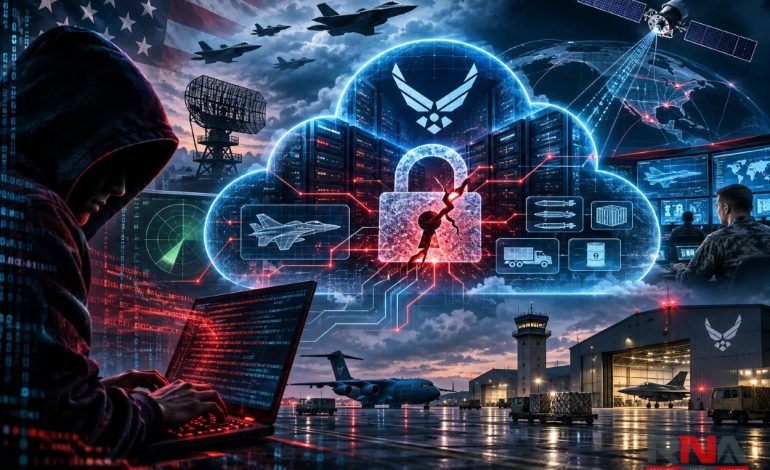

New Delhi: Hackers have penetrated Cloud One, one of the United States military’s largest cloud computing platforms, raising concerns over the security of sensitive information underpinning American air operations worldwide. The intrusion has disrupted the US Air Force’s digital modernization programme and prompted the involvement of the US Cyber Command to assess the potential damage.
The breach was detected during an exercise to upgrade the platform in recent weeks, Reuters reported on Friday, citing people familiar with the development. The identity of the hackers, the extent of their penetration and whether they succeeded in extracting sensitive military information remain unknown.
The US Air Force declined to discuss the reported intrusion, citing its policy of not commenting on the security and operational condition of individual networks. It maintained that measures were continuously being taken to protect its information infrastructure and military capabilities.
The incident is particularly significant because Cloud One supports far more than routine administrative functions. It forms part of the digital infrastructure through which the US Air Force manages several critical operational and logistical requirements across its global network of military installations.
Why Cloud One is critical to US military operations
Launched in 2017, Cloud One was conceived as a common computing environment that would enable the US Air Force to consolidate its fragmented information technology infrastructure. The platform draws on the cloud computing capabilities of four American technology giants – Amazon, Microsoft, Google and Oracle.
Instead of requiring individual military establishments to maintain separate computing infrastructure, Cloud One enables authorized organizations to host applications, process information and access computing resources through a standardized environment. This is intended to reduce operating costs, accelerate software deployment and improve coordination across geographically dispersed military units.
Among the platform’s most consequential applications is a command-and-control system that integrates information from North American air-defence radars and other surveillance sources. Another application helps the US Air Force account for its missile and bomb inventories across more than 200 locations worldwide.
The concentration of these functions within a common digital ecosystem offers considerable operational advantages but also creates cybersecurity challenges. A successful intrusion into shared infrastructure could potentially have implications extending well beyond a single military establishment or application.
Cyberattack disrupts modernization programme
The discovery of the intrusion has reportedly forced the US Air Force to suspend the migration of additional administrative applications to Cloud One. Software updates for existing applications have also been restricted, while administrative privileges have been withdrawn from some users.
The restrictions present a separate security challenge because delaying software patches could leave existing applications exposed to newly discovered vulnerabilities. Investigators must therefore balance the need to contain the intrusion with the operational requirement to maintain and secure essential military services.
The breach comes at an awkward time for the US Air Force’s cloud modernization programme. On March 11 this year, American defence technology company Leidos announced a $454.9 million contract to upgrade Cloud One, with particular emphasis on cybersecurity, automation and operational readiness.
Leidos, which succeeded Science Applications International Corporation (SAIC) as the platform’s principal contractor in 2025, referred questions about the intrusion to the US Air Force. There is currently no evidence establishing a connection between the modernization contract and the breach.
Military intelligence implications
One of the principal concerns surrounding the incident is the reported compromise of the platform’s control plane – the management layer responsible for administering cloud resources and services. However, the precise vulnerability involved and the level of access obtained by the intruders have not been publicly established.
Military logistics information can be as valuable to an adversary as conventional battlefield intelligence. Information concerning aircraft serviceability, ammunition availability, maintenance schedules and supply-chain movements could collectively provide insights into a military’s operational preparedness and capacity to sustain prolonged combat.
Such information could theoretically enable a hostile intelligence agency to assess the availability of American airpower during a regional crisis. However, there is no confirmed evidence that the hackers obtained such information or compromised classified military networks.
Nor has any government, intelligence agency or criminal organization been publicly identified as being responsible for the intrusion.
Growing cybersecurity challenge for Washington
The Cloud One incident follows a succession of recently disclosed cybersecurity breaches affecting American federal institutions, including the Pentagon, the Federal Bureau of Investigation, the homeland security department, the treasury department and intelligence agencies. Together, these incidents highlight the difficulties Washington faces in securing its increasingly interconnected government infrastructure.
The rapid advancement of artificial intelligence has added another dimension to the challenge by enabling automated identification of software vulnerabilities across extensive digital networks. Nevertheless, investigators have not publicly established whether AI-assisted tools were used in the Cloud One intrusion.
The Pentagon has been pursuing a department-wide zero-trust cybersecurity strategy with a target of achieving its prescribed baseline capabilities by the end of the 2027 financial year. Under this approach, users, devices and applications are not automatically considered trustworthy merely because they operate within an authorized network.
Lessons for India and other militaries
The incident holds considerable relevance for countries such as India, where the armed forces are increasingly adopting network-centric warfare capabilities, integrated command-and-control systems and digitally managed logistics. As military networks become more interconnected, cybersecurity becomes inseparable from conventional combat readiness.
India has already taken steps in this direction through the Defence Cyber Agency and exercises such as Cyber Suraksha, aimed at strengthening cybersecurity preparedness and institutional coordination. The challenge, however, extends beyond protecting information to ensuring that essential military functions remain available even when digital infrastructure comes under attack.
For the US military, the immediate priority will be to establish the extent of the compromise, restore confidence in Cloud One and determine whether sensitive information has fallen into unauthorized hands. The outcome of the investigation could have wider implications for how militaries worldwide balance the operational advantages of centralized cloud computing against the national security risks associated with it.