From street protests to presidential race: Serbia’s students pick chemistry professor to seal political transformation
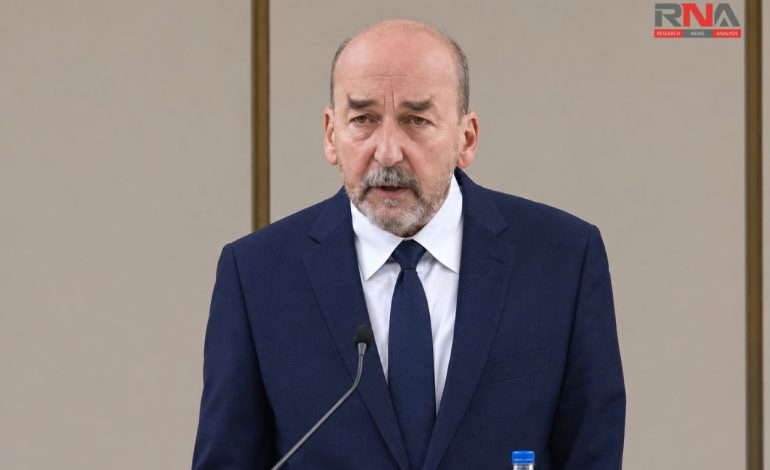
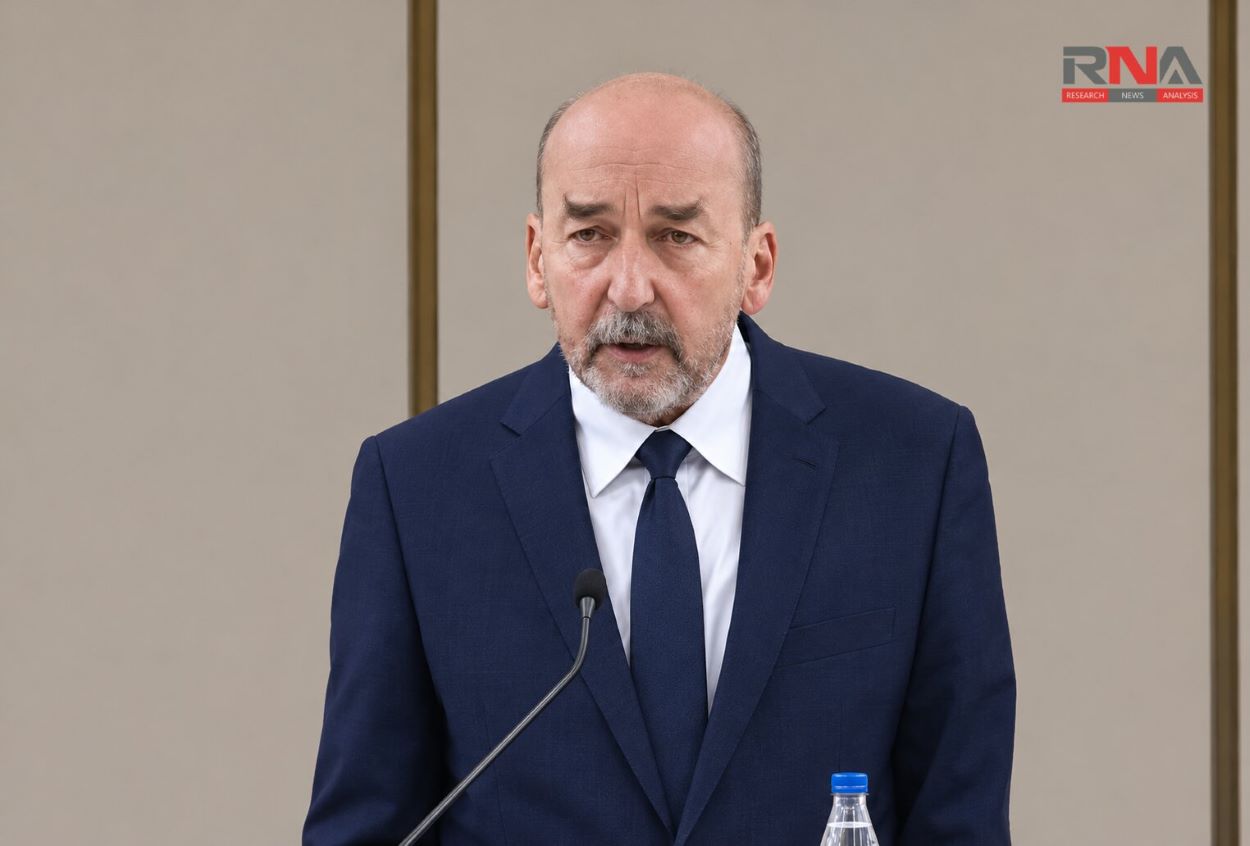
Radomir Saicic. (Digitally enhanced screenshot of a widely circulated video on X.)

New Delhi: Serbia’s student-led political movement, which ended Aleksandar Vucic’s 14-year dominance of the country’s politics in October, on Friday nominated chemistry professor Radomir Saicic as its candidate for the December 27 presidential election. The nomination marks another decisive step in the transformation of a grassroots anti-corruption campaign into a political force capable of reshaping the Balkan nation’s institutions and governance.
Saicic, 65, a professor at the University of Belgrade and a member of the Serbian Academy of Sciences and Arts, was among the earliest academics to support the student protests that erupted in 2024. He now represents the Student List in Serbia’s parliament, where the movement secured a commanding majority of 140 seats in the 250-member legislature in the October 25 snap parliamentary election.
Announcing his candidature at a news conference in Belgrade, Saicic identified restoring public confidence in state institutions, strengthening the rule of law and combating corruption as his principal objectives. He also pledged to exercise his presidential authority within constitutional limits and make his decisions transparent to the public.
His remarks, reported by Serbian broadcaster N1, reflected the movement’s emphasis on institutional accountability rather than the concentration of political authority in individual leaders. Saicic argued that replacing a government would serve little purpose unless accompanied by a fundamental change in how state institutions dealt with citizens.
From railway tragedy to political revolution
The origins of Serbia’s extraordinary political transition lie in the collapse of a concrete canopy at a recently renovated railway station in the northern city of Novi Sad on November 1, 2024, which eventually claimed 16 lives. The disaster triggered widespread anger over alleged corruption, administrative negligence and the lack of transparency in government-funded infrastructure projects.
University students subsequently organized campus blockades, demonstrations and marches, demanding accountability for the disaster and the disclosure of documents relating to the station’s renovation. What began as a campaign for justice gradually developed into Serbia’s most consequential protest movement since the overthrow of Slobodan Milosevic in October 2000.
As academics, lawyers, teachers and other professionals rallied behind the students, the movement broadened its demands to include an early parliamentary election. Its emergence outside the established party system also enabled it to mobilize sections of the electorate that had become disillusioned with both the ruling establishment and traditional opposition parties.
According to the final election results, declared on November 5, the Student List secured an absolute parliamentary majority, while the alliance led by Vucic’s Serbian Progressive Party (SNS) was reduced to 103 seats. Voter turnout stood at nearly 69 per cent – the highest recorded in a Serbian parliamentary election this century.
Vucic’s political gamble backfires
Vucic, who had served as prime minister between 2014 and 2017 before becoming president, resigned from the presidency on September 27 in a bid to return to parliamentary politics. However, the October election defeated his attempt to retain power through the prime minister’s office, leaving him on the opposition benches.
Serbia’s constitution restricts presidents to two terms, making Vucic ineligible to contest the forthcoming election. The SNS has yet to announce whether it will field a candidate, with Vucic previously indicating that his party could stay out of the presidential contest altogether.
The speaker of parliament, Aleksandar Cupic, who assumed office on November 17, is currently discharging the functions of the president. He formally called the early presidential election on Thursday.
Although executive authority in Serbia rests primarily with the government, the presidency carries considerable constitutional and political significance. Under the Serbian constitution, the president nominates a candidate for prime minister, represents the country internationally and commands its armed forces.
Vucic’s tenure had demonstrated how a president commanding considerable influence over the ruling party could become the dominant figure in Serbian politics despite the constitutional distribution of executive powers.
Challenges of moving from protest to governance
Despite its overwhelming parliamentary victory, the Student List has yet to nominate a prime minister or constitute a cabinet. Its relatively inexperienced lawmakers now face the challenge of converting a broad anti-corruption platform into a coherent programme of economic management, institutional reform and foreign policy.
According to Reuters, several important fiscal and energy-related deadlines are approaching before the incoming administration is likely to assume office. These include the December 20 deadline for adopting the national budget and the December 31 expiry of Serbia’s natural gas supply agreement with Russia.
The movement has until February 15, 2027, to form a government under constitutional provisions. Failure to do so would necessitate another parliamentary election, potentially undermining the political momentum generated by its October victory.
Geopolitical implications of Serbia’s political transition
The change of leadership in Belgrade is also being closely watched in Brussels, Moscow and Beijing, given Serbia’s distinctive geopolitical position in southeastern Europe. Although a candidate for European Union (EU) membership, Serbia has maintained military neutrality and cultivated substantial economic, energy and strategic relationships with Russia and China.
Leading figures in the Student List have indicated that they favour closer alignment with European institutional standards without imposing sanctions on Russia. They have also maintained Serbia’s longstanding position that Kosovo, which unilaterally declared independence in 2008, remains part of Serbian territory.
These positions suggest that the political transition may bring substantial changes to Serbia’s domestic governance without necessarily precipitating an immediate reversal of its foreign policy. Much will depend on how the incoming government reconciles its institutional reform agenda with the country’s existing strategic relationships.
For Serbia’s student movement, the December presidential election represents another opportunity to consolidate its electoral gains. Its more enduring test, however, will be whether it can translate the public demand for accountable governance that brought millions of voters behind it into functioning institutions and credible public policy.