

Rajnath Releases Operation Sindoor Documentary, As Indian Armed Forces Talk About Destroying Pakistan Military
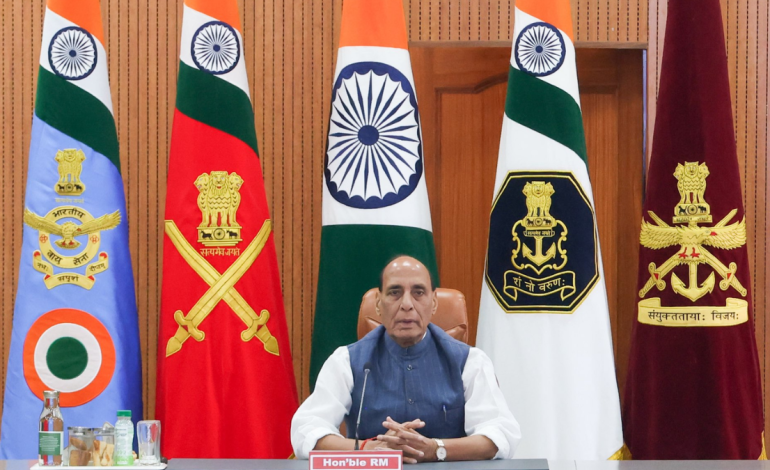
Rajnath Singh releases Operation Sindoor documentary as India marks one year of the military operation against Pakistan-based terror infrastructure.Image courtesy: X.com/@rajnathsingh

India, on Thursday (May 7, 2026), observed the first anniversary of its armed forces’ massive victory against Pakistan during the May 2025 Operation Sindoor, with Defence Minister Rajnath Singh releasing a documentary on the military action, even as the security forces talked about destroying 13 enemy aircraft and striking 11 airfields.
At Jaipur, where the Indian military was hosting its joint commanders’ conference, Rajnath Singh unveiled the 28-minute audio-visual documentary on the YouTube channel of the Integrated Defence Staff headquarters, which posted the link on its X handle.
The documentary showcased India’s military operation against terror camps in Pakistan and Pakistan-occupied Kashmir (POK), and highlighted the most significant aspects of the 88-hour operation that ended on May 10, 2025, after the Pakistan Army sought a ceasefire after the battering delivered by the Indian armed forces.
The key aspect of the documentary was how the Indian Space Research Organisation (ISRO) satellites came to the aid of the Indian military during Operation Sindoor to locate the terror camps and enemy military installations to deliver precise strikes and to inflict maximum damage on the ground.
It also showcased the complexity of the operations planning and execution, with Prime Minister Narendra Modi featured in the documentary, providing a free hand to the Indian armed forces to achieve the military objectives of the operation.
The audio-video documentary began with the striking words, ‘A Nation’s Resolve’, and records the significant damage to terrorist infrastructure and military assets across the border with Pakistan, where multiple high-value targets were neutralised in a calibrated and precise military strike.
Earlier in the day, the Indian armed forces held a joint press conference to highlight what Paksitan sufferred during Operation Sindoor, a retaliatory action for the April 22, 2025, terrorist attacks on civilian tourists in Pahalgam in Jammu and Kashmir that claimed 26 lives.
“We struck and decimated their nine terrorist camps on May 7. The proof is there for everybody to see. We struck 11 of their airfields. We destroyed 13 of their aircraft either on the ground or in the air, including one high-value airborne asset at a record distance of 300 kilometres plus,” Indian Air Force’s Air Marshal Awadhesh Kumar Bharti told the media.
As part of Operation Sindoor, India carried out airstrikes and eliminated at least 100 terrorists. The strikes at the terror camps included the Jaish-e-Mohammed (JeM) headquarters at Bahawalpur, the Lashkar-e-Taiba’s base at Muridke, and terrorist infrastructure in Mehmoona Joya in Sialkot, Sawai Nala, and Syed Na Bilal in Muzaffarabad, Gulpur and Abbas in Kotli, Barnala in Bhimber, and Sarjal.
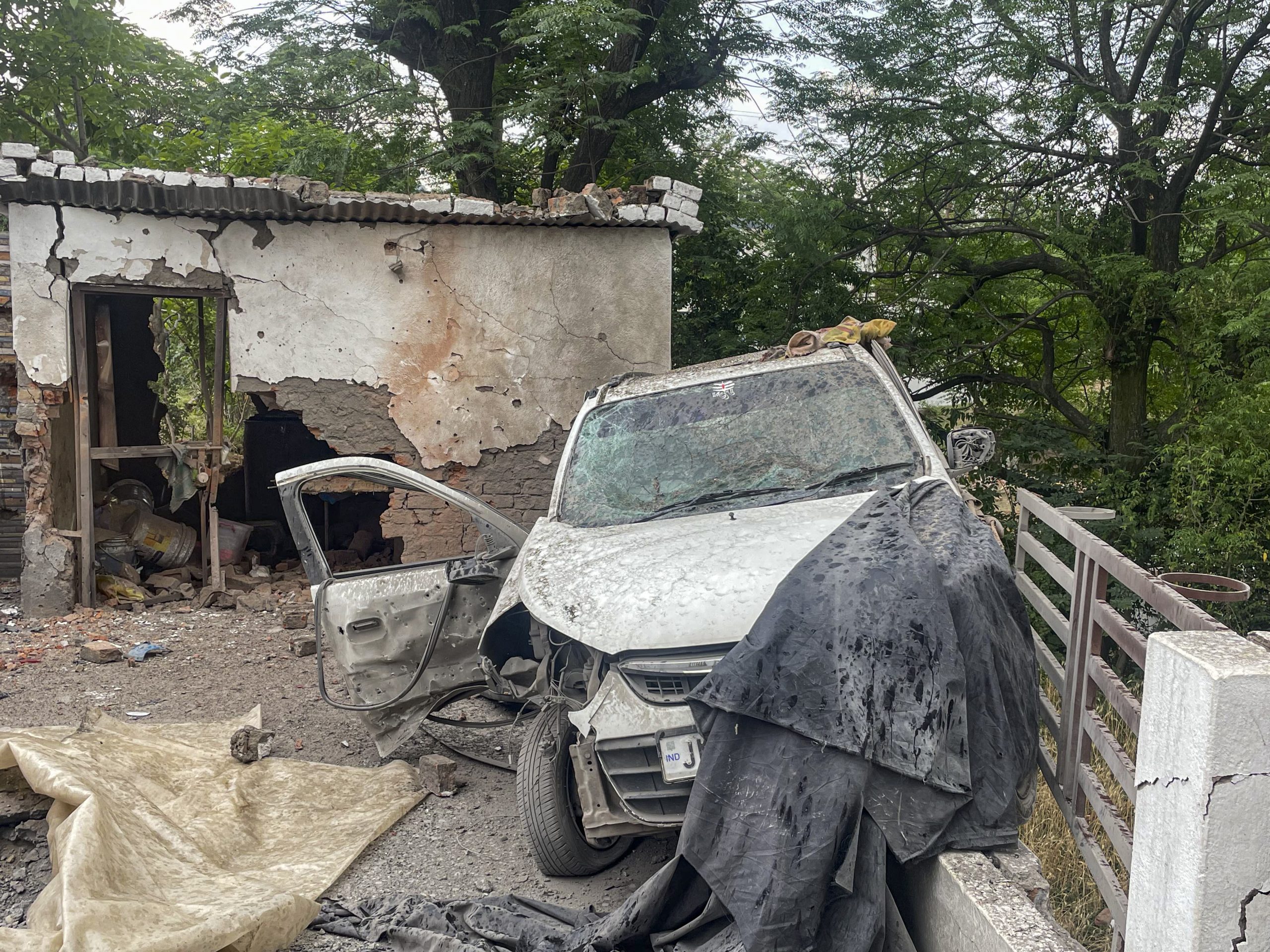
The action triggered a rapid escalation in tensions with Pakistan launching retaliatory strikes on military and civilian sites, which were thwarted by the Indian military. After the three-day conflict, India said that it will not tolerate any nuclear blackmail by Islamabad. “Operation Sindoor is India’s policy against terrorism. This operation has drawn a new line; it is the new normal,” Modi said in an address to the nation last year.
Air Marshal Bharti said the “proof is available for everyone to see” on the damage inflicted on Pakistan during Operation Sindoor. “We struck and decimated their 9 terrorist camps on May 7. We struck 11 of their airfields. We destroyed 13 of their aircraft either on the ground or in the air, including one high-value airborne asset at a record distance of 300 km plus,” he said.
He further emphasised that Pakistan had failed to inflict any significant damage on Indian military or civilian infrastructure. Air Marshal Bharti also dismissed all repeated victory rhetoric by Pakistan, stressing that it is “measured by hard facts.”
“They (Pakistan) have not been able to inflict any major damage on our side. Neither any military infrastructure nor much of the civilian structures…Whatever they may say, remember narratives and rhetoric do not give you victory. Victory is measured by hard facts.”
Lieutenant General Rajiv Ghai, who played a key role in executing the operation in his capacity as the then Army’s Director General of Military Operations (DGMO), said, “Operation Sindoor was not an end, and it was just the beginning.”
“It was a statement of resolve, responsibility, and strategic restraint by our nation,” he noted, adding it was executed with precision, proportionality, and clarity of purpose. “India will defend its sovereignty, its security, and its people decisively, professionally, and with the utmost responsibility,” he said.
Director General Naval Operations, Vice Admiral A. N. Pramod, said, “By striking the terror hubs in the heart of Pakistan using long-range precision weapons, India effectively called the bluff on Pakistan’s nuclear blackmail.”
He said the operation highlighted the strategic vision of the national leadership, which provided a “precise and unambiguous mandate” along with operational freedom to the armed forces. He further noted that the forward deployment of the Indian Navy forced Pakistani naval and air units into a defensive posture close to their coastline and harbours.
“As the campaign unfolded, forward deployment of the Indian Navy compelled Pakistani naval and air units to enter a defensive posture largely confined to harbours or operating close to their coastline,” Vice Admiral Pramod added.