



Nuclear shadow over Earth’s orbit: Nato vows space defence as Russia reportedly readies atomic satellite
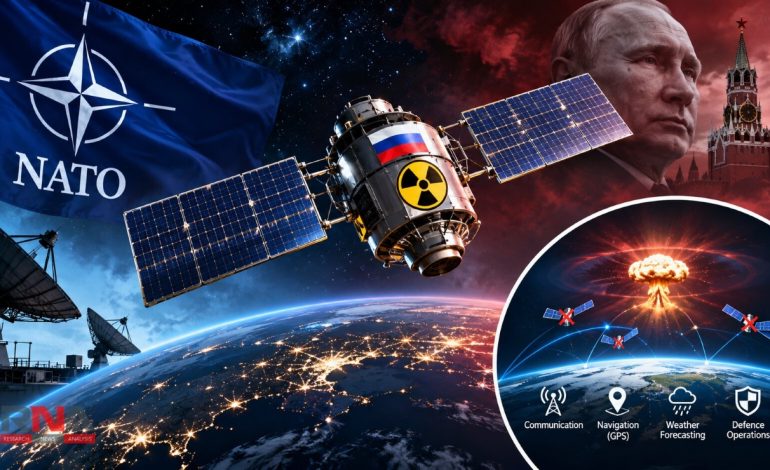
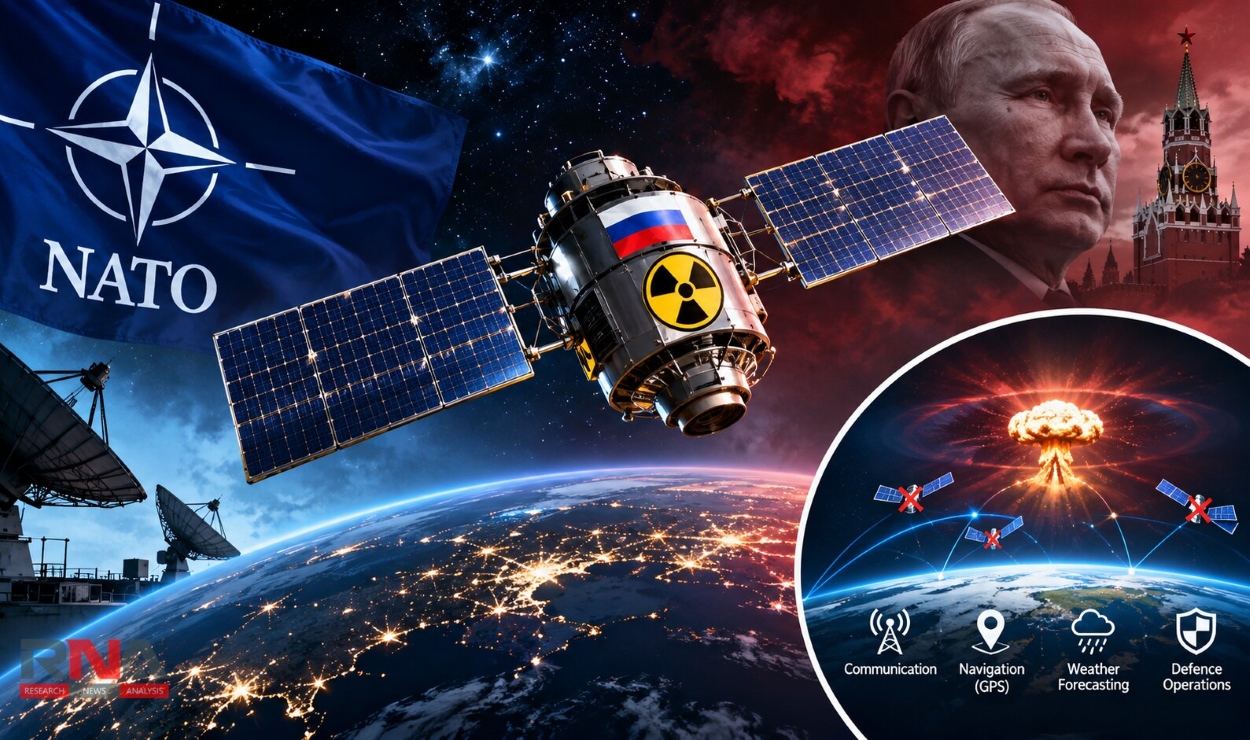
RNA Media illustration for representation.

New Delhi: Nato has pledged to defend its strategic assets in space following intelligence reports that Russia could launch a satellite carrying a nuclear weapon as early as December. The development has raised fears of an unprecedented escalation in the militarization of outer space, with potentially devastating consequences for military and civilian satellite networks across the world.
The secretary general of Nato, Mark Rutte, said on Monday that the alliance was continually reviewing its deterrence and defence capabilities, including those concerning space. Although there is no publicly available evidence that Moscow has authorized an imminent launch, western intelligence agencies reportedly believe Russia’s controversial space weapons programme has reached an advanced stage.
Speaking at a joint news conference with the chancellor of Germany, Friedrich Merz, in Berlin on November 23, 2026, Rutte stressed that the alliance’s security responsibilities extended beyond conventional theatres of warfare. His remarks came as relations between Moscow and Nato deteriorated further over the Ukraine war and growing military tensions along Europe’s eastern flank.
Russia’s secretive Sputnik-S satellite
A joint investigation by German public broadcasters NDR and WDR and the newspaper Süddeutsche Zeitung revealed that western intelligence agencies had exchanged assessments concerning a Russian satellite designated Sputnik-S. The spacecraft, reportedly designed to carry a nuclear warhead, is believed to have been assembled several years ago and stored in the Moscow region.
According to intelligence assessments, warnings circulated among several Nato countries in early November indicated that the satellite could be launched within 60 days. Germany’s military space command reportedly considers a December launch possible.
The German government said it was treating the intelligence reports with considerable seriousness, although it declined to publicly discuss classified assessments. The Kremlin, however, dismissed the reports, maintaining its opposition to the deployment of nuclear weapons in space.
Concerns about the Russian programme first entered the public domain in February 2024, when Washington disclosed that Moscow was developing a new anti-satellite capability involving nuclear technology. The president of Russia, Vladimir Putin, subsequently denied that his country intended to station nuclear weapons in outer space.
Why nuclear weapon in space is particularly dangerous
Unlike conventional anti-satellite (ASAT) weapons designed to destroy individual spacecraft, a nuclear weapon detonated in space could disable numerous satellites without directly striking them. The resulting radiation and electromagnetic disturbances could damage sensitive electronic components, potentially rendering entire sections of satellite networks inoperable.
Radiation trapped within Earth’s magnetic field could also create a hazardous environment for spacecraft long after the initial explosion. Depending on the circumstances, satellites belonging to neutral countries and even the country responsible for the detonation could suffer damage.
Such an attack could disrupt military communications, reconnaissance, missile early-warning systems and battlefield coordination. Its civilian consequences could be equally serious, affecting satellite-based navigation, weather forecasting, telecommunications, disaster management and other critical services.
The dangers are not merely theoretical. In July 1962, the United States conducted a high-altitude nuclear test called Starfish Prime, which generated artificial radiation belts and damaged several satellites at a time when relatively few spacecraft were in orbit.
Nato’s preparations for warfare in space
Nato formally recognized space as its fifth operational domain in 2019, alongside land, air, sea and cyberspace. At its 2021 Brussels summit, the alliance acknowledged that attacks involving space could potentially trigger Article 5 of the North Atlantic Treaty, which provides for collective defence.
However, invoking Article 5 would not be automatic and would depend on the nature and consequences of an attack. The alliance has also maintained that it has no intention of placing weapons in space.
According to its updated space policy, more than half of the operational satellites orbiting Earth belong to Nato member states or companies based in those countries. This concentration of space-based capabilities gives the alliance considerable military advantages but also exposes it to significant vulnerabilities.
In July, eight Nato countries launched the Hybrid Alliance Layered Operations in Space (HALO) initiative to integrate their military satellites into a multinational network. The project is intended to strengthen the resilience of satellite-based communications, intelligence gathering and missile tracking.
The latest development comes against the backdrop of increasingly hostile nuclear rhetoric between Moscow and the western alliance. As RNA Media reported earlier, Russia warned Nato in October of a possible nuclear response to threats against its strategically important Kaliningrad exclave.
Threat to a decades-old international treaty
The deployment of a nuclear-armed satellite would constitute a violation of the 1967 Outer Space Treaty, to which Russia, the US, China and India are parties. Article IV explicitly prohibits countries from placing nuclear weapons or other weapons of mass destruction in orbit around Earth.
On April 24, 2024, Russia vetoed a United Nations security council resolution sponsored by the US and Japan seeking to prevent a nuclear arms race in outer space. Thirteen members supported the resolution, while China abstained.
Moscow argued that international restrictions should encompass all categories of space weapons rather than nuclear weapons alone. Washington, however, questioned Russia’s motivations for blocking a resolution reaffirming existing international obligations.
The dispute exposed a major weakness in the international space security architecture – the absence of a comprehensive and effective mechanism for verifying the nature of classified military payloads launched into orbit.
While the reported Russian launch plans remain unverified, the controversy highlights a fundamental change in the nature of strategic competition. Unlike conventional military confrontations, a nuclear conflict extending into space could severely compromise the technological infrastructure of countries that have no involvement in the hostilities.