


Francis Halzen wins Nobel physics prize for catching cosmic ‘ghost particles’ beneath Antarctic ice
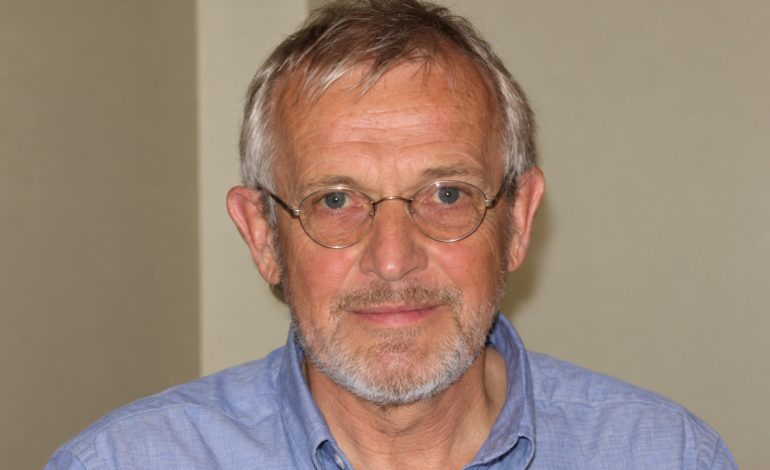
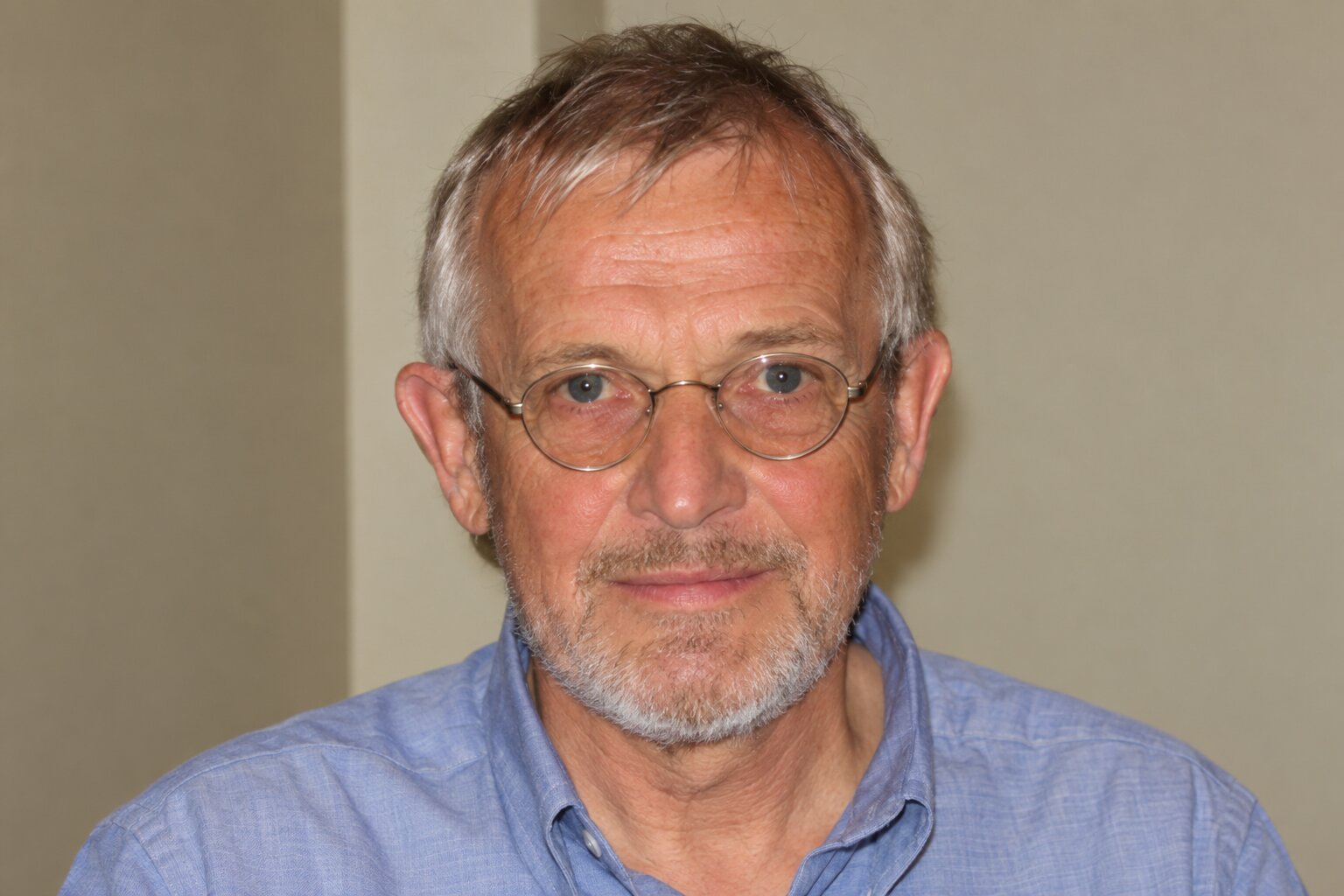
Francis Halzen. (Photo courtesy: IceCube)

New Delhi: Belgian-American physicist Francis Halzen has won the 2026 Nobel prize in physics for his pivotal role in building the IceCube Neutrino Observatory and discovering high-energy neutrinos arriving from deep space. Announced in Stockholm on Tuesday, the award recognizes work that turned Antarctic ice into an astronomical instrument capable of investigating some of the universe’s most powerful processes.
The Royal Swedish Academy of Sciences named Halzen, of the University of Wisconsin–Madison, as this year’s sole physics laureate. Its citation honoured him “for decisive contributions to the IceCube Neutrino Observatory and the discovery of high-energy neutrinos of astrophysical origin”.
Halzen will receive 12 million Swedish kronor, approximately $1.2 million, with the award to be formally presented on December 10. The recognition centres on his scientific vision and leadership in establishing a way to study the cosmos through particles that conventional telescopes cannot observe.
Neutrinos are electrically neutral particles with extremely small masses that interact only rarely with matter, earning them the nickname “ghost particles”. That elusiveness makes them exceptionally difficult to detect, but also allows them to travel immense distances while preserving information about the environments in which they were produced.
Their usefulness becomes clearer when compared with cosmic rays, the highly energetic charged particles that reach Earth from space. Magnetic fields bend cosmic rays’ paths and obscure their origins, whereas neutrinos travel without such deflection, giving researchers a more direct pointer towards distant cosmic accelerators.
The IceCube observatory, near the Amundsen–Scott South Pole Station, uses a cubic kilometre of Antarctic ice as its detection medium. Its original underground array comprises 5,160 optical sensors suspended along 86 cables, at depths ranging from about 1,450 metres to 2,450 metres.
These instruments detect the consequences of a neutrino interaction rather than the neutrino itself. When a neutrino interacts with matter in or near the detector, it can produce charged particles that emit faint Cherenkov light as they travel through the ice.
The timing and distribution of that light allow scientists to estimate the incoming neutrino’s energy and direction. IceCube therefore operates as a telescope embedded beneath the surface, using the ice itself as part of the instrument rather than collecting light from the sky through a conventional mirror or lens.
Halzen’s involvement stretches back decades: his university biography dates his work on the project to 1987, beginning with its predecessor, the Antarctic Muon and Neutrino Detector Array. That earlier experiment established the foundations for the much larger observatory, bringing together particle physics, astrophysics and the engineering required to operate deep beneath the polar surface.
A major breakthrough came in 2013, when the IceCube collaboration reported evidence for high-energy neutrinos from beyond the solar system. Researchers identified 28 high-energy events in observations collected between May 2010 and May 2012, providing evidence of a cosmic neutrino population beyond the background generated in Earth’s atmosphere.
The next challenge was to connect those particles with identifiable objects in the sky, rather than simply establish that they existed. In findings published in 2018, IceCube and other observatories presented evidence linking high-energy neutrinos to the blazar TXS 0506+056, a distant galaxy with a powerful jet directed towards Earth.
That investigation followed a neutrino detected on September 22, 2017, which triggered an alert to telescopes worldwide and observations of the blazar’s heightened activity. The result demonstrated the value of combining neutrino detections with observations of electromagnetic radiation – an approach that helps researchers investigate cosmic events through several complementary signals.
The physics announcement followed the 2026 Nobel medicine prize awarded on Monday to Karl Deisseroth, Peter Hegemann and Georg Nagel, whose discoveries laid the foundations for optogenetics. By enabling researchers to control selected cells with light, that technique has transformed the study of neural circuits, including those involved in neurological and psychiatric disorders.