


Iran unveils advanced missile, warns of pre-emptive action as Hormuz shipping crisis deepens
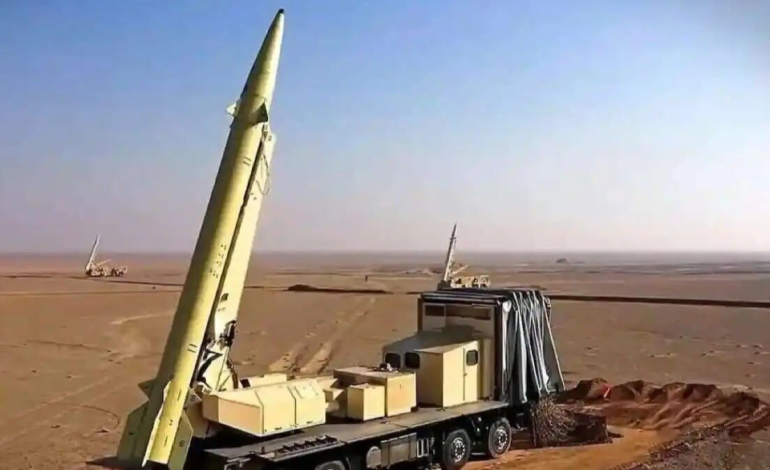
Qassem Basir ballistic missile. (Image courtesy: IRNA)

New Delhi: Iran has signalled a major shift in its military posture, warning that it could act against a perceived threat even before an attack actually takes place. The warning comes as the wider US-Iran conflict is putting growing pressure on shipping through the Strait of Hormuz and energy infrastructure across the Gulf.
Iran’s state news agency IRNA has presented the Qassem Basir ballistic missile as a symbol of this new approach, saying Tehran will take action against threats even before they are carried out. The report cited Mohsen Rezaei, head of Iran’s supreme national security council, who has described Iran’s growing missile capabilities as part of a broader effort to strengthen deterrence and make any attack against the country more costly for its opponents.
The Qassem Basir represents Iran’s attempt to improve the accuracy and effectiveness of its missile force rather than simply increasing range or warhead size. Iranian state media has described the solid-fuel missile as having a range of at least 1,200 kilometres and carrying a half-tonne warhead, while Rezaei has claimed that an advanced Iranian missile was tested against a US warship.
However, it remains unclear whether the missile reportedly used in that test was specifically the Qassem Basir. The claim about the test has therefore not been independently established.
The latest Iranian messaging comes as tensions between Tehran and Washington continue to grow at sea. The United States has said its forces have redirected 94 commercial vessels, disabled three and boarded two since mid-July as Washington enforces its blockade of Iranian ports and seeks to restrict Tehran’s oil shipments.
Iran has responded by threatening tighter restrictions on maritime movement through the Persian Gulf and the Strait of Hormuz. Rezaei has warned of a maritime exclusion zone, with Tehran seeking to control the route that ships would use to pass through the Hormuz.
The proposed exclusion zone would add another layer of pressure to an already tense maritime confrontation. The United States has rejected Iran’s attempt to impose such restrictions and continues to maintain that the waterway must remain open to international shipping.
Attacks disrupt Saudi energy facilities
The confrontation is also spreading to Saudi Arabia’s energy infrastructure. Saudi Arabia’s energy ministry said several energy-sector facilities and installations in the kingdom’s southern region were attacked on Tuesday, causing fires, temporarily halting some operations and injuring several people, Reuters reported.
The attacks were attributed to Yemen’s Iran-aligned Houthi movement, which has stepped up attacks on Saudi targets as the wider regional conflict has intensified. Saudi authorities said 73 people were injured, while emergency teams were deployed to deal with fires and secure the affected facilities.
Saudi Arabia has warned that it will take necessary steps to safeguard its sovereignty after the Houthi attacks.
The targeting of energy infrastructure is particularly significant because it threatens facilities that support regional oil supplies at a time when shipping through the Gulf is already under severe pressure. Any prolonged disruption could therefore affect both regional energy security and global oil markets.
The situation around the Strait of Hormuz has continued to worsen. Shipping data cited by Al Jazeera showed that an average of around 10 commodity vessels crossed the strategic waterway each day over the previous 10 days, the lowest level since May.
Traffic through the strait also fell 28 per cent last week to 77 vessels, highlighting the growing impact of the confrontation on commercial shipping.
The Qatar foreign ministry spokesperson, Majed Al-Ansari said reopening the Strait of Hormuz remained a priority and warned that continued disruption could lead to an “industrial catastrophe”.
Qatar has also continued its efforts to mediate between Washington and Tehran as the two sides remain locked in a wider confrontation. The concern is that continued restrictions around Hormuz could disrupt the movement of oil and gas and put further pressure on countries that depend on the waterway.
The pressure on Hormuz is already being reflected in global energy markets. Oil prices moved higher on Tuesday as investors assessed the possibility of prolonged disruption, with Brent crude approaching $100 a barrel following the latest attacks on Saudi energy infrastructure
The developments are therefore creating pressure on several fronts at the same time. Iran is warning of earlier military action, the United States is enforcing a naval blockade, commercial shipping through Hormuz is falling, and attacks on Saudi energy facilities are adding another threat to Gulf oil supplies.
At the centre of Iran’s latest messaging is a shift from retaliation to pre-emptive deterrence. Tehran is seeking to make clear that it may not wait for an attack to happen before responding if it believes a serious threat is developing.
That approach could make the conflict more difficult to predict. A military deployment, naval operation or other action that Iran considers a threat could potentially trigger an Iranian response before an actual strike takes place.