
Supreme Court declines to stay CBSE’s language policy, questions ‘native’ tag on English
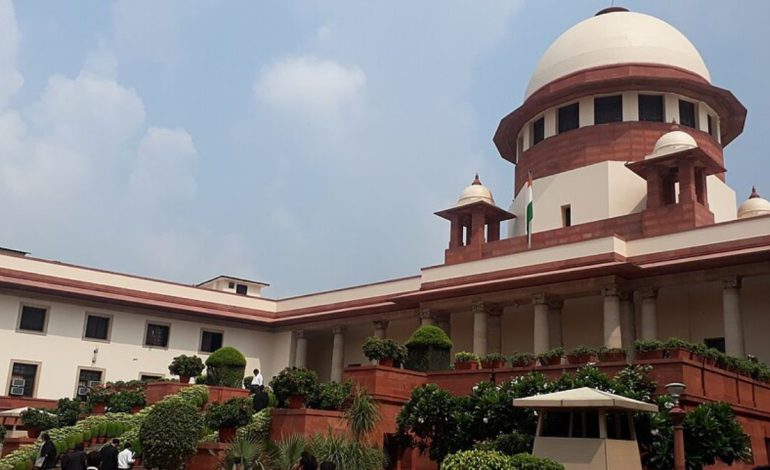
Supreme Court agrees to hear appeals in the Bhojshala–Kamal Maula dispute, orders alternate space for Friday namaz while the case remains pending. Image credit: Wikimedia Commons

New Delhi: A three-judge Supreme Court bench heard petitions on Tuesday against the Central Board of Secondary Education’s (CBSE) revised three-language scheme. The bench included Chief Justice of India Surya Kant along with Justice Joymalya Bagchi and Justice V Mohana.
The scheme requires Class IX students to study at least two languages classified as “native to India.” It treats English, German, French and Spanish as “non-native”.
Justice Bagchi questioned this terminology. He noted that the Constitution does not use the word “native”. It instead uses terms like mother tongue, regional language or Indian language. He then asked whether English could be considered an indigenous Indian language, given that it has been spoken in India for around 300 years. He did not rule on the question.
Petitioners raised practical concerns. They said only three of the 22 required language textbooks are currently available. They also said schools lack enough teachers to implement the policy. Students already studying foreign languages up to Class VIII would be forced to switch languages abruptly in Class IX, the petitioners argued.
The court declined to stay the policy. However, it said it would step in if any teachers faced dismissal for failing to implement it.
The additional solicitor general, appearing for the government, asked for two weeks to file a response. The court granted only 10 days instead, and posted the matter for further hearing on July 29.