In Beijing embassy event, Indian diaspora in China voices anger over online abuse and shrinking work visas
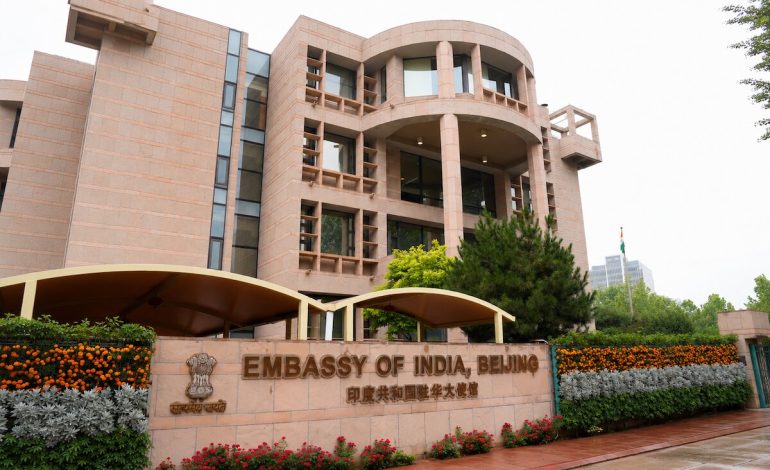
The Indian embassy in Beijing.

New Delhi: The Indian embassy in Beijing held its first open-house interaction with the resident Indian diaspora in several years, on Friday, and the gathering turned into a candid airing of grievances rather than a ceremonial affair. Members of the community raised concerns over abusive anti-India content on Chinese social media, a decline in work visas for Indian professionals and restrictions on employment for spouses.
The mission organized the outreach to bring together a large number of Indian professionals working across various sectors in the Chinese capital, giving them a direct channel to flag issues affecting the community. The ambassador of India to China, Vikram Doraiswami, led the interaction. He was accompanied by the counsellor for consular, education and community affairs, Nitinjeet Singh, and the counsellor for visas, Ramesh Singh.
Online hostility, stalled paperwork
Among the issues raised was a rise in abusive content targeting Indians, including mockery of their food habits and culture, on Chinese social media platforms. Diaspora members also pointed to a falling number of job visas being issued by Chinese authorities to Indian professionals, and continuing curbs that prevent their spouses from taking up employment.
Difficulties in accessing consular services featured as well, according to those present. Taken together, the complaints painted a picture of a community that feels squeezed by bureaucratic friction even as diplomatic ties between the two countries have been on the mend.
‘Steps already underway’
Doraiswami, who took charge of the mission in May 2026 and has since stepped up engagement with Chinese officials to improve bilateral ties, used the session to announce a practical concession. He said the embassy would further simplify the documentation required for Chinese nationals applying for Indian visas from next week, to encourage greater travel to India.
On the question of hostile social media content, Doraiswami struck a measured tone rather than a defensive one. He said the Chinese government was itself concerned about the rise in such content and was taking steps to address it, while the embassy was countering misinformation by putting out fact-based material through its own social media handles.
He also flagged softer, longer-term fixes. The ambassador said the mission planned to organize more cultural events, building on the strong response to annual programmes such as the Vasant Mela, to showcase India’s culture and cuisine. He added that the mission was working to set up a mechanism with legal professionals to assist Indians facing work-related disputes, and that open-house interactions would now be held periodically to keep such channels open.
Thaw on paper, friction on ground
The grievances aired in Beijing sit against a wider trend that has drawn comment well beyond the diaspora itself. Even as government-to-government ties between New Delhi and Beijing have visibly warmed over the past year, independent commentary on Chinese social media has taken a markedly harder edge towards Indian visitors and residents.
Analysts have traced part of this hostility to viral clips – some showing Indian tourists behaving inappropriately in public spaces – that fed a wave of disparaging and, at times, openly racist commentary online, with a handful of posts going as far as to demand that Indians be barred from entering China altogether. A separate but related controversy has swirled around China’s new K-visa scheme for foreign professionals, which has drawn nationalist backlash on domestic platforms over fears of job competition and loosened immigration control – a debate that has occasionally bled into broader anti-foreigner sentiment rather than staying confined to any one nationality.
This backdrop matters for how Friday’s open house should be read. It suggests the concerns raised by the diaspora are not isolated complaints but symptoms of a gap between diplomatic messaging and public sentiment – one that Indian officials in Beijing will now have to manage on a more sustained footing rather than through one-off outreach.