
Chinese J-16 fighters refuelled over Karachi after Egypt exercise. What it means
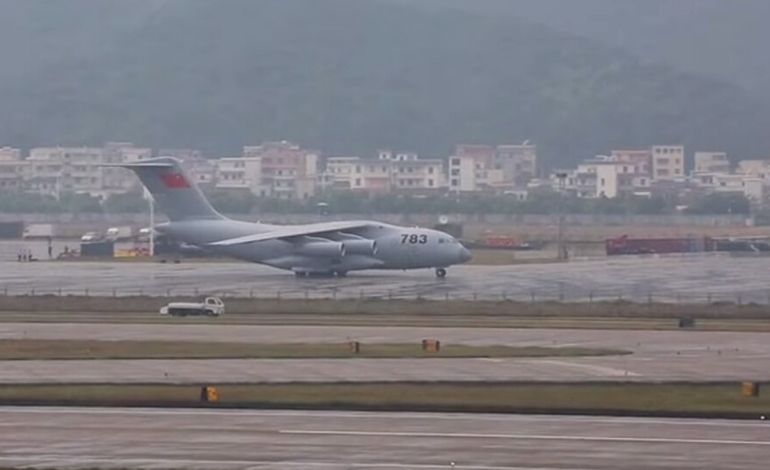
Representational image. (Image courtesy: Wikimedia)

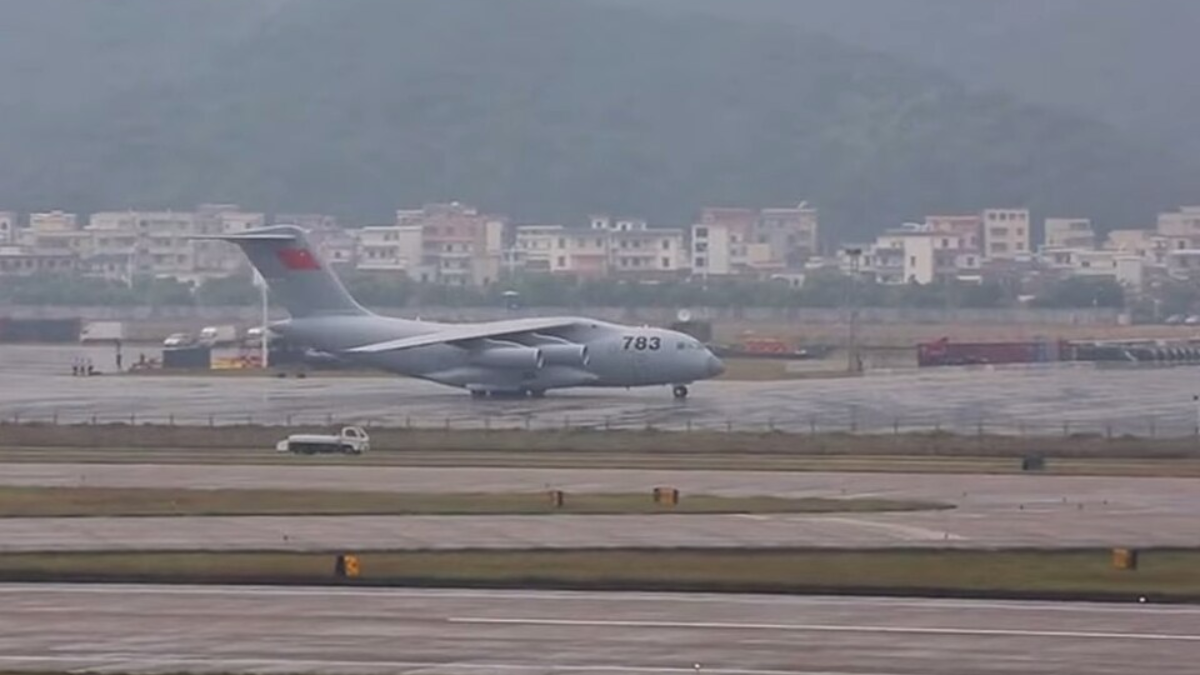
New Delhi: Chinese military aviation activity over Pakistan has revealed how Beijing is expanding the reach of its fighter aircraft beyond its immediate region. A Chinese Y-20 aerial tanker was tracked refuelling two J-16 fighter jets over Karachi, highlighting the role of aerial tankers in supporting long-distance fighter operations.
The activity came after the People’s Liberation Army – Air Force (PLA-AF) took part in the “Eagles of Civilization 2026” exercise in Egypt. China had deployed J-16 fighters along with Y-20 transport aircraft and aerial tankers for the exercise, marking a major overseas deployment for the Chinese fighter aircraft.
The use of a tanker is important because fighter jets normally have to land to refuel during very long journeys. An aerial tanker allows them to take on fuel while flying, helping them travel over greater distances and stay in the air for longer periods.
News18 reported, citing Indian intelligence sources, that open-source intelligence and flight-tracking data recorded nearly 60 hours of Chinese and Turkish military aviation activity in Pakistan between August 19 and 21. The activity included Chinese military cargo aircraft and Turkish Air Force C-130 and A400M transport aircraft operating through Pakistani military airbases.
The aircraft were tracked at PAF Base Nur Khan near Rawalpindi and PAF Base Masroor in Karachi. The reported presence of a Chinese Y-20 tanker with two J-16 fighters over Karachi was particularly significant because it showed the fighters receiving aerial refuelling while operating away from their home bases.
Indian intelligence assessments indicate that the movements may have been linked to the return of Chinese aircraft through Pakistan after the Egypt exercise. This suggests that Pakistan’s airspace and military infrastructure could be used as a transit and support route for Chinese military aircraft travelling between China and distant locations.
The arrangement gives China another option for moving its combat aircraft over long distances. Instead of relying only on a direct return journey, Chinese aircraft can use a combination of foreign airspace, military bases and aerial refuelling to make such deployments easier to manage.
The J-16 is a multirole fighter capable of carrying out both air-to-air and air-to-ground missions. Its operations with the Y-20 tanker show how China is increasingly combining its fighter aircraft with support platforms to conduct longer-range missions.
The Y-20 family has become an important part of this capability. While the transport version can move troops and equipment, the tanker variant can provide fuel to aircraft in the air and help extend the operating range of Chinese fighters.
The reported movements also come against the backdrop of expanding China-Pakistan defence cooperation. The use of Pakistani military airfields by Chinese aircraft could give Beijing additional flexibility when conducting exercises or moving aircraft towards regions west of China.
For India, the development has a wider security significance because Pakistan’s location gives Chinese military aircraft a potential route closer to India’s western approaches. Indian intelligence agencies are therefore assessing whether the activity represents a temporary transit arrangement linked to the Egypt deployment or could become part of a more regular pattern.
The presence of Turkish military aircraft during the same period also points to the wider use of Pakistani air infrastructure for foreign military movements. While the individual flights may have been connected to separate requirements, their concentration at Pakistani bases highlights the importance of the country’s air network for regional military mobility.