


US labour watchdog warns of ‘big week’ on foreign-worker visas amid H-1B crackdown
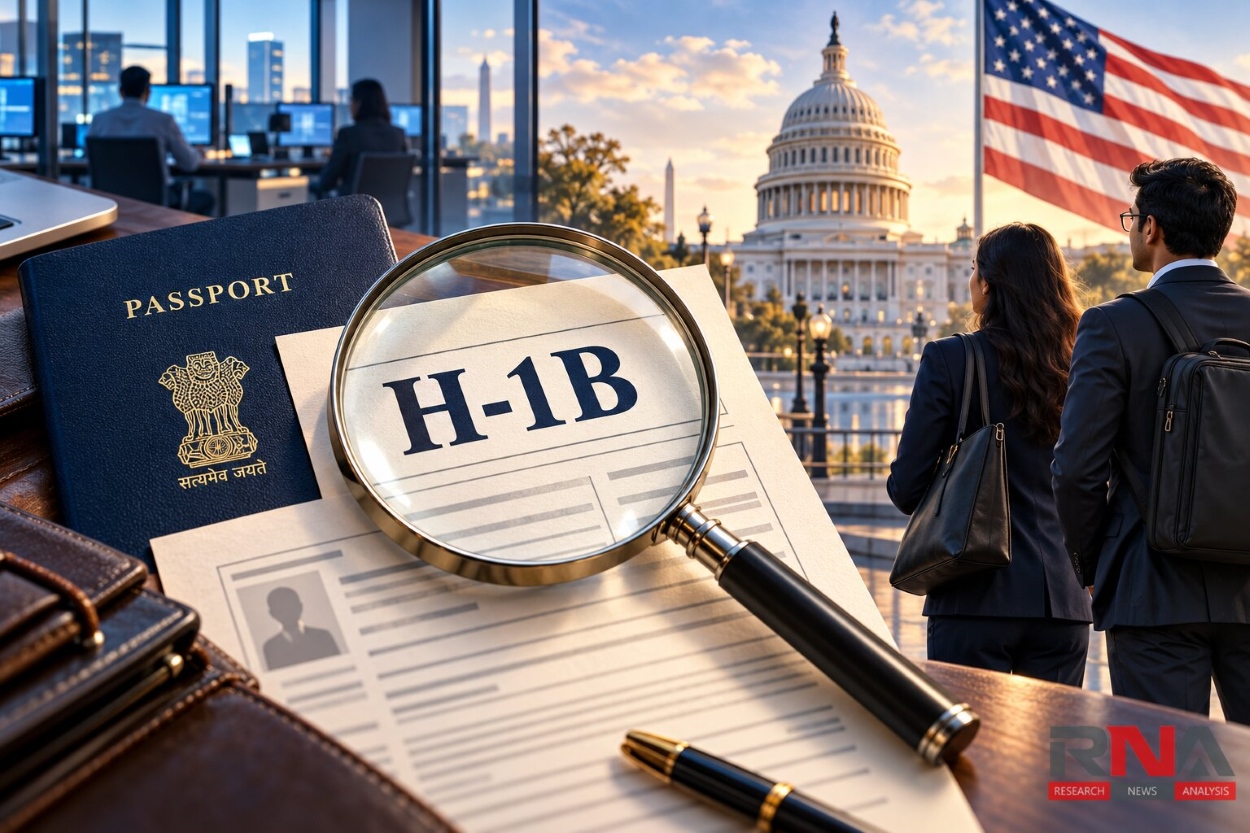
RNA Media illustration for representation.

New Delhi: The US labour department’s inspector general, Anthony D’Esposito, has signalled fresh action on foreign-worker visa programmes, adding to uncertainty over H-1B recruitment as Washington widens its scrutiny of sponsoring employers. His warning did not identify companies, specify enforcement measures or announce the closure of any visa programme.
“Big week ahead on the foreign labour visa front,” D’Esposito wrote on X. He emphasized the protection of American employment but offered no details establishing whether the promised developments would involve investigations, penalties or further policy changes.
The statement comes against a sharper political challenge to H-1B, with the vice-president, JD Vance, saying on Friday that he would support abolishing a programme he considered fundamentally flawed. Vance accused businesses of using it to replace American employees with cheaper overseas recruits, distinguishing such practices from hiring foreign specialists for their expertise.
Vance’s position increases the political pressure on the programme, but neither his comments nor D’Esposito’s latest post constitutes an announcement that H-1B has ended. The developments described so far concern employer scrutiny, investigations and restrictions on access, leaving the scope of any forthcoming action unresolved.
D’Esposito had already raised the prospect of substantial changes during an interview with the conservative commentator, Benny Johnson, covered in RNA Media’s September 28 report. He predicted that the foreign-worker visa system would look “very different 365 days from now”, saying investigators were building a case and bringing their findings before the American public.
In that interview, D’Esposito also said investigators had “handcuffs ready”, suggesting that their inquiries could lead to criminal enforcement. However, he did not announce an H-1B shutdown or provide a timetable for abolishing it – an important qualification to speculation surrounding his remarks.
The investigative backdrop is broader than disputes over recruitment paperwork: the inspector general’s office announced a major inquiry on July 8, covering alleged fraud and human trafficking involving H-1B and the PERM employment-based permanent labour certification system. The office said its concerns included fraudulent applications, coercive arrangements requiring workers to return part of their wages, and practices that undercut American employees.
An official account of field checks in Dallas, released on August 13, illustrated the scrutiny now facing sponsors. Investigators visited a building associated with businesses linked to more than 500 approved H-1B applications and reported locked offices, unlit premises and little evidence of active operations, although those observations alone did not establish fraud in every associated petition.
The president, Donald Trump, subsequently issued an executive order on September 18, directing agencies to consider whether sponsoring employers had undertaken layoffs during the previous year or planned cuts affecting comparable American workers. It also instructed the labour department to begin reviewing previously submitted labour condition application data within 30 days to determine whether further action against employers was warranted.
Separately, Trump extended restrictions involving a $100,000 payment for covered H-1B petitions concerning workers outside the United States until September 21, 2027, subject to exceptions. However, Reuters reported on October 1 that a second federal judge had blocked implementation of the fee, ruling that agencies had failed to follow the required rule-making procedures.
For India, the consequences extend across technology services, skilled recruitment and professionals planning careers in the United States. India-born beneficiaries accounted for 71 per cent of approved H-1B petitions in fiscal 2024, according to US Citizenship and Immigration Services data cited in RNA Media’s earlier report; that figure includes approved petitions rather than measuring only new arrivals.
Under existing programme rules, H-1B permits temporary employment in specialty occupations generally requiring a relevant bachelor’s degree or equivalent, with a regular annual cap of 65,000 and another 20,000 places under the US advanced-degree exemption. Employers must also meet wage safeguards, paying the applicable prevailing wage or the wage paid to similarly qualified colleagues, whichever is higher – protections intended to cover both American and foreign workers.