


ONGC strikes gas off Odisha coast, raises hopes for Mahanadi basin development
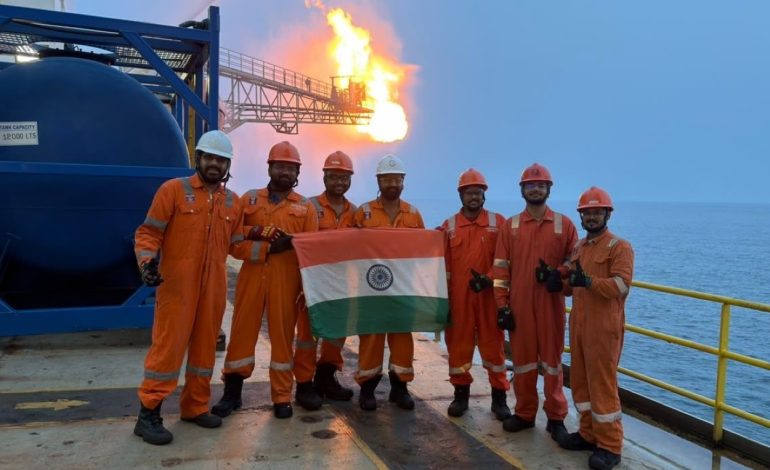
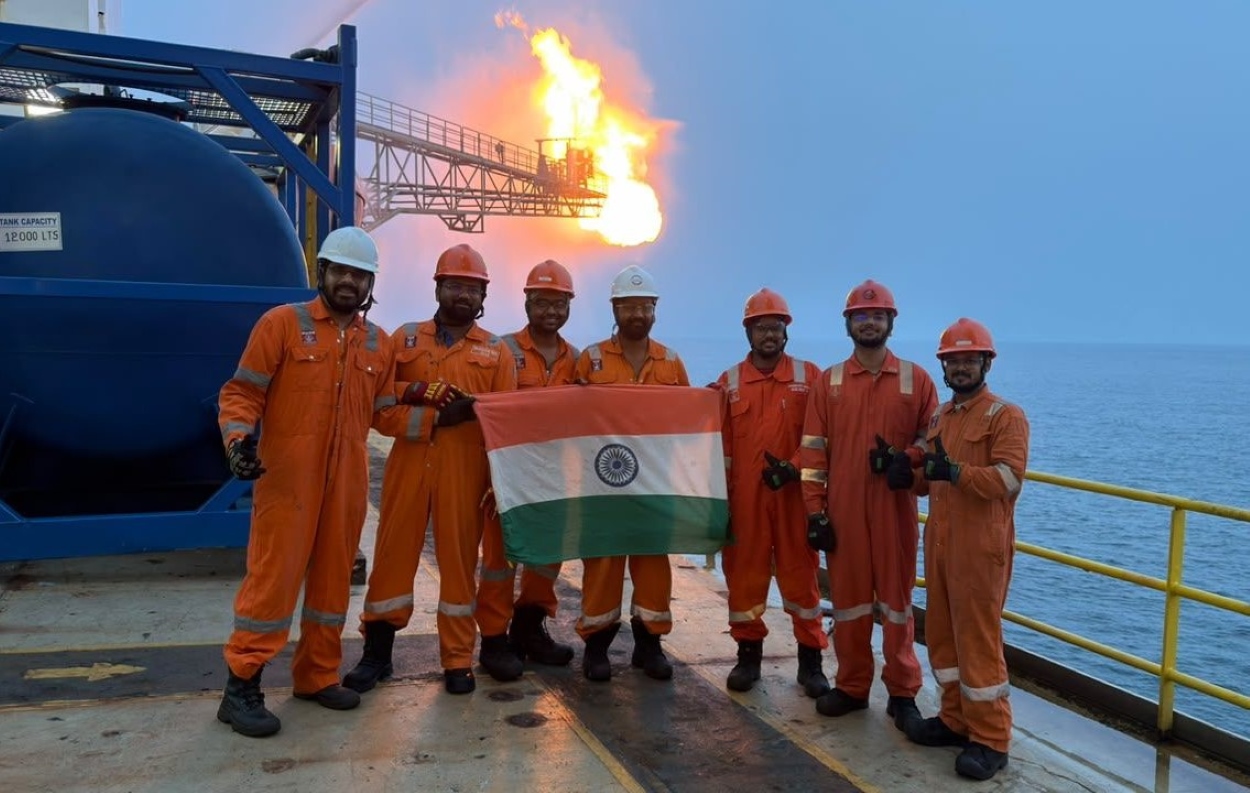
The ONGC exploration team that discovered the gas reserve in the Mahanadi basin. (Photo: ONGC)

New Delhi: State-owned Oil and Natural Gas Corporation (ONGC) has discovered natural gas in the Mahanadi offshore basin, about 43 kilometres off Odisha’s Konark coast, opening a possible route to developing additional domestic energy supplies. The well’s proximity to land could help accelerate commercialization, although further appraisal must establish whether the discovery can support an economically viable project.
Announcing the find on Monday, ONGC said gas had been struck on September 18 at well MN-DW18-1-H-D, the first Mahanadi well drilled under its current Samudra Manthan campaign. Drilling reached a target depth of 1,623 metres, with gas encountered in the interval between 1,441 and 1,452 metres.
The company said the well had flowed gas for three days, recording “encouraging flow and reservoir pressure”. Those initial results support further assessment, but ONGC has not disclosed recoverable reserves, expected production volumes, investment requirements or a timetable for bringing the gas to market.
That distinction is central to the announcement. The reason is that a successful gas strike establishes the presence of hydrocarbons, while appraisal examines the discovery’s quality and commercial value. The government’s description of the Mahanadi programme identifies this evaluation as the purpose of the drilling campaign, whose results will determine the prospects for subsequent development.
ONGC has identified the location as a potential advantage, saying the relatively short distance from the coast could support earlier monetization if subsequent assessments are favourable. It has also raised the possibility of developing the find alongside other discoveries in the area through shared facilities, although no development plan has been announced.
Such an approach could spread infrastructure costs across several discoveries and improve their collective economics. The opportunity is particularly relevant to Mahanadi because the government has identified expensive infrastructure as a reason why offshore discoveries in this basin, and in Kutch, have remained undeveloped.
Drilling for the Mahanadi programme began on July 25 this year, with the petroleum and natural gas minister, Hardeep Singh Puri, marking its commencement. The ministry described the well as the first of four planned deepwater wells intended to evaluate the basin systematically and assess its contribution to future domestic production.
The latest result builds on earlier exploration success rather than marking the first discovery of gas in the basin. In its review of 2024, the petroleum ministry had reported two ONGC gas discoveries in Mahanadi offshore, within a block where 94 per cent of the area had previously fallen under exploration restrictions.
The broader Samudra Manthan national offshore exploration scheme has a first-phase outlay of ₹84,084 crore through the 2030–31 financial year. Its provisions include ₹10,000 crore for common production and evacuation infrastructure in selected basins, making the connection between finding hydrocarbons and establishing an affordable route to market an explicit policy priority.
For ONGC, the discovery comes during a wider expansion of deepwater exploration aimed at finding resources beyond its established producing assets. Reuters reported on August 31 that the company planned to invest ₹1 lakh crore over five years in domestic deepwater and ultra-deepwater exploration, with 87 wells targeted by March 2031.
The investment drive reflects the pressure to replace declining output and establish new sources of supply. At the launch of the Mahanadi drilling programme, the ministry outlined a parallel strategy of discovering fresh resources and improving recovery from mature fields, while emphasizing that sustained exploration would be necessary to strengthen energy security.
For now, the Odisha discovery offers a promising addition to that effort, with its location and potential for shared development providing grounds for further evaluation. Its eventual contribution to India’s energy supply will depend on the appraisal results and commercial assessment – decisions that remain ahead of ONGC despite the encouraging initial gas flow.