Mojtaba Khamenei skipping father’s funeral due to security concerns from Israel’s Mossad and air force
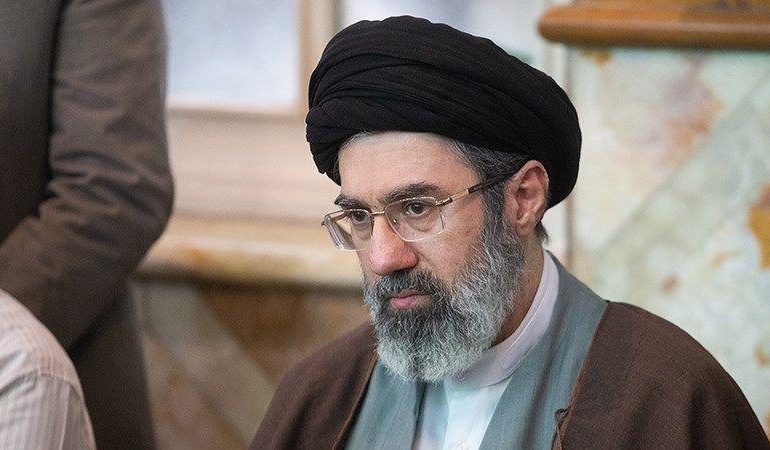
Mojtaba Khamenei. (Photo: Tasnim News Agency)

New Delhi: Iran is holding the funeral ceremonies for the slain supreme leader of the country, Ayatollah Ali Khamenei, on Friday. Ali Khamenei was killed in a precision airstrike carried out jointly by the US and Israel with the intelligence inputs reportedly gathered by Israel’s external spy agency Mossad along with their American counterparts in the Central Intelligence Agency.
Khamenei’s funeral ceremonies, which began in Tehran on Friday, will end with his body laid to rest at the Imam Reza shrine in Mashhad on July 9.
However, conspicuously missing from the elaborate send-off is the man who succeeded him: his son and Iran’s new supreme leader, Ayatollah Mojtaba Khamenei. According to an Iranian official cited by India Today, he has decided against attending his own father’s funeral because of the security risks he faces.
According to Ayatollah Hakim Elahi, the representative of Iran’s supreme leader in India, Mojtaba’s decision to stay away from the ceremonies was driven chiefly by fears over his personal safety. These included concerns about Israeli surveillance through Mossad agents and other electronic surveillance that could make any public appearance a liability.
The 56-year-old has not been seen in public since the war began and was himself injured in the February 28 strike that killed his father. Reports at the time suggested wounds to his leg, though the precise extent has never been officially confirmed.
He has communicated with the public only through written statements read out by news anchors on state television, a pattern he has kept up even as speculation mounted. Given the funeral’s scale and symbolic weight, many had expected it might finally draw him into view.
The security considerations are not without foundation. The Israeli defence minister, Israel Katz, said in comments reported last month that Mojtaba was “marked for death” and that any leader Tehran appointed to continue what he described as Iran’s campaign against Israel would be an “unequivocal target for elimination”.
The remark drew a sharp rebuke from the Iranian foreign minister, Abbas Araghchi, who warned Israel against acting on the threat. Iranian military officials have echoed that warning in the run-up to the funeral itself.
Major General Ali Abdollahi, commander of Iran’s Khatam al-Anbiya Central Headquarters, cautioned the US and Israel this week against any “miscalculation” during the mourning period. He promised what he called “harsh and regret-inducing responses” from Iran’s armed forces should the ceremonies be targeted.
Beyond the security threat, Mojtaba’s continued absence from public life has fuelled persistent – if unverified – speculation about his health. He is understood to have lost his wife, Zahra Haddad-Adel, in the same February 28 strike that killed his father, along with other members of the wider Khamenei family, including a sister and a brother-in-law.
State media have at times used language reserved in Iranian official terminology for those who have suffered severe, permanent physical injury. This has fed reports – never confirmed by Tehran – that he may have lost a limb in the attack, though authorities have consistently maintained he is in good health and fully in charge.
The funeral arrives at a delicate moment for Tehran, which is simultaneously engaged in indirect talks with Washington, mediated by Qatar and Pakistan. These cover the nuclear programme and the reopening of the Strait of Hormuz to normal shipping traffic, with officials on both sides describing the negotiations as making gradual progress.
For Iran’s clerical establishment, the scale of the ceremonies is intended to project resilience after a costly war and years of economic hardship. Commentators have called it a defiant, victory-parade-style send-off rather than a subdued state funeral.
Whether that same defiance extends to bringing Mojtaba Khamenei out of hiding remains, for now, an open question. It is one the new supreme leader has chosen not to answer in person.