

Rijiju rejects claim of 60km Chinese incursion, flags unresolved Arunachal border issue

Union minister Kiren Rijiju rejects claims of a 60 km Chinese incursion into Arunachal Pradesh. Image courtesy: Wikimedia Commons

New Delhi: Union minister Kiren Rijiju on Wednesday rejected claims that Chinese troops had entered 60 kilometres into Arunachal Pradesh, calling the assertion incorrect and cautioning against misinformation on a sensitive national security issue. At the same time, he acknowledged that there was a genuine border problem because the India-China boundary was not fully delineated on the ground and said concerns raised by frontier communities should be taken seriously.
The distinction is important. Rijiju was not confirming a fresh Chinese incursion, but separating an unverified claim of a deep military advance from the longstanding problem of differing perceptions along parts of the line of actual control (LAC).
What triggered the 60km claim?
The immediate concern centres on Taksing in Arunachal Pradesh’s upper subansiri district, where residents and local organisations have raised allegations about increased activity by People’s Liberation Army (PLA).
In June, the Nah Welfare Society alleged that Chinese forces had expanded infrastructure and restricted access to areas traditionally used by local communities. The Indian Army rejected reports of fresh encroachment as “incorrect and without any basis”.
The issue resurfaced in August. Reuters reported that a residents’ welfare body, in a July 26 letter seen by the news agency, alleged an expanding Chinese presence in border areas. Reuters also cited reporting of an encounter between Indian and Chinese patrols near Taksing in late July, but an Indian defence spokesperson described reports of renewed tensions as “unsubstantiated and uncorroborated”.
At least one viral claim of a 60 km Chinese advance has also been shown to be false. CyberPeace Research Wing found that videos circulated as evidence of Chinese troops entering Arunachal Pradesh actually showed Royal Thai Army personnel during training exercises in Thailand.
Rijiju similarly warned against circulating unrelated photographs and videos. In remarks reported by IANS, he said increased Chinese activity in some areas should be taken seriously but rejected suggestions that China had captured an Indian village or breaking 60 km into Indian territory.
Why an undelineated border matters
The larger issue is the absence of a mutually settled India-China boundary. The LAC is the de facto line up to which India and China exercise control, but its alignment is not mutually agreed in all areas and it is not a demarcated international boundary. Differing perceptions of the LAC can therefore bring patrols from the two sides into the same areas.
China claims approximately 90,000 square kilometres of Indian territory in the eastern sector, largely in Arunachal Pradesh. India rejects that claim and has repeatedly maintained that Arunachal Pradesh is an integral and inalienable part of the country.
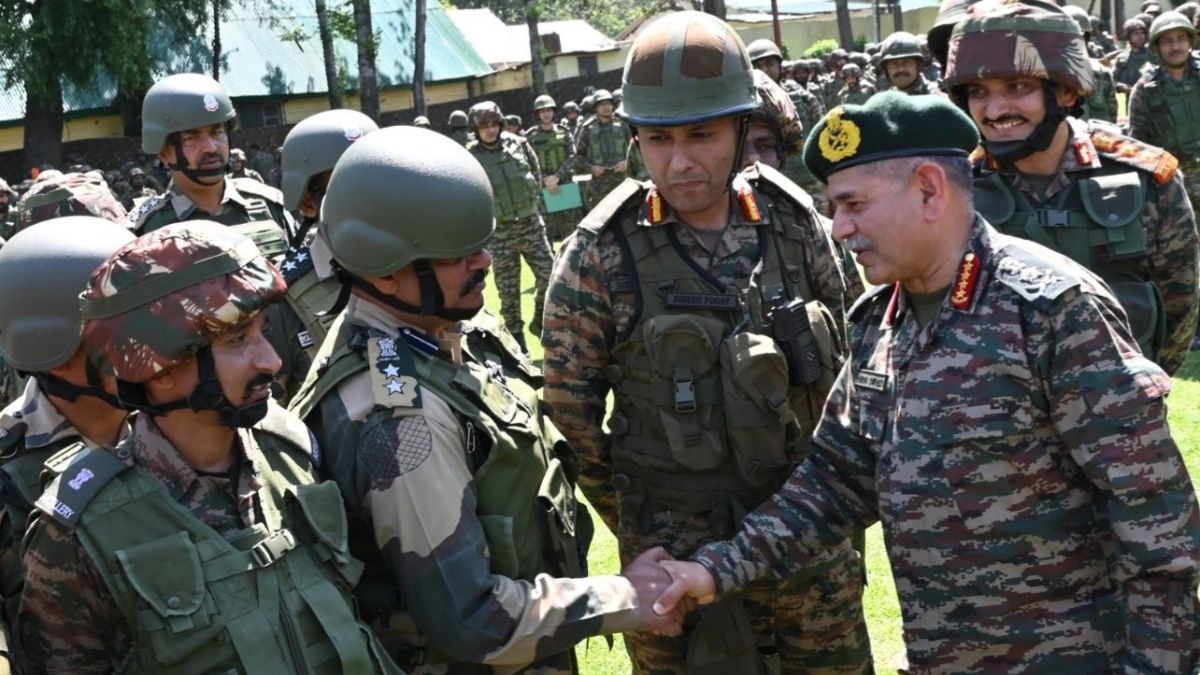
Rijiju said the absence of clear delineation meant communities on either side could have differing perceptions about the extent of their traditional territory. He also said the Army and Indo-Tibetan Border Police had strengthened patrolling in the area.
Border infrastructure and habitation have consequently become a larger part of India’s frontier strategy. Under the Vibrant Villages Programme I, 455 villages in Arunachal Pradesh have been identified for priority development, alongside efforts to improve connectivity to remote settlements.
Border remains central to India-China ties
The controversy comes as New Delhi and Beijing seek to stabilise relations while continuing discussions on their unresolved boundary.
On August 11, the external affairs ministry said India regarded border issues with China as “most serious” and reiterated that the state of the border would be reflected in the wider bilateral relationship. China separately told a Reuters reporter the border situation was “generally stable” and said the two sides had agreed to maintain diplomatic and military communication.