


India steps up global fugitive hunt with Interpol, technology and stronger legal framework
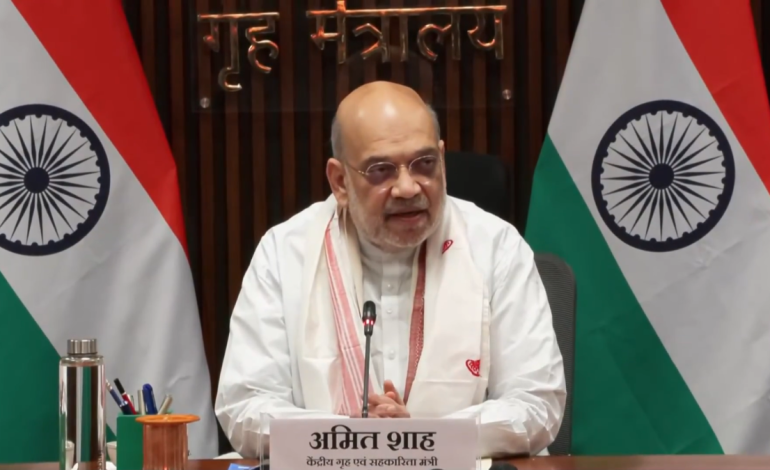
India brings back 274 fugitives from 36 countries since 2019. (Image courtesy: X/@AmitShah)

New Delhi: India has moved towards a more coordinated system for tracking fugitives operating abroad, combining international law-enforcement cooperation, intelligence inputs, financial investigations and technology to locate offenders and pursue their return. The Ministry of Home Affairs (MHA) said the framework has been strengthened through legal changes, faster information-sharing and closer coordination between central and state agencies.
A key part of this system is the use of Interpol mechanisms, with India issuing 40 “red-corner notices” in 2022, 100 in 2023, 107 in 2024 and 112 in 2025. The number has risen to 182 so far in 2026, while notices have been issued against 401 fugitive criminals over the past three years.
The government has also sought to improve the speed at which Indian agencies can obtain information from their counterparts abroad. BHARATPOL, launched in January 2025, brought the CBI, state police headquarters through Interpol liaison officers and district police headquarters onto a common platform, connecting more than 1,400 units of central and state agencies.
The MHA said the platform has substantially reduced delays in information exchange. Responses are generally received within 10 to 20 days, while some requests are processed within three to 10 days, helping agencies move faster in fugitive investigations and extradition proceedings.
The CBI has established a “Special Global Operations Centre” for real-time coordination with police agencies across the world through Interpol. Interpol officers have also been appointed in every state and in all central investigating agencies to strengthen the flow of information in cases involving fugitives.
Technology is being used to identify offenders who attempt to conceal their identities overseas. Under Operation Trishul, agencies have relied on satellite inputs, surveillance and digital footprint analysis to establish the locations of absconding criminals, while profile mapping has helped trace fugitives who changed their names or identities.
These have been supplemented through reforms in India’s legal regime. The Fugitive Economic Offenders Act came into effect in 2018, while amendments were made to the NIA and UAPA Acts in 2019, and provisions relating to trial in absentia have been added under Sections 355 and 356 of the BNSS
The government has also tightened the financial side of the crackdown. Assets worth ₹17,874 crore belonging to fugitive criminals were attached under the Prevention of Money Laundering Act (PMLA) between 2019 and 2026.
Against this backdrop, India brought back 274 fugitive criminals from 36 countries between 2019 and July 2026, according to the MHA. The number returned each year rose from nine in 2019 and seven in 2020 to 23 in 2021, 40 in 2022, 37 in 2023, 43 in 2024, 70 in 2025 and 45 till July 2026.
Of the 274 fugitives, 62 were wanted in murder, robbery and violent crime cases, while 53 were linked to sexual offences, rape and Pocso cases. Organized crime, gangsters and extortion accounted for 42 cases, followed by 45 in other categories, 18 involving human trafficking and kidnapping, 17 involving terrorist activity, anti-national activity and narco-terror, 16 related to narcotics and drug trafficking, 12 involving smuggling, fake currency, cybercrime and contraband, and nine financial or fraud cases.
The campaign covers terrorism, pro-Khalistan extremism, the gangster-terror nexus, narcotics trafficking, cyber fraud and fake currency. The MHA cited the extradition of Tahawwur Hussain Rana from the United States as an example of India’s sustained legal and diplomatic efforts in a complex terror case.
The ministry said fugitives based abroad have also been used to sustain terrorism, narco-terrorism and cross-border support networks in matters concerning Jammu and Kashmir. Pursuing such cases involves the Intelligence Bureau (IB), CBI, Research and Analysis Wing (R&AW), National Investigation Agency (NIA), Enforcement Directorate (ED), The Ministry of External Affairs (MEA), Narcotics Control Bureau (NCB), Directorate General of Goods and Services Tax Intelligence (DGGI) and state police forces.
A “Standing Focus Group” under the Multi-Agency Centre (MAC) of the IB was established in January 2026 to further streamline the process. Its responsibilities include prioritizing fugitive cases, standardising dossiers, addressing information gaps, maintaining follow-up with foreign partners and supporting cases initiated by state agencies.
The MHA said extradition requests are now being prepared in a more professional and standardized manner, with written assurances provided after considering the legal and documentary requirements of the country concerned. Videoconferencing has also been used in court hearings to help expedite extradition proceedings.