India rejects Erdogan’s Kashmir remarks at UNGA, says ‘no outside party has locus standi’
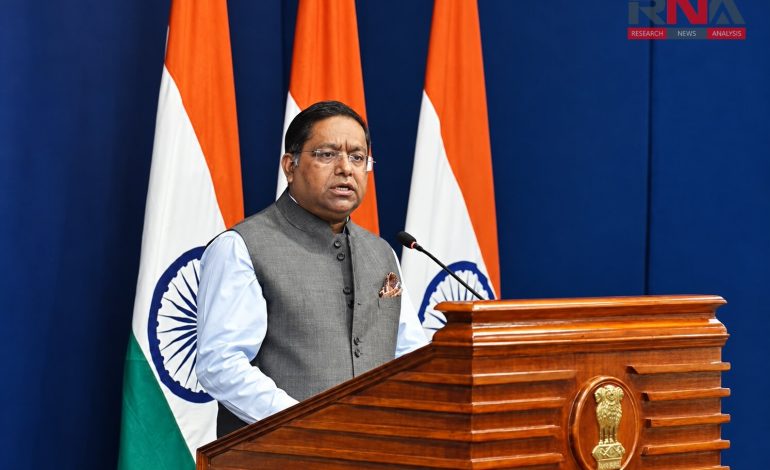
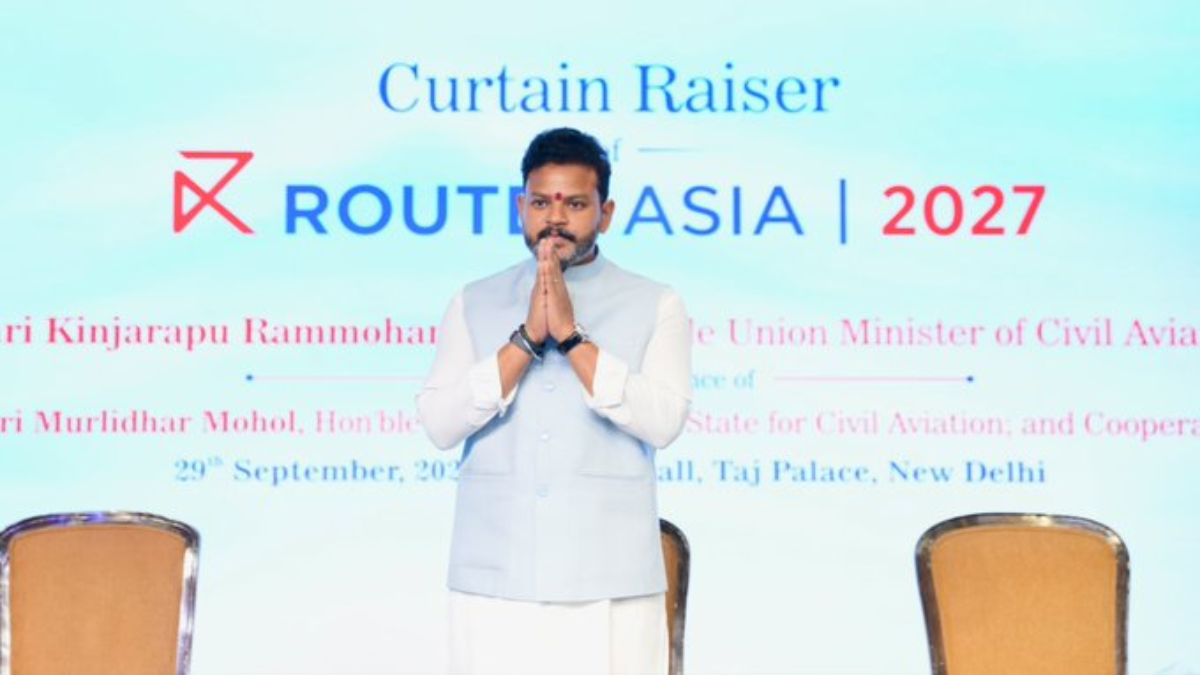
MEA spokesman Randhir Jaiswal during his biweekly briefing.

New Delhi: India has rejected what it called “unwarranted references” to Jammu & Kashmir by the Turkish president, Recep Tayyip Erdogan, at the UN general assembly, saying the issue concerns its territorial integrity and sovereignty. “No external party has any locus standi on this issue,” the Ministry of External Affairs spokesperson, Randhir Jaiswal, said at the ministry’s biweekly briefing on Tuesday.
Erdogan had said in his UNGA address that all disputes, especially in South Asia and including Kashmir, should be resolved in line with the UN Charter. Turkey has raised Kashmir at the UN on several earlier occasions, and India has consistently rebuffed such references.
Jaiswal also said the foreign secretary conveyed New Delhi’s concerns over a proposed US Lindsey O Graham Russia sanctions law to a congressional delegation led by the chairman of the US house foreign affairs committee, Brian Mast. The meeting took place on Sunday, and the foreign secretary, Vikram Misri, spelled out the implications the legislation could have for bilateral ties and for the international energy market.
Asked whether India had told Washington that its recent posture on Pakistan is straining the relationship, Jaiswal declined to go beyond what the external affairs minister, S Jaishankar, had said publicly in the US. A questioner noted that Jaishankar, speaking at the Asia Society, had cited drawn-out negotiations and a lack of empathy for India’s concerns over cross-border terrorism. Jaiswal said Jaishankar had once again underlined that cross-border terrorism is a major concern and that countries must come together to fight it.
On shipping in the Gulf, Jaiswal said six Indian-flagged vessels and six foreign-flagged vessels carrying cargo to India are currently in the Persian Gulf, west of the Strait of Hormuz. Around 163 Indian seafarers are on board these 12 ships, while more than 4,500 others are serving on various commercial vessels in the area.
The Ministry of Shipping continues to monitor the movement of these ships and the welfare of the crew, he said. Indian missions and other stakeholders will step in as required.
On the Israel-Gaza conflict, Jaiswal confirmed that the foreign ministers of India, Brazil and South Africa met on the sidelines of the UNGA in New York and issued a joint statement. It covers economic and development issues as well as certain political questions, he said.
He did not say whether India has raised West Bank settlements with Israel bilaterally, a point a journalist pressed after noting the statement’s line against changing the demographic character of occupied Palestine. Jaiswal reiterated only that India stands for a two-state solution.
Asked about Hungarian media reports that India opposes Turkey’s full membership of the Shanghai Cooperation Organisation, Jaiswal said membership is for all SCO members to decide collectively. On the Russian president, Vladimir Putin’s, remark that mediating between India and China is a “thankless job”, he pointed to the meeting between the prime minister, Narendra Modi, and the Chinese president, Xi Jinping, on the sidelines of the BRICS summit. The two leaders gave guidance on the relationship, he said, and both sides are now taking it forward.
On Bangladesh, Jaiswal said all matters concerning shared rivers, including the Ganga water treaty, are discussed under the India-Bangladesh Joint Rivers Commission. Technical-level meetings on the treaty have continued, he added, after Dhaka’s rivers minister said Bangladesh wants a fresh review of the pact rather than a simple renewal. Jaiswal said he had no information on reports of a visit by the national security adviser to Dhaka.
On Russia, Jaiswal said the next annual summit will be held in Russia, after the country’s president Vladimir Putin visits India for the last one, but that it is still some distance away. He had no update on reviving the Russia-India-China (RIC) format, which the Russian foreign minister, Sergey Lavrov, said in early September would resume its work.