
India-EU trade deal could take effect within five months of signing, Piyush Goyal says
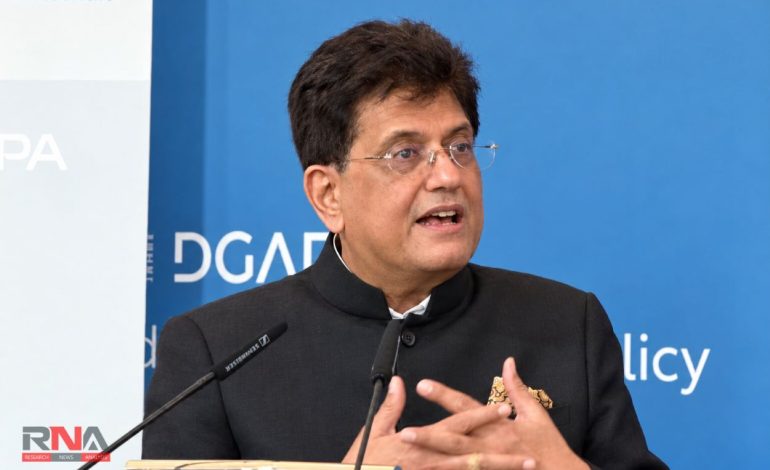
Piyush Goyal.

New Delhi: India’s free-trade agreement with the European Union could become operational within four to five months of signing, the commerce and industry minister, Piyush Goyal, said on Thursday. Speaking during a visit to Germany, he said the pact was expected to be signed before the end of the year, setting out a prospective timetable for businesses awaiting preferential access to the two markets.
The timeline, reported by Reuters, places implementation in 2027, although the precise date will depend on when the agreement is signed and the required approvals are completed. Signing in December would, on Goyal’s estimate, point to implementation around April or May.
India and the 27-member bloc concluded negotiations on January 27 this year, but that milestone did not bring the agreement into force. The European Commission distinguishes between completing negotiations, signing the treaty and making its provisions legally binding after both sides fulfil their internal procedures.
The commission submitted its proposals for signature and conclusion to the Council of the European Union in September. Under the approval process outlined by the commission, the agreement requires council authorization for signing, European parliament consent and a subsequent council decision concluding the pact, alongside ratification by India.
For Indian exporters, the agreement promises wider access to a major market for manufactured goods and labour-intensive products. According to the commerce ministry’s factsheet on the negotiated deal, preferential access would cover 99.5 per cent of India’s exports by value, with immediate duty elimination covering approximately 90.7 per cent when the agreement takes effect.
Among the sectors expected to benefit are textiles, apparel, leather, footwear, gems and jewellery, sports goods and selected marine products. However, preferential access does not mean every product becomes duty-free immediately: the negotiated package combines immediate tariff removal, phased reductions and concessions limited by import quotas.
European exporters would also gain substantially from lower Indian import duties, particularly in machinery, chemicals, pharmaceuticals and automotive products. The commission’s chapter-by-chapter summary describes different transition periods, including five to 10 years for removing most duties on car parts and up to 10 years for some machinery tariffs.
The agreement retains protection for sensitive agricultural interests rather than opening every sector on identical terms. India has safeguarded products including dairy, cereals, poultry, soymeal and certain fruits and vegetables, while the EU has retained protection for several sensitive agricultural products of its own.
Lower tariffs will also leave exporters with regulatory obligations to meet, including rules establishing where goods originate and the importing market’s safety requirements. The agreement provides for simpler customs procedures and origin certification, but Indian food and agricultural exports will remain subject to EU sanitary and phytosanitary standards.
Goyal’s announcement came at the start of a visit to Germany and the Netherlands, scheduled from Thursday to October 27, with around 100 businesses and start-ups accompanying him. The commerce ministry said the programme would focus on expanding trade and investment while strengthening industrial and technological cooperation.
The business engagements include advanced manufacturing, automotive industries, energy, information technology, artificial intelligence, pharmaceuticals and textiles. Germany was India’s largest EU trading partner in 2025–26, with bilateral goods trade of about $31 billion, while trade with the Netherlands stood at approximately $23.26 billion.
The proposed pact follows a lengthy negotiating process that began in 2007, stalled in 2013 and resumed in 2022. Alongside the trade agreement, India and the EU are pursuing separate negotiations on investment protection and geographical indications, extending the economic agenda beyond reductions in customs duties.