




India building 9 nuclear reactors in 100GW push. Why atomic power could reshape country
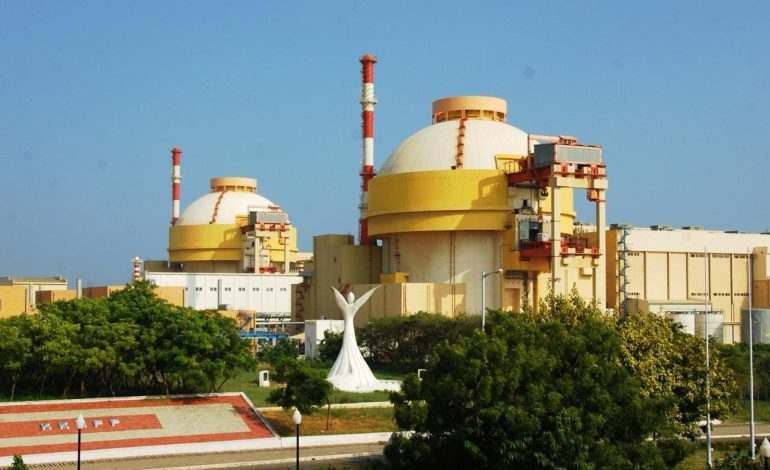
The Kudankulam Nuclear Power Project is built to Russian cooperation. (Photo: X/@MossadInterpol)

New Delhi: India has nine nuclear reactors with a combined generating capacity of 7.5 gigawatts under construction as it prepares for an elevenfold expansion of atomic power by 2047, the government said on Friday. The programme seeks to raise installed nuclear capacity from 8.78GW to 100GW, turning what is now a relatively small component of the electricity mix into a significant source of firm, low-carbon power.
The country currently operates 24 reactors across seven sites, according to the Department of Atomic Energy. These plants provide continuous electricity to the grid, although nuclear power still accounts for only a small share of India’s total generation, which remains heavily dependent on coal.
The units under construction comprise Rajasthan Atomic Power Project Unit 8 at Rawatbhata; Kudankulam Units 3, 4, 5 and 6 in Tamil Nadu; Kaiga Units 5 and 6 in Karnataka; and Gorakhpur Haryana Anu Vidyut Pariyojana Units 1 and 2. The Kudankulam reactors are 1,000-megawatt Russian-designed units, while the projects at Rawatbhata, Kaiga and Gorakhpur use India’s indigenous 700MW pressurized heavy water reactor technology.
There is, however, a technical difference between the government’s construction count and international industry databases. The World Nuclear Association lists fewer reactors as formally under construction because it applies the industry convention of counting a project only after the pouring of first concrete for the reactor building, whereas India also includes certain units on which substantial site and project work has begun.
The government has separately approved 10 indigenous 700MW pressurized heavy water reactors for construction in fleet mode, although this group overlaps with some units already included in the construction programme. Pre-project work has also been authorized for two 500MW fast breeder reactors at Kalpakkam, extending the second stage of India’s three-stage nuclear-energy strategy.
New Delhi’s roadmap is being driven by the Nuclear Energy Mission for Viksit Bharat and the SHANTI Act, 2025, which replaced much of the earlier legal architecture governing civil nuclear power. The legislation permits wider participation by public and private companies under regulatory supervision, ending the state’s near-exclusive hold over the construction and operation of nuclear power stations.
The Union Budget 2025–26 allocated ₹20,000 crore for the research, design and deployment of small modular reactors, with at least five indigenous units intended to become operational by 2033. The Bhabha Atomic Research Centre is developing a 220MWe (megawatt electrical) Bharat Small Modular Reactor, a 55MWe design and a high-temperature gas-cooled reactor intended primarily to support clean-hydrogen production.
India also crossed an important technological threshold in April 2026 when the 500MW Prototype Fast Breeder Reactor at Kalpakkam attained first criticality. The reactor is central to the second stage of the country’s nuclear programme, in which plutonium recovered from spent fuel is used to produce energy and breed additional fissile material before an eventual transition towards thorium.
Russia backs expansion and seeks a larger role
Russia has not issued a separate response to the nuclear inventory released on August 28, but Moscow has publicly supported India’s 100GW objective and positioned itself as a long-term participant in the expansion. Four of the nine units listed by the government are being built at Kudankulam with Russian technology, equipment and fuel support.
In the joint statement issued after the India-Russia summit on December 5, 2025, the prime minister, Narendra Modi, and the president of Russia, Vladimir Putin, agreed to broaden cooperation in nuclear energy, including the fuel cycle, maintenance of operating reactors and non-power applications. The two sides specifically acknowledged India’s plan to reach 100GW and called for timely supplies of equipment and fuel for the remaining Kudankulam units.
New Delhi and Moscow also agreed to accelerate technical and commercial discussions on newer Russian VVER reactors, localization of equipment production and the joint manufacture of nuclear components and fuel assemblies. India said it would work towards formally allotting a second site for a Russian-designed nuclear power station, an undertaking that has remained under discussion for several years.
Russia’s state nuclear corporation, Rosatom, has additionally proposed VVER-1200 reactors, small nuclear plants and potentially floating power units for India. After talks with the Department of Atomic Energy, Rosatom said the experience and supply chain developed at Kudankulam could provide the foundation for further large and small-scale projects.
Why 100GW nuclear plan bigger than electricity project
The importance of the programme lies first in its scale: India must add more than 91GW of nuclear capacity over roughly two decades to meet the target. This would require an average net addition exceeding 4GW every year, before accounting for reactors that may retire, and represents a pace far beyond the country’s historical rate of construction.
The expansion is being contemplated because India’s electricity requirements are rising with urbanization, industrialization, higher household incomes, air-conditioning, electric transport and digital infrastructure. The International Energy Agency expects Indian electricity demand to increase by an average of about 6.4 per cent annually between 2026 and 2030, with buildings and industry accounting for most of the recent growth.
Solar and wind power will remain central to India’s transition because they can be installed rapidly and at increasingly competitive prices, but their output changes with sunlight and weather. Nuclear stations can supply firm electricity through the day and night, reducing the amount of coal- or gas-fired capacity required to balance renewable generation, although storage, stronger grids and demand management will still be indispensable.
If the 100GW target is achieved, the government expects nuclear power to meet roughly a tenth of India’s electricity requirements by 2047. That would not displace coal by itself, but it could prevent a large quantity of additional coal-fired generation from being built as power consumption expands.
For manufacturing, the principal benefit would be access to dependable electricity that is less exposed to fluctuations in fossil-fuel prices. Steel, aluminium, chemicals, engineering, railways, defence production, semiconductor fabrication and other power-intensive industries require not merely an electricity connection but voltage stability and uninterrupted supply.
Nuclear expansion could also establish a substantial domestic industrial supply chain encompassing special steels, heavy forgings, turbines, pumps, pressure tubes, control systems, robotics, radiation-monitoring equipment and high-integrity construction. Building standardized reactors in fleets should allow Indian manufacturers to repeat designs, develop specialist skills and lower costs, provided orders are predictable and projects are completed without prolonged interruptions.
The opportunity extends to data centres, artificial intelligence systems and semiconductor plants, which require large quantities of uninterrupted electricity and cannot rely exclusively on variable generation. As RNA Media had reported on August 15, Modi’s Independence Day address explicitly connected the nuclear target with the rapidly growing power requirements of chips, AI and data infrastructure.
High-temperature reactors could eventually provide industrial heat and produce low-carbon hydrogen, offering another route to decarbonize refineries, fertiliser plants and heavy industry. This application remains at an early stage, however, and its commercial value will depend on reactor costs, hydrogen-production efficiency and the availability of transmission and storage infrastructure.
Healthcare stands to benefit through two distinct channels: more reliable electricity for hospitals and wider applications of nuclear science. Nuclear medicine uses radioisotopes for diagnosis, cancer staging and targeted treatment, while radiation technologies sterilize medical equipment and support pharmaceutical and biological research.
Institutions under the Department of Atomic Energy are already developing radiopharmaceuticals, medical imaging systems and cancer therapies, while radiation facilities sterilized 1.53 crore medical devices during 2024–25, according to the government’s nuclear-technology assessment. Building power reactors alone will not automatically widen cancer care, however; India will also need isotope-production facilities, transport networks, trained medical physicists and affordable treatment centres outside major cities.
The effects on education would similarly be both direct and indirect. Reliable electricity can support digital classrooms, laboratories, cooling and internet connectivity, while the nuclear programme itself will require universities and technical institutions to train reactor engineers, metallurgists, chemists, radiation specialists, cybersecurity professionals and emergency-response personnel.
This could stimulate advanced research in materials science, thermal engineering, robotics, isotope science and waste management, with benefits beyond the energy sector. Such gains will depend on sustained investment in laboratories, vocational training and university-industry partnerships rather than emerging automatically from reactor construction.
Atomic technologies can also improve agriculture through radiation-induced crop breeding, pest control, soil and water analysis and the preservation of food. The Department of Atomic Energy says BARC has developed 70 crop varieties, while irradiation facilities are being expanded to prolong the shelf life of products such as mangoes, onions, potatoes, grain, fish and spices.
Reliable low-carbon power could additionally support irrigation, cold chains, food processing and desalination in water-stressed coastal regions. These applications could reduce post-harvest losses and improve farmers’ access to distant markets, but they require local infrastructure and affordable electricity tariffs to produce gains at the household level.
For ordinary Indians, the most tangible effect would be a power system better equipped to handle growing demand for cooling, appliances, public transport, telecommunications and essential services. Replacing part of the future coal requirement with nuclear generation could also reduce air pollution and exposure to volatile international coal and gas prices, improving health and household economic security over time.
Nuclear energy can strengthen strategic autonomy because relatively small quantities of uranium can be stockpiled for long periods, unlike the continuous fuel deliveries required by coal- and gas-fired stations. India nevertheless has limited high-grade domestic uranium resources and will continue to require imports until its fast-breeder and thorium programmes mature, making diversified fuel agreements with Russia, Kazakhstan, Canada, Australia and other suppliers important.
The construction programme could generate employment and infrastructure around reactor sites, including roads, housing, hospitals, schools and skilled-service industries. Such projects can raise regional incomes, but benefits must be shared with surrounding communities and accompanied by transparent compensation, environmental monitoring and credible emergency-preparedness arrangements.
A formidable execution test
The ambition comes with a large financial and administrative burden: industry estimates suggest that reaching 100GW could require close to $210 billion, or approximately ₹20 lakh crore, in investment. A government-appointed panel has noted that Indian nuclear projects can take 11 to 12 years from site approval to commissioning and has recommended faster land acquisition, regulatory decisions and fuel planning, as Reuters reported.
Private capital and foreign technology are therefore important, but investors still need clarity on tariffs, expected returns, insurance, waste responsibilities and liability. Industry specialists have warned that proposed rules requiring foreign reactor designs to obtain multiple certifications could slow approvals and restrict access to new small-reactor technologies, according to a Reuters examination of the draft framework.
Safety and public confidence will remain non-negotiable as the programme spreads to new locations and private operators acquire a role. India will need an adequately staffed and demonstrably independent regulator, rigorous cybersecurity, secure management of spent fuel and radioactive waste, dependable cooling-water arrangements and open communication with communities near proposed sites.
Affordability will be the final test because additional generating capacity improves living standards only when electricity reaches consumers reliably and at manageable prices. Nuclear construction must therefore proceed alongside investment in transmission, distribution reform, renewable energy, storage and energy efficiency rather than being treated as a substitute for them.
Nine reactors under construction constitute an important foundation, but they are not proof that the 100GW goal is already within reach. The real significance of India’s nuclear turn will be determined by whether the country can convert an ambitious capacity target into safe, competitively priced and widely accessible energy that raises industrial productivity and measurably improves daily life.