Himalayan glacier melt accelerates, raising risks for India’s economy and water security
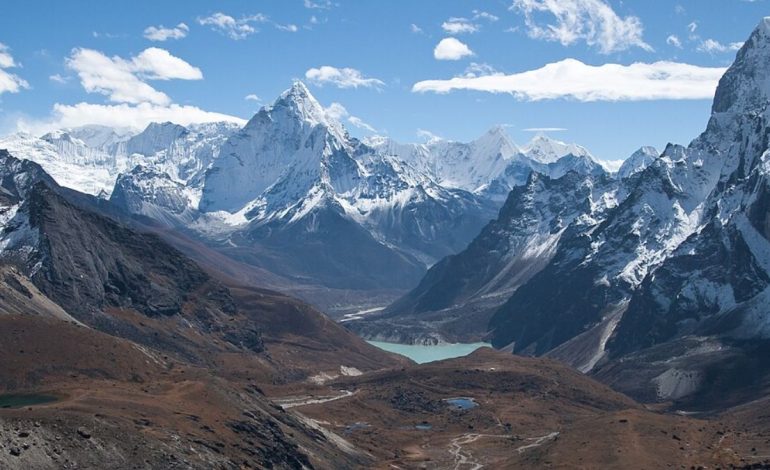
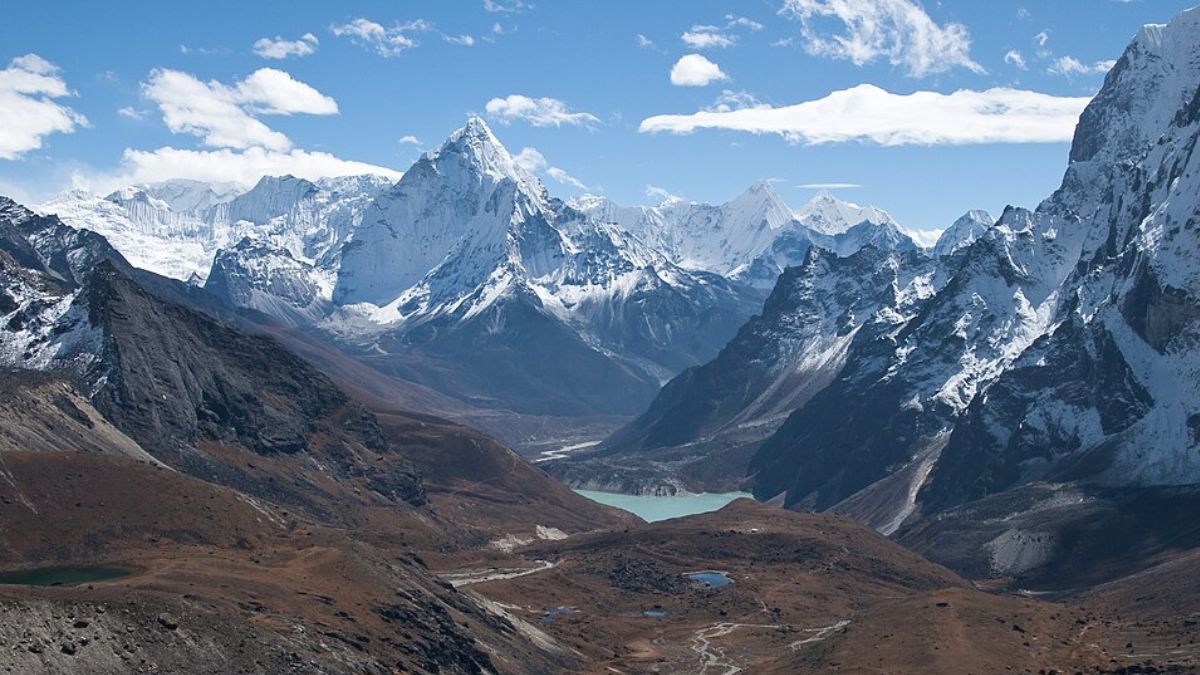
The Himalayas in Nepal. Image courtesy: Wikimedia Commons

New Delhi: Accelerating glacier loss across the Himalayas is emerging as an economic, water security and infrastructure risk for India. Himalayan water supports more than 20 per cent of the country’s GDP, while glacier mass loss is now estimated to be 65 per cent faster than a decade ago.
The findings come from a new Systemiq assessment released on Wednesday. Prepared with the integrated mountain initiative and with technical contributions from the International Centre for Integrated Mountain Development (ICIMOD) and the GB Pant National Institute of Himalayan Environment, the report links the mountain system to agriculture, hydropower, industry and downstream water supplies.
The 20 per cent figure represents an estimate of economic activity supported by Himalayan water and should not be read as a forecast that glacier retreat would directly reduce India’s GDP by the same proportion.
Monitoring gap remains
ICIMOD’s this year’s Glacier Outlook says ice-loss rates across the Hindu Kush Himalaya have doubled since 2000, while separate regional research found a 12 per cent reduction in glacier area between 1990 and 2020.
Monitoring, however, remains thin. ICIMOD scientist Mohd Farooq Azam has said systematic, sustained long term monitoring is being carried out on only about 21 of an estimated 40,000 glaciers across the Himalaya Karakoram region. Only seven meet international benchmark standards for long-term monitoring.
The gap matters as retreating glaciers leave expanding lakes behind and thawing permafrost destabilizes high mountain slopes. Systemiq says the Indian Himalayan region covers about 18 per cent of India’s land area but accounts for around 35 per cent of disasters.
India has stepped up glacial lake surveillance. The government told parliament in July that the central water commission was monitoring 2,485 glacial lakes larger than 10 hectares across Himalayan river basins. Of 189 high risk lakes assessed in 2025, 56 were classified as very high risk.
The risks were underscored by the August 26 disaster along the Nepal-Tibet border, where a glacier collapse triggered cascading landslides and flash floods in valleys below. Reuters reported on Monday, that at least 1,300 people had been confirmed dead and more than 5,300 were missing across Nepal and Tibet. The disaster damaged roads, bridges, hydropower projects and settlements and disrupted tourism and pilgrimage routes, highlighting how high-mountain hazards can spread rapidly across river systems and national borders
RNA Media had earlier reported that the Centre had directed Himalayan states and Jammu & Kashmir to accelerate glacial lake outburst flood and avalanche preparedness, strengthen evacuation plans and close early warning gaps after a high-level review in September.
The economic exposure extends far beyond Himalayan states. Snow and glacier fed rivers support irrigation, food production, hydropower, urban water supplies and industries across the Gangetic plain. ICIMOD says most Hindu Kush Himalayan river basins are expected to reach “peak water” around the middle of the century, when glacier runoff reaches its maximum before declining as ice reserves shrink.
Recent disasters illustrate the risk. The October 2023 South Lhonak glacial lake outburst flood in Sikkim caused extensive loss of life and infrastructure damage, while the 2021 Chamoli disaster in Uttarakhand was triggered by a rock and ice avalanche that devastated hydropower infrastructure.
Black carbon offers a near-term lever
Systemiq estimates that roughly one-third of Himalayan glacier melt is linked to black carbon, or soot. The World Bank has separately identified emissions from brick kilns, vehicles, cooking and other combustion sources as contributors to faster snow and glacier melt. Cleaner brick kilns and tighter pollution controls could reduce soot deposition while also improving air quality.
The report also calls for stronger glacier and lake monitoring, wider early warning coverage, risk informed infrastructure and more sustainable tourism. It recommends moving away from simply maximizing visitor numbers towards managing carrying capacity and retaining more tourism income within mountain communities.
Because the Hindu Kush Himalayan system crosses national boundaries, Systemiq and ICIMOD also call for stronger cross border data sharing and coordinated warning systems. The central concern is that faster glacier loss is increasingly becoming a water, infrastructure and economic management challenge for India, not just an environmental one.