


AI-171 Dreamliner crash probe enters final phase, draft report likely by October, AAIB tells Supreme Court
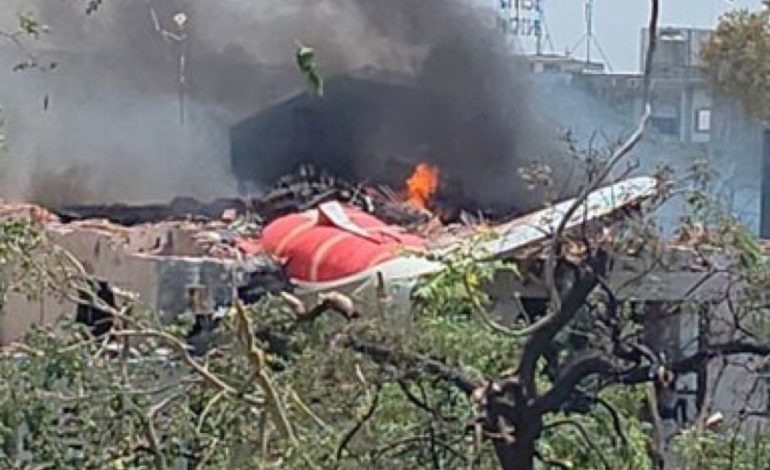
Screenshot taken from an amateur video shows the wreckage of the ill-fated Boeing 787 Dreamliner, which crashed in Ahmedabad in June 2025.

New Delhi: India’s aircraft accident investigator has told the Supreme Court that the draft final report into the June 2025 crash of Air India Flight AI-171 is expected to be ready only by October. The Aircraft Accident Investigation Bureau (AAIB) said the inquiry remains in its final analytical phase and involves extensive coordination with international agencies.
In an affidavit filed before the apex court, the AAIB said it expects to complete the remaining investigative work within about six weeks, subject to the resolution of a few external dependencies. Once that stage is over, investigators will complete the analysis and prepare the draft final report, which is expected to be ready around October this year.
The affidavit was submitted in response to petitions seeking an independent or court-monitored investigation into the June 12, 2025 crash near Ahmedabad, one of India’s deadliest aviation disasters. The crash claimed 260 lives, including 241 passengers and crew on board the London-bound Boeing 787-8 Dreamliner and 19 people on the ground after the aircraft struck a medical college hostel shortly after take-off.
The AAIB argued that the investigation is being conducted under the framework prescribed by the International Civil Aviation Organization (ICAO) and India’s Aircraft (Investigation of Accidents and Incidents) Rules. It maintained that there is no legal or procedural basis for judicial supervision of what is intended to be an independent, technical safety investigation.
The bureau also emphasized that accident investigations are intended to determine the causes of an accident and improve aviation safety rather than assign civil or criminal liability. It said demands relating to compensation, criminal prosecution or broader regulatory reforms fall outside the scope of an air accident investigation.
Under ICAO’s Annex 13 procedures, the draft report cannot be released immediately after it is prepared. It must first be circulated confidentially to accredited participants in the investigation, including foreign authorities representing the state of design and manufacture of the aircraft, to allow them to submit significant and substantiated comments before the report is finalized. In the AI-171 investigation, the United States’ National Transportation Safety Board is participating as the accredited representative because the aircraft was designed and manufactured there.
The investigation has entered its final analytical stage after investigators completed several major technical tasks, including the transcription of the cockpit voice recorder and a psychological assessment as part of the broader human-factors examination. Officials are also evaluating operational, technical, organizational and maintenance-related aspects of the accident while awaiting certain remaining technical data. Investigators have interviewed Air India personnel, air traffic controllers, weather officials and other specialists as part of the inquiry.
The AAIB has also cautioned against speculation over the cause of the crash. It told the court that media reports assigning blame before the investigation is complete have complicated the inquiry by making some witnesses reluctant to cooperate fully.
The investigation has drawn intense public attention since the release of the preliminary report in July 2025. That report confirmed that both engine fuel-control switches moved from the “RUN” to the “CUTOFF” position within seconds of each other shortly after take-off, resulting in a rapid loss of engine thrust. However, investigators deliberately stopped short of identifying the reason for the movement of the switches or attributing responsibility, stressing that the inquiry remained incomplete.
The final report is expected to provide a comprehensive assessment of the technical, operational, organizational and human factors examined during the investigation. Aviation experts generally regard such reports as essential not only for establishing the sequence of events but also for recommending safety measures aimed at preventing similar accidents in the future.