


Swavlamban 2026: Navy turns to quantum positioning and ramjets as iDEX proposals cross 4,000, vice-chief says
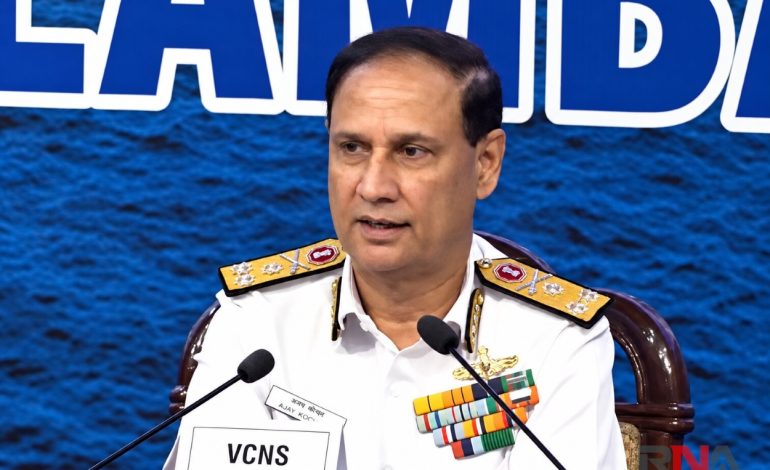
Vice Admiral Ajay Kochhar during his address at the curtain-raiser news conference of Swavlamban 2026 in New Delhi, on October 19, 2026.

New Delhi: Challenges now being addressed under the Navy’s indigenization drive include quantum positioning systems, high-power microwave directed-energy systems, extra-large autonomous underwater vehicles and indigenous ramjet engines for fixed-wing aerial platforms, the vice-chief of the naval staff, Vice Admiral Ajay Kochhar, said on Monday. He was speaking at the curtain-raiser for Swavlamban 2026, the Navy’s flagship innovation and indigenization seminar, to be held at the Manekshaw Centre in New Delhi on October 26 and 27.
VAdm Kochhar said the significance of the effort lies not only in its scale but in the growing sophistication of the problems being tackled. On scale, more than 4,000 proposals have been received from Indian innovators through the Innovation for Defence Excellence (iDEX) framework, with around 150 MSMEs and start-ups taking part.
He noted that acceptance of necessity (AoN) has been accorded for projects worth more than ₹3,500 crore, while contracts worth over ₹1,900 crore have been concluded. VAdm Kochhar said the figures reflect growing industry interest in defence requirements and the scale of the opportunity before innovators.
The AoN figure has risen steadily. At last year’s curtain-raiser, the-then vice-chief, Vice Admiral Sanjay Vatsayan, had put approved AoNs at over ₹2,700 crore and contracts executed at nearly ₹1,500 crore.
Swavlamban itself has grown too, VAdm Kochhar said. The first edition drew around 800 participants, while nearly 3,000 attended last year’s edition, and the fifth edition will have over 100 stalls.
The push comes as the character of warfare changes rapidly with technology, he said. Unmanned systems, artificial intelligence, advanced sensors and networked capabilities are changing how navies gather information, make decisions and operate at sea.
For the Navy, VAdm Kochhar said, keeping pace is not just about adopting new technology but about being able to develop, integrate and employ the capabilities it needs – and to do so with considerable swiftness.
Two more aspects, speed and spiral development, will drive this effort. Speed means building faster, more efficient pathways for promising ideas to move from concept and prototype to testing, production and operational deployment.
Spiral development means building on achievements and improving continuously. “Technology does not stand still, and neither should the capabilities we develop,” Kochhar said, adding that each stage should absorb user feedback, trial lessons and technological advances.
Together with scale and sophistication, these four aspects are the Navy’s “guiding mantras” for absorbing technology through initiatives such as Swavlamban, he said.
The two-day event will combine an exhibition with deliberations. The exhibition will let the three services and other security agencies interact directly with innovators, industry, academia and investors, explore new technologies and give feedback on their operational relevance.
The deliberations will focus on hurdles in taking promising ideas forward, including vulnerabilities in cyber security and supply chains, and on better access to funding for development and production. The Navy wants such engagement to help promising technologies move closer to deployment, while Indian industry builds the capacity to produce, sustain and upgrade them.
VAdm Kochhar had a message for industry and academia. He urged them to bring forward disruptive solutions grounded in operational understanding, supported by sound engineering and a commitment to reliable delivery. Self-reliance, he said, rests on the country’s collective ability to design, manufacture, sustain and continuously improve critical technologies.
He thanked the government, the Ministry of Defence, the Society of Indian Defence Manufacturers (SIDM) and the Defence Innovation Organisation (DIO) for backing what he called a whole-of-nation effort towards a truly Aatmanirbhar Indian Navy. Their support, he said, has let each edition build on the last, widening participation and creating more opportunities for collaboration.
Kochhar also urged the media to look beyond the technologies on display and tell the stories of the people, enterprises and partnerships behind them. Such coverage, he said, can draw more young talent, researchers and entrepreneurs into India’s defence innovation ecosystem.