

The Strategic Reality of Aircraft Carriers: Defeating Information Warfare
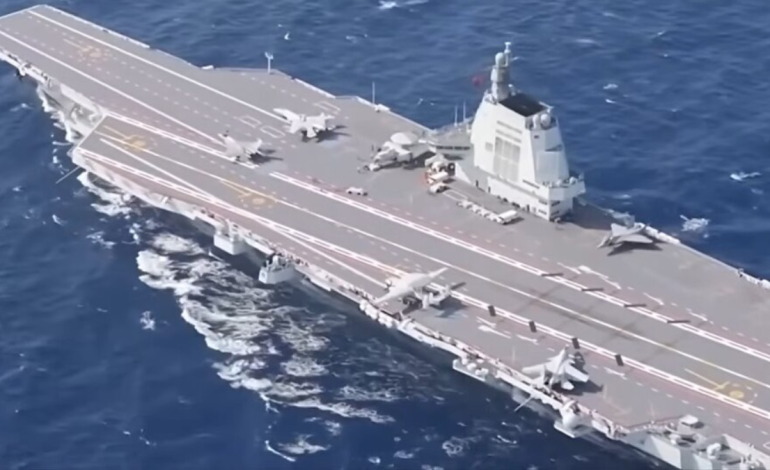
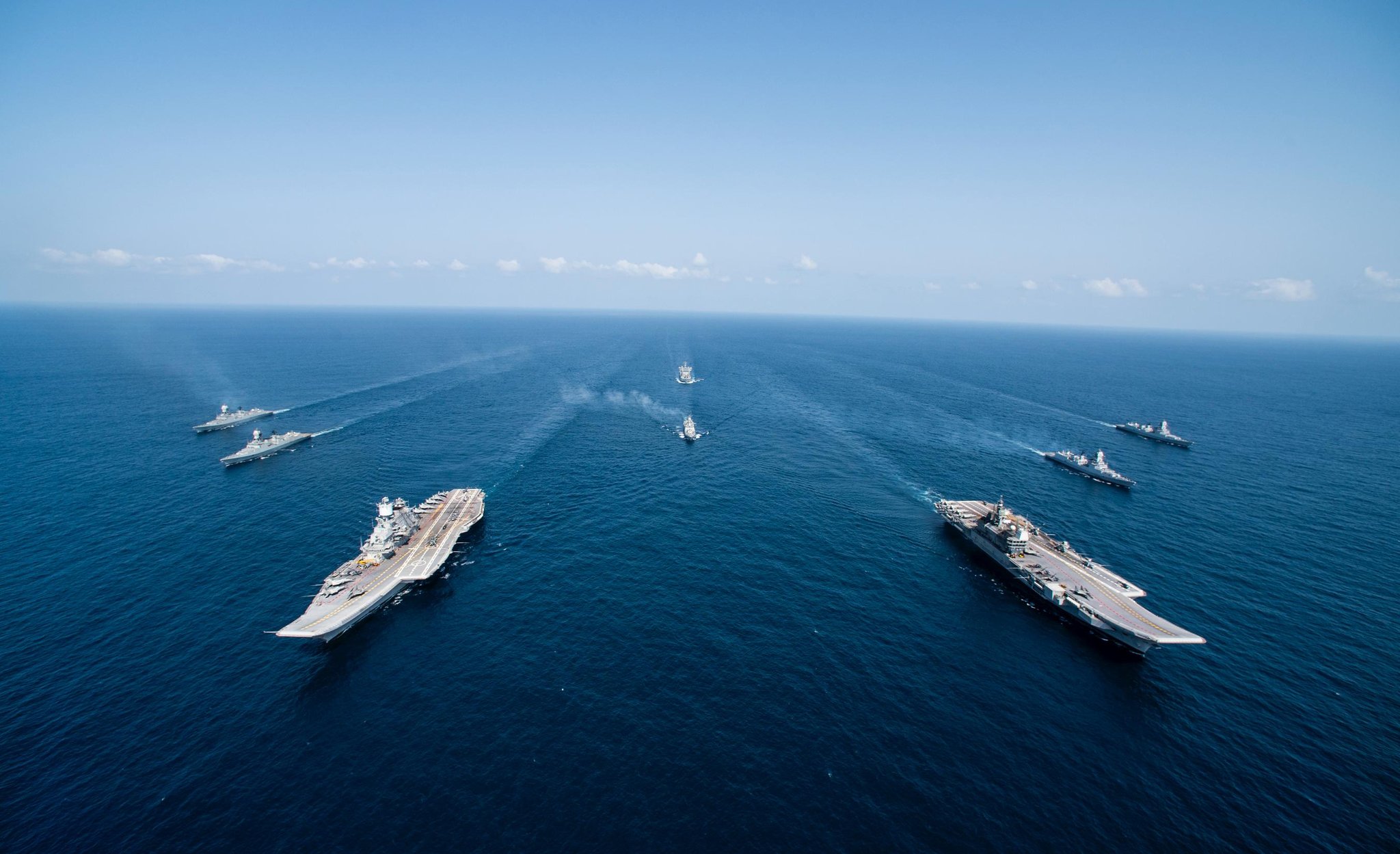
Representational Image, Image courtesy: Wikimedia

In 1998, a Chinese company bought a rusty, unfinished Soviet aircraft carrier for $20 million. They told the world it would become a floating casino. Many believed them. The ship was the Varyag, which China later rebuilt and renamed the Liaoning, its first operational aircraft carrier. This story reveals a basic truth. Deception is a standard tool in international politics. States hide their true intentions while building the military power they need to survive. Today, Beijing uses a similar tactic, deploying information warfare to stop India from building its own aircraft carriers.
States operate in an anarchic world where survival depends on military power. There is no higher authority to protect one country from another. Therefore, great powers seek to dominate their regions. China wants to achieve regional hegemony in Asia and control the Indian Ocean. India stands in its way. Because war is costly, China uses information warfare to weaken India. A prime example is China’s campaign to convince India to stop building aircraft carriers. In April 2017, Chinese state media told New Delhi to focus on economic development rather than speeding up aircraft carrier construction to contain China. The Chinese press warned that India was too impatient and lacked the industrial base to build such massive ships. This narrative was a calculated psychological operation.
The Deception: Obsolete Carriers versus Chinese Naval Expansion
Chinese media and defence analysts frequently claim that aircraft carriers are obsolete and highly vulnerable. They point to weapons like the DF-21D anti-ship ballistic missile. They call this weapon a carrier killer because it can fly at high speeds and strike from long distances. The goal is to trick democratic states into cutting naval defence budgets. China wants the Indian public to think carriers are a waste of money.
If China truly believed carriers were obsolete, it would not build them. Instead, China is frantically expanding its blue-water fleet. It currently operates the Liaoning, commissioned in September 2012, and the Shandong, commissioned in December 2019. In 2022, China launched the Fujian, which was commissioned into active service in November 2025.
This carrier is equipped with advanced electromagnetic catapults, a technology previously only used by the United States. Furthermore, China is rapidly building a fourth carrier, the Type 004, currently under construction at the Dalian shipyard. This new ship is expected to be nuclear-powered and displace over 110,000 tonnes. China ultimately plans to deploy a six-ship carrier force to project power globally.
To illustrate this rapid expansion, the Liaoning, commissioned in 2012, utilises ski-jump (STOBAR) technology and is currently in active service. The Shandong, commissioned in 2019, also utilises ski-jump technology and remains in active service. The Fujian, launched in 2022 and commissioned in 2025, represents a technological leap with its electromagnetic catapults and is now fully operational. Looking ahead, the Type 004 is expected to launch around 2027–2028 and be commissioned by approximately 2030; it is currently under construction and is anticipated to feature nuclear propulsion.
The Physics of Defence: The Indian Carrier Battle Group
The Chinese claim that carriers are sitting ducks is false. Hitting a moving ship at sea is extremely difficult. It requires finding the target, tracking it, and guiding a missile to it while the ship moves at over 30 knots. An Indian Carrier Battle Group is not a single target. It is a heavily defended fortress with a multi-layered shield designed to break the enemy attack at every step.
The outer shield is fleet air defence. The Indian Navy in the future will rely on the Rafale-M fighter to control the skies hundreds of miles from the carrier. These fighters will carry the Meteor beyond-visual-range missile. The Meteor uses a ramjet engine, giving it the range and speed to destroy enemy aircraft more than 150 kilometres away. This shoots down the enemy bomber before it can launch its anti-ship weapons.
If a missile slips past the fighters, it hits the middle shield. This is area defence. The Indian Navy uses Project 15B stealth destroyers, like the INS Visakhapatnam, to escort the carrier. These ships carry the MF-STAR active electronically scanned array radar, which provides constant 360-degree surveillance. When the radar detects a threat, the ship fires Barak-8 missiles. The Barak-8 travels at Mach 2 and uses an active radar seeker to destroy incoming cruise and ballistic missiles at ranges up to 100 kilometres.
If a missile survives the middle shield, it faces the inner layer. This is the close-in weapon system. The Indian Navy uses the AK-630. The AK-630 is an automatic radar-guided gun that fires 30mm rounds at a rate of up to 5,000 rounds per minute. It creates a wall of metal effective against airborne threats at ranges up to 4,000 meters, and can engage surface targets out to 5,000 meters, shredding any missile attempting to strike the carrier in the final seconds of flight.
In great power politics, a state must judge its rivals by their actions, not their words. China tells India to focus on its domestic economy and abandon aircraft carriers, yet China builds a massive carrier fleet to dominate the Indian Ocean. India must not fall for this deception. An Indian aircraft carrier, protected by Rafale-M fighters, Project 15B stealth destroyers, and AK-630 close-in weapon systems, is the hardest target at sea. India must continue to project naval power to ensure its survival. A strong navy is the only guarantee of sovereignty in a dangerous and unforgiving world.