




Toxic listings: Karnataka suspends Amazon, Instamart and BigBasket food licences over datura sales
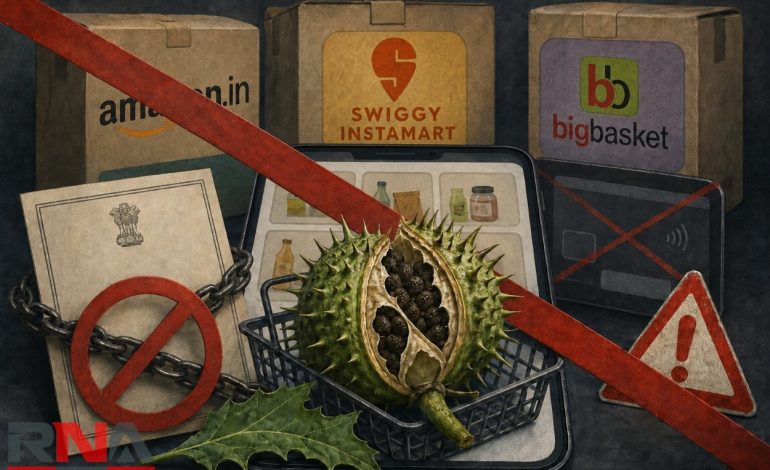
RNA Media illustration for representation.

New Delhi: The Karnataka government has suspended the food licences and registrations of Amazon, Swiggy Instamart and BigBasket after an investigation found poisonous datura fruits and seeds being offered through the platforms for human consumption. The suspension will remain in force until further orders, while the companies have been directed to remove the listings and stop advertising, selling or distributing datura as food.
The order was issued on Monday by the commissioner of the Karnataka Food Safety and Drug Administration, Srinivas K, following complaints and inspections of warehouses and online marketplaces. Officials found packets of datura fruits and seeds carrying Food Safety and Standards Authority of India licence or registration numbers, potentially giving consumers the impression that the products were approved for consumption.
The department said the collection, storage, sale or distribution of poisonous datura as a food product was impermissible under the Food Safety and Standards Act, 2006, and the Food Safety and Standards Rules, 2011. Its order covers not only the three digital platforms but also the vendors, suppliers and establishments that provided the products to them.
Representatives of all three companies appeared before the adjudicating authority on August 24, but their explanations failed to satisfy the regulator. According to the proceedings, Amazon did not submit a response to the earlier notice, while Swiggy Instamart sought additional time to produce documents showing what corrective action it had taken.
BigBasket informed the authority that it had discontinued the online sale of datura fruits and seeds and would change the manner in which such products were listed. It also proposed carrying a conspicuous warning saying “Not for human consumption”, but the department considered the response inadequate in view of the plant’s toxicity and the potential danger to customers.
The platforms must now submit compliance reports detailing the removal of the products, related advertisements and promotional material. They have also been asked to give written undertakings that datura fruits and seeds will not again be marketed as food or for human consumption.
State and central food-safety officers have separately been instructed to suspend the licences or registrations of the manufacturers, sellers and establishments that supplied the products. Further enforcement action may follow if any operator continues to advertise or distribute datura as food despite the direction.
The regulatory action amounts to a suspension rather than a final cancellation of the licences. The department said it would decide whether to revoke the suspensions after receiving the compliance reports and giving the companies another opportunity to present their cases.
A check conducted by Indian Express on Monday found no datura fruits or seeds listed on Swiggy Instamart or Amazon Fresh. BigBasket displayed a datura product intended for pooja as sold out, with one piece priced at ₹14, underscoring the distinction between selling the plant for ritual use and presenting it as edible.
Why datura is dangerous
Datura, also known as dhatura or thorn apple, has a long association with religious rituals and is used in some traditional medicinal formulations after controlled processing. However, medical and botanical experts stress that its ritual or medicinal significance does not make its raw fruits, seeds or other plant parts safe for consumption.
The plant contains potent tropane alkaloids, including atropine, scopolamine and hyoscyamine, with toxin concentrations varying between plants and plant parts. These compounds can disrupt the brain, heart and nervous system, making unsupervised consumption particularly unpredictable.
Early signs of poisoning may include intense thirst, dry mouth, dilated pupils, blurred vision, flushed skin and a rapid heartbeat. Severe poisoning can cause hallucinations, extreme agitation, delirium, cardiac arrhythmia, convulsions, loss of consciousness or coma, according to medical literature and poison-control guidance.
Experts consulted by New Indian Express said datura may be incorporated into certain Ayurvedic preparations only after specific treatment and in carefully measured quantities under professional supervision. They warned that the spiny green fruit could also be mistaken by an unfamiliar consumer for an edible exotic fruit, increasing the danger when sold without unambiguous warnings.
The reports on the Karnataka action have not identified any confirmed case of poisoning directly linked to the online listings. The intervention therefore appears primarily preventive, prompted by the possibility that consumers could mistake a poisonous ritual or medicinal plant for an ordinary food item.
The case also raises wider questions about product screening by e-commerce and quick-commerce companies, particularly when third-party goods are placed under food categories or carry FSSAI credentials. By proceeding against both the platforms and their suppliers, the Karnataka regulator has signalled that responsibility for food safety extends across the digital retail chain.