
Why has Pakistan deployed troops in Rawalpindi? Army gets six-month security role
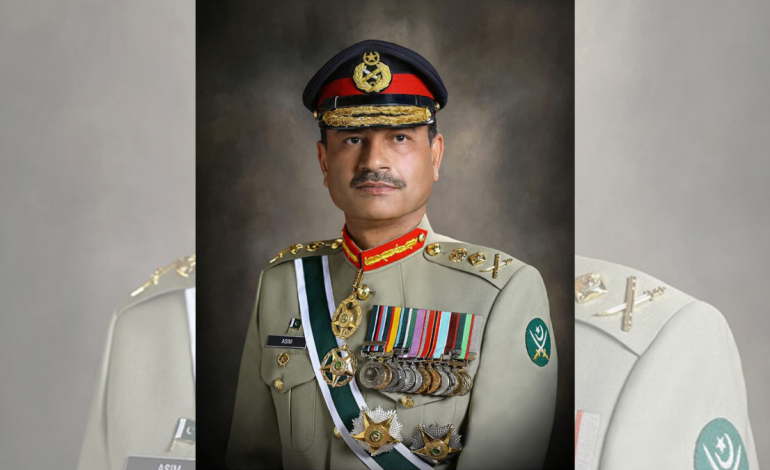
Pakistan CDF General Asim Munir

New Delhi: Pakistan has authorized the deployment of three companies of the Pakistan Army in Rawalpindi for six months, giving troops a role in supporting the civilian administration on security duties. The order, issued by the Ministry of Interior and Narcotics Control on August 21, came after a request from the Punjab Home Department and was made under Article 245 of Pakistan’s constitution.
According to Dawn, the notification says the deployment is meant to prevent an “undesirable situation” and allow the authorities to respond quickly to any “unforeseen situation” based on the requirements of the district administration. It does not specify a particular threat or incident as the reason for the move.
What will the troops do?
The three companies, comprising more than 400 personnel, will assist the Rawalpindi district administration with security and law-and-order duties, according to Shafaqna Pakistan. The deployment is expected to include security at sensitive locations and important roads, as well as support for the authorities if an unexpected security situation develops.
The troops will remain in place for six months, with the deployment taking effect immediately. Article 245 allows Pakistan’s armed forces to operate in support of civilian authorities when called upon by the federal government.
Why has the timing raised questions?
The deployment comes ten days after a shooting on Rawalpindi’s Mall Road, a short distance from the Pakistan Army’s General Headquarters. On August 11, a man identified by police as Muhammad Hussain allegedly opened fire on a security forces patrol team with a pistol, injuring one official before being shot dead in return fire, according to a police statement carried by Geo News.
The deployment also lands just days after Pakistan’s new Defence Forces Act came into force, handing sweeping new powers to Chief of Defence Forces (CDF) General Asim Munir. The new law lets Munir decide, at his own discretion, whether military personnel are retired, discharged, retained or kept on beyond their term. It also puts him in direct command of the Army, while giving him operational control over the Navy and Air Force. The law also makes him the prime minister’s principal adviser on defence and national security matters. That the troop deployment was ordered just two days after the new act was passed has only deepened questions over why the reinforcement came now.
State broadcaster PTV News, citing security sources, identified Hussain as a resident of Khyber district and described him as an “active member” of Pakistan Tehreek-e-Insaf (PTI). A party flag, weapons, ammunition and documents were reportedly recovered from him, according to Arab News, though the outlet noted it could not independently verify his party affiliation.
Pakistan’s information minister, Attaullah Tarar, used the incident to criticize PTI directly, calling it part of the party’s “politics of violence” in televised remarks. Days later, the minister of state for interior, Tallal Chaudhry, went further, telling reporters in Islamabad that PTI’s leadership “cannot absolve themselves of responsibility,” and that the party had long been warned against “perpetuating the politics of hatred and anarchy.”
PTI rejected any link to the shooting, calling it a “regrettable incident” and demanding a “thorough, impartial, transparent, and judicial investigation” so that, in the party’s words, no individual or organization would be blamed “on the basis of mere allegations or political expediency.”
Though the Rawalpindi deployment notification makes no mention of the Mall Road shooting, it only refers to unspecified “sensitive security duties” and the need to respond to an undesirable or unforeseen situation. Nothing in the official order draws a formal line between the two events.
The timing, however, sits inside a wider pattern of pressure on PTI. The party has announced plans for a “long march” on Islamabad on September 27, demanding Imran Khan’s release from Adiala Jail, where he has been held since 2023. Khyber Pakhtunkhwa’s chief minister, Sohail Afridi, has said the march’s actual goal is gaining access to Khan, rather than his release outright, according to Geo News.