

US urges caution as EU backs ICJ ruling on Myanmar’s Rohingya genocide
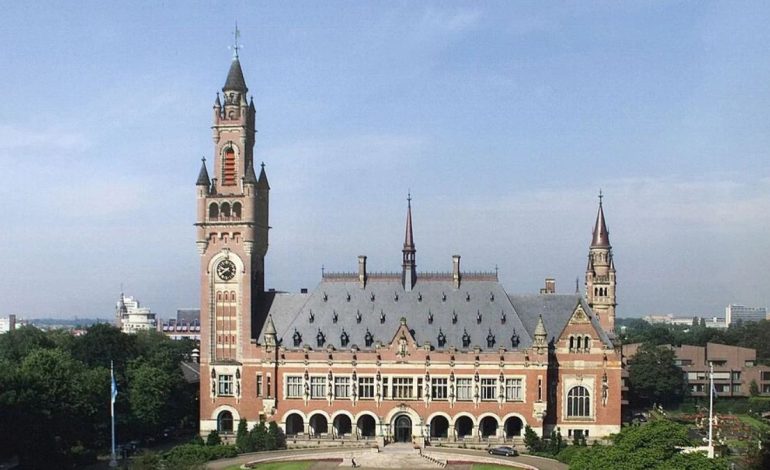
(Image courtesy: Wikimedia Commons)

New Delhi: The United States has adopted a cautious response to the international court of justice’s landmark judgment holding Myanmar responsible for genocide against the Rohingya, saying it is reviewing the decision and warning against politicizing the court. The European Union, meanwhile, has welcomed the ruling and called on Myanmar to implement it without delay.
The contrasting reactions came a day after the ICJ delivered its judgment in a case brought by The Gambia under the 1948 Genocide Convention. The court found that Myanmar committed genocide against the Rohingya in northern Rakhine State during its 2017 military operations. It was the first time in the court’s history that a state had been held responsible for committing genocide.
The ICJ judgment marks a significant development in the long-running pursuit of justice for the Rohingya community. The court’s finding that Myanmar was responsible for genocide is a historic step towards accountability for the atrocities committed against the minority. RNA Media reported earlier on the court’s historic ruling and its implications for the Rohingya community in its report on Myanmar’s responsibility for the genocide.
US calls for caution, EU demands compliance
The US state department said Washington would study the judgment to assess its implications. It stressed that the proper interpretation of the Genocide Convention was important and cautioned against the politicization of the ICJ.
The cautious response comes amid the Trump administration’s broader scepticism towards international legal institutions. Washington has threatened to dismantle the international criminal court (ICC), which it regards as an illegitimate global institution. However, the ICC and the ICJ are separate bodies, and the administration has not questioned the legitimacy of the ICJ.
Washington also reiterated its support for Myanmar’s people and expressed grave concern over continuing human rights abuses against Rohingya Muslims and other minority communities. The United States remains the largest single humanitarian donor to the Rohingya crisis response, according to the Guardian.
The European Union adopted a firmer position, describing the judgment as a landmark decision. It called on Myanmar to comply with the court’s orders without delay and stressed that implementing ICJ decisions is an obligation under international law.
The EU also highlighted the importance of accountability and reparations for Rohingya victims, including restitution and compensation for damage that cannot be remedied through restitution.
What the court found
The Gambia filed the case in November 2019, alleging violations of the Genocide Convention during Myanmar’s 2017 military campaign. The ICJ found that Myanmar’s security forces committed killings, caused serious bodily and mental harm and imposed measures intended to prevent births, with the intent to destroy a substantial part of the Rohingya population.
In August 2017, Myanmar’s military launched what it described as a clearance campaign in Rakhine state following an attack by a Rohingya insurgent group. The operation was accompanied by allegations of mass killings, sexual violence and the burning of thousands of homes. The ICJ said evidence showed that Myanmar’s forces killed approximately 10,000 Rohingya during the campaign.
The court also found that Myanmar had violated its obligations to prevent genocide, punish those responsible and preserve evidence. It directed the country to investigate people reasonably suspected of committing acts covered by the convention and prosecute and punish them where warranted.
The judgment further requires Myanmar to provide guarantees against repetition and adopt restitution measures. These include enabling the safe, voluntary and dignified return of displaced Rohingya and reuniting separated families.
The court established Myanmar’s obligation to compensate the Rohingya for damage caused. However, the amount and modalities of compensation will be determined in a subsequent phase. Myanmar must submit a report to the court within two years detailing the restitution measures adopted and the compensation involved.
International calls for accountability
The UN secretary general, Antonio Guterres, welcomed the judgment, describing it as a demonstration of international justice and a reaffirmation that impunity for such crimes must not prevail. He also urged Myanmar to comply with the court’s decision.
The United Kingdom announced that it would expel Myanmar’s defence attache. The foreign secretary, Ed Miliband, also called urgently for a United Nations security council session to discuss the judgment.
The Australian foreign minister, Penny Wong, called for those responsible for serious human rights abuses in Myanmar to face justice.
The consequences of the 2017 violence continue to shape the Rohingya refugee crisis. Around 1.2 million Rohingya refugees now live in Bangladesh, primarily in overcrowded camps in Cox’s Bazar district. They face difficult living conditions, including fire hazards, infectious diseases, monsoon-related landslides, inadequate sanitation and restrictions on employment.
The ruling could also draw attention to other cases before the ICJ involving allegations of genocide. South Africa has accused Israel of violating the Genocide Convention during its military offensive in Gaza, a charge that Israel strongly denies. In an interim ruling in January 2024, the ICJ ordered Israel to take measures to prevent acts covered by the Genocide Convention against Palestinians in Gaza.
The case remains ongoing and is expected to take years to conclude. The Myanmar judgment does not determine its outcome, as the court must assess the evidence and legal arguments in each case separately.
RNA Media had earlier examined the possible implications of the Myanmar genocide ruling for the legal proceedings concerning Israel’s actions in Gaza, including the question of international accountability. The report explored why the ICJ judgment matters for Israel’s actions in Gaza.