
Trump vs CNN, Politico and MS NOW: How a White House ban turned into a court fight?
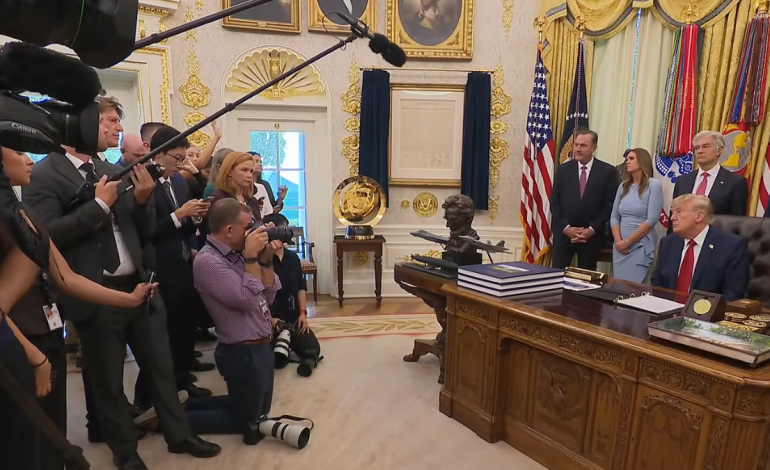
Trump vs CNN, Politico and MS NOW. (Image courtesy: White House)

New Delhi: The United States president, Donald Trump, latest confrontation with the media has moved to court, with CNN, MS NOW and Politico suing his administration after their reporters were denied entry from the White House and their press credentials revoked. The three outlets are seeking the restoration of their access, arguing that the administration’s action violates their First Amendment rights and retaliates against them over their reporting.
The lawsuit has brought a long-running dispute between Trump and several news organizations into a new legal battle over access to the presidency. It also comes after the three outlets’ reporters were physically turned away from the White House.
Trump responds after lawsuit
Trump responded to the legal challenge on Monday by turning his criticism back on the media. In a Truth Social post, he said the White House was not attacking the “Free Press”, but what he called “FAKE NEWS”, describing the targeted media as corrupt, coordinated and a threat to national security.
Trump has repeatedly rejected accusations that his administration is suppressing the press. His latest response instead framed the dispute as a confrontation with news organizations whose reporting he considers false or deliberately misleading.
The latest clash began on September 18, when Trump announced that CNN, MS NOW and Politico were being banned from the White House. He accused the three outlets of repeatedly publishing what he called “FAKE NEWS” and said they should not be allowed to report what he described as “FICTION and LIES”.
Trump also warned that other news organizations could face similar treatment. When later asked about the decision, he said it was not triggered by one particular report but followed what he viewed as a pattern of coverage over the previous two years.
Politico was singled out in particular over Trump’s claim that the Biden administration had spent about $8 million on subscriptions to the publication. Trump cited the alleged spending while criticizing the outlet, although his broader justification for the ban focused on his complaints about media coverage.
The decision was put into effect when journalists from the three organizations arrived at the White House. CNN reported, MS NOW correspondent Akayla Gardner said her press pass was disabled when she tried to enter, while a security guard told her the matter was “above him”.
Similarly, CNN correspondent Betsy Klein and a cameraman were also stopped and left without their badges. Politico reporter Cheyenne Haslett was stopped by the Secret Service and had her White House pass confiscated.
The reporters continued covering Trump and his administration from outside the White House after being denied entry. The scenes marked the first direct enforcement of Trump’s announced ban against the three outlets.
The dispute soon affected the White House television press pool, which regularly shares footage of presidential events among major networks and the wider press corps. CNN had been scheduled for pool duty and was expected to accompany Trump to New York for the United Nations general assembly.
After CNN was removed from the pool, Fox News, which chairs the rotating television pool, said it would not send a replacement crew. The pool normally includes ABC, CBS, CNN, NBC and Fox News, with its footage shared with other television organizations.
The decision meant the consequences of the White House ban extended beyond CNN, MS NOW and Politico. It also placed the other major television networks in the middle of the dispute over access to Trump’s presidential events.
Trump’s earlier clashes with news outlets
The current dispute follows several previous battles between Trump and American news organizations over press access. During his first presidency, Trump clashed with CNN correspondent Jim Acosta after a heated 2018 White House news conference.
The administration revoked Acosta’s press credentials, but CNN challenged the decision in court and a federal judge ordered his access restored. Trump also fought with Playboy correspondent Brian Karem over his White House access, with Karem challenging the restrictions through the courts and eventually regaining his credentials.
The conflict continued during Trump’s second administration. In 2025, the White House restricted Associated Press journalists from certain presidential events after the AP declined to adopt the administration’s preferred name “Gulf of America” for the Gulf of America.
The AP challenged the restrictions in court, arguing that the administration had retaliated against the news organization over its editorial decision. A federal judge ruled against the administration’s access restrictions, although the case continued through the appeals process.
A wider fight over press access
The latest lawsuit puts the question of presidential control over White House press access back before the courts. Trump maintains that the targeted outlets have engaged in reporting he considers false and unfair, while CNN, MS NOW and Politico argue that access cannot be withdrawn as punishment for coverage the president dislikes.
The dispute now extends beyond the three organizations involved. With the television pool declining to replace CNN and the White House press corps watching the case closely, the lawsuit has become another major test of the boundaries between presidential control over access and the press’s ability to cover the US government.