

Houthis press into Yemen’s highlands as Trump reportedly halts planned US strikes

Abdul-Malik al-Houthi, the leader of the Houthi Ansarallah Movement.

New Delhi: Houthi fighters of the Ansarallah group pushed towards strategic heights in southern Yemen on Monday, seeking to secure the Red Sea coast they seized earlier this month and threaten the remaining positions of Saudi-backed forces. The advance came as the United States held back from entering the renewed fighting, with a separate report saying the president, Donald Trump, cancelled planned airstrikes against the group at the last moment.
Five Yemeni military sources told Reuters that the Houthis were trying to capture the Kahboub mountains, which extend across Taiz and Lahij provinces between the Red Sea coast and the government-held south. Fighting has focused on the outskirts of Al-Wazi’iyah district in Taiz and around Ras al-Ara, on the coast between the Bab al-Mandeb Strait and Aden, the seat of Yemen’s internationally recognized government.
The high ground matters because the Houthis’ rapid gains along the coast could be difficult to defend if Saudi-backed forces retain positions overlooking routes inland. Capturing it would help the group protect its forces near Bab al-Mandab and potentially open further fronts towards the south, according to the military sources cited by Reuters.
The offensive follows the Houthis’ capture of Mokha and islands near Bab al-Mandab, the narrow passage linking the Red Sea to the Gulf of Aden. Those gains have improved their ability to observe passing ships, although control of territory beside the strait does not mean that every vessel sailing through it is under Houthi control.
Saudi Arabia has responded with airstrikes on Houthi positions in the highlands; the Houthis say hundreds of strikes have been carried out in recent days. The competing battlefield claims are difficult to verify independently, and it remains unclear whether either side can hold its recent gains as the fighting moves into mountainous terrain.
The fighting has also crossed Yemen’s northern border. Saudi Arabia said it intercepted a Houthi ballistic missile aimed at Riyadh on Saturday, September 19, while the Houthis claimed attacks on the capital and on facilities in the Red Sea port of Yanbu; the Saudi-led coalition said attempts to strike infrastructure had been thwarted, and no casualties or damage were reported in Riyadh.
Yanbu is especially sensitive because it is the Red Sea outlet of a pipeline used to move Saudi crude away from the Strait of Hormuz. Pressure on shipping at Bab al-Mandeb therefore threatens an alternative export route at a time when the wider war involving Iran has already disrupted tanker movements through Hormuz.
According to satellite-based figures reported by Reuters, Saudi crude exports through Hormuz have risen to about 2.9 million barrels a day in recent days, from roughly 700,000 barrels a day in August, as Red Sea loadings stopped. The additional shipments have helped restrain crude prices, but moving oil through the strait carries substantial wartime risk and cost; Reuters reported that tanker operators were charging fees of up to a quarter of a cargo’s value for some voyages.
Washington’s response remains a central question for Riyadh and Yemen’s government. Reuters reported that the president of Yemen’s internationally recognized government, Rashad al-Alimi, sought American military support in a call with Trump on Sunday, September 20, but two people familiar with the conversation said Trump made no direct pledge to provide it.
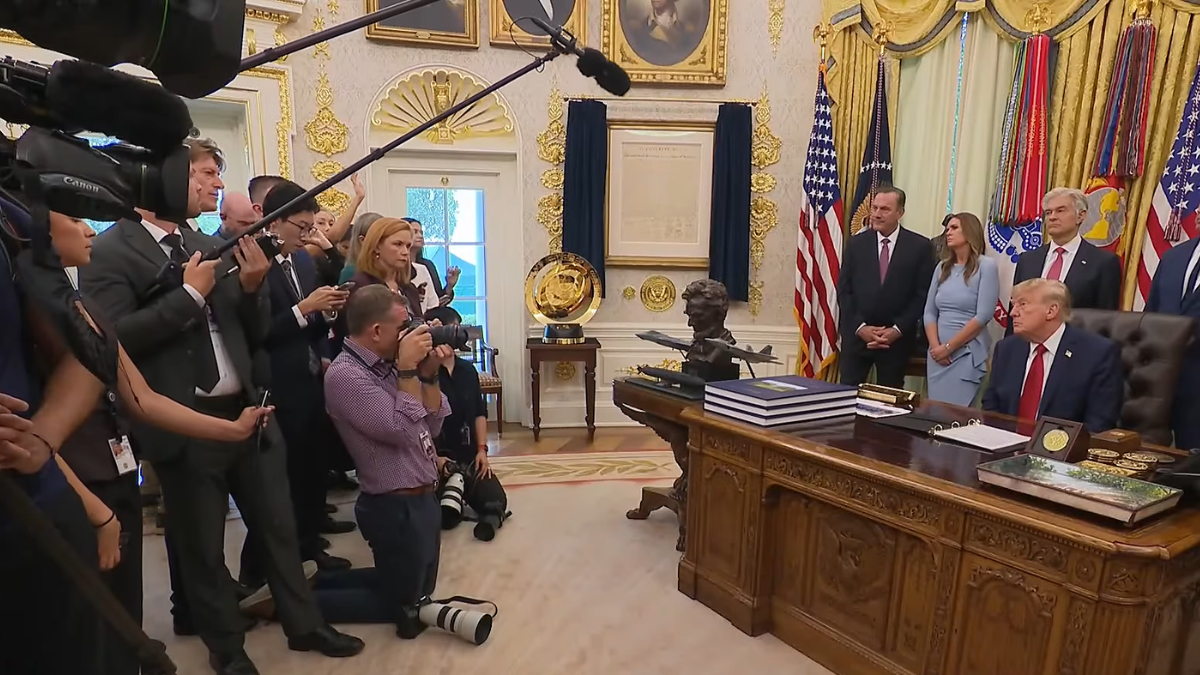
The New York Times reported that US aircraft were being prepared for strikes against the Houthis on Sunday before Trump called off the operation. However, the US Central Command (Centcom) referred media questions to the White House, which had not immediately commented.
Trump’s reluctance to commit American forces comes despite repeated Saudi requests for help, according to Reuters. The United States conducted a bombing campaign against the Houthis in early 2025, then ended it after an Oman-mediated agreement under which the group said it would stop attacking US vessels.
A senior Houthi official, Mohamed al-Bukhaiti, told AP that the group did not intend to target American ships but warned other countries against joining Saudi
Arabia in the war. His assurance leaves the threat to Saudi-linked shipping unresolved, while a wider attack on commercial traffic would affect vessels and cargoes with no direct role in the conflict.
For Yemenis, the territorial contest has brought a sharp return to large-scale fighting after years of relative calm. Reuters, citing United Nations figures, reported nearly 700 deaths and thousands of injuries in the latest escalation, while the International Organization for Migration said nearly 130,000 people had been displaced within Yemen.
More than 3,000 others have crossed the Red Sea by boat towards Africa, Reuters reported, adding to the pressure on communities and aid services already strained by Yemen’s long war. The battle for the Kahboub heights will help determine whether the Houthis can consolidate their coastal gains, but its immediate effect is clear: another front has opened in a conflict with consequences well beyond Yemen’s borders.