

Three-way military talks planned as Saudi Arabia faces rising Houthi attacks
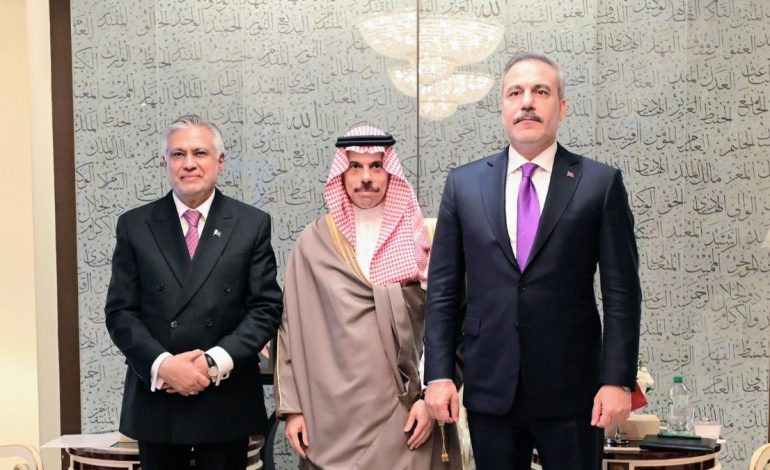
Saudi, Pakistani and Turkish foreign ministers meet. (Image courtesy: X.com/@MIshaqDar50)

New Delhi: Saudi Arabia, Turkiye and Pakistan are preparing an urgent meeting of their military chiefs to discuss ways to support the kingdom as Houthi attacks intensify, bringing their recently signed collective defence agreement into sharper focus. The Saudi foreign ministry announced the consultations after the three countries’ foreign ministers met in New York, but gave no date, venue or details of what form any support might take.
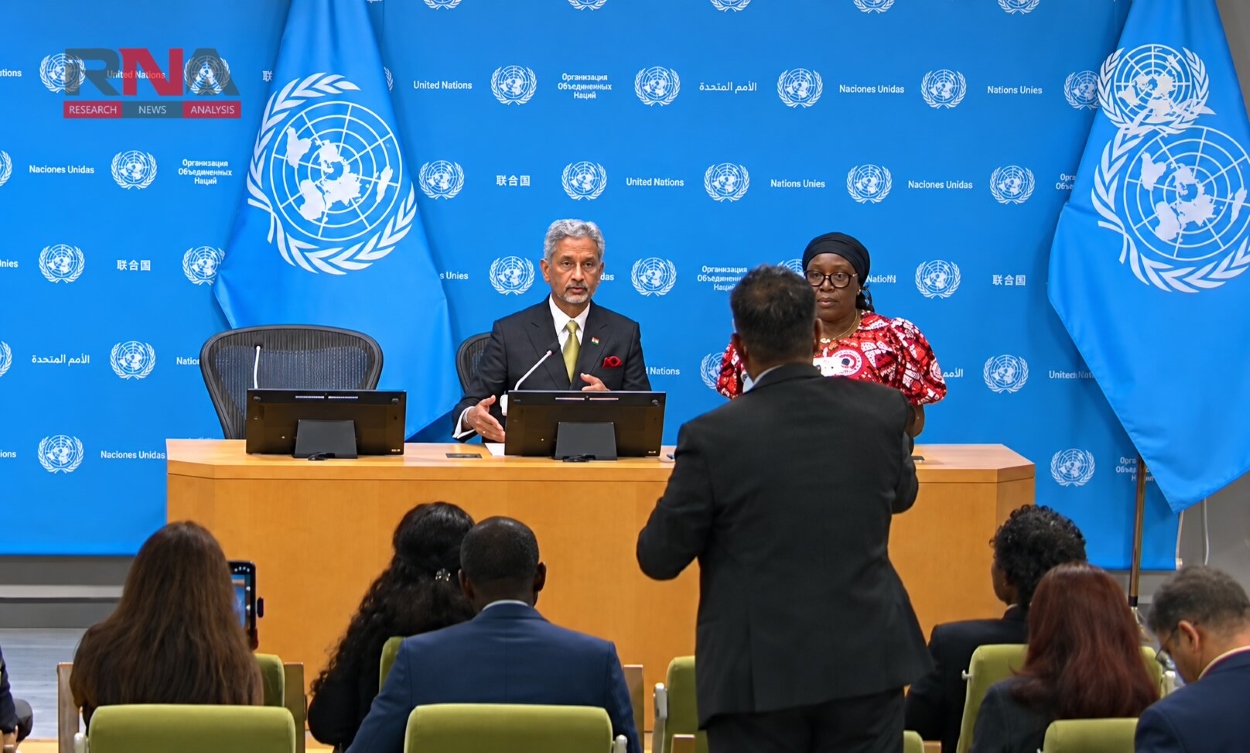
The New York meeting brought together the Saudi foreign minister, Prince Faisal bin Farhan Al Saud, Pakistan’s foreign minister, Ishaq Dar, and the Turkish foreign minister, Hakan Fidan. According to a Saudi foreign ministry statement carried by Saudi Gazette, the three condemned attacks targeting Mecca as well as civilian and economic facilities in the kingdom, and reaffirmed Saudi Arabia’s right to defend itself under Article 51 of the UN Charter.
As RNA Media reported earlier, the Makkah Joint Defence Agreement signed on August 7 commits Saudi Arabia, Turkiye and Pakistan to regard an armed attack on any one of them as an attack on all three. The three countries subsequently held the first meeting of their strategic political and defence committee in Istanbul on August 31, agreeing to establish a secretariat in Saudi Arabia and deepen defence cooperation.
Why the pact is in focus
As RNA Media reported earlier, the Saudi-led coalition said on Thursday that its air defences intercepted six ballistic missiles it said were aimed at Taif and the Red Sea port of Yanbu. Saudi civil defence authorities had earlier issued warnings across several areas before later announcing that the danger had passed, while coalition spokesman major general Turki al-Malki said any further escalation would be dealt with firmly.
The Houthis separately claimed missile and drone attacks against Saudi targets, including facilities in Yanbu, but not all of those claims have been independently verified.
Turkiye had already signalled that it could help meet Saudi military requirements under the pact. Reuters reported that Fidan said on September 19 that Ankara was prepared to assist with possible technical military needs. Pakistan had earlier said no military response was then under discussion, although its foreign ministry said Islamabad would act under the agreement when required.
Neither Turkiye nor Pakistan has announced a combat deployment to Saudi Arabia.
Reuters reported that France would send troops and defence systems to Saudi Arabia to help protect Yanbu. The French president, Emmanuel Macron, said the deployment would include soldiers, radar systems and defence systems, stressing that its purpose was to protect the strategic Red Sea energy site rather than involve France in the wider conflict.
Yemen fighting raises stakes
The consultations also come as fighting intensifies inside Yemen. Houthi forces have advanced along the Red Sea coast and into strategic highlands, while Saudi backed Yemeni government forces have fought to contain those gains. The UN refugee agency said more than 130,000 people had been displaced since the beginning of September.
Yanbu has additional importance because Saudi Arabia’s East-West pipeline provides a Red Sea outlet for crude exports when traffic through the Strait of Hormuz is disrupted, making the port important to the kingdom’s energy security and regional oil flows.
The Houthis have longstanding links with Iran. Reuters has reported, citing Yemeni government, Iranian and regional sources, that Iran’s Revolutionary Guards had provided guidance for the Houthis’ recent Red Sea campaign, while Tehran publicly denies directing the group’s military operations. The Iranian president, Masoud Pezeshkian, also sought to distance Tehran from the latest Houthi actions, saying this week that “the Houthis are responsible for their own actions.”