
Thailand seeks Myanmar leadership’s return to Asean meetings as bloc faces divisions over peace plan
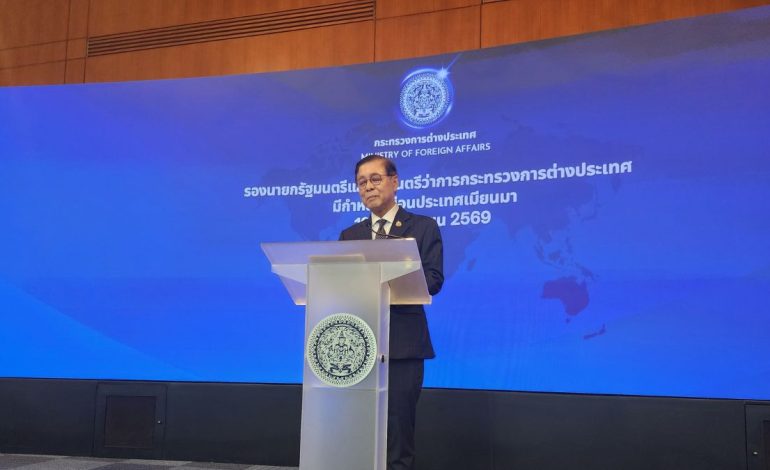
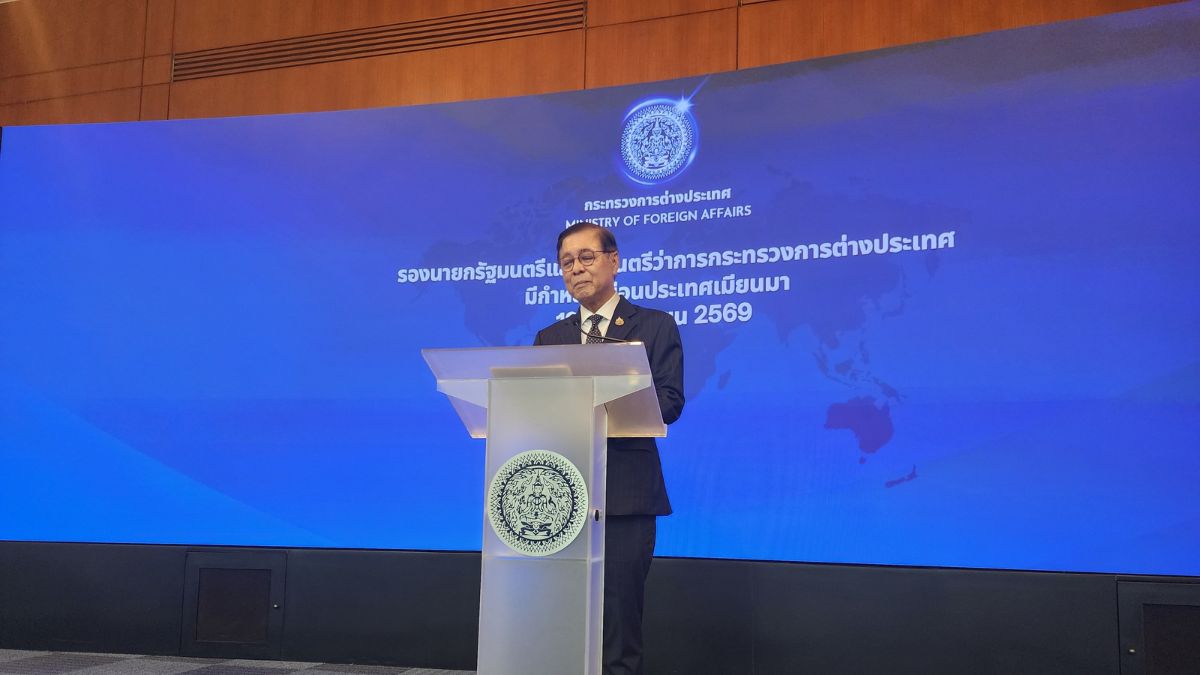
Thai deputy prime minister and foreign minister, Sihasak Phuangketkeow. (Image courtesy: X/@MayWongST)

New Delhi: Thailand is urging Asean to allow Myanmar’s foreign minister back into high-level meetings as the bloc prepares to review its stalled peace plan at the November 15–17 summit in Manila. The proposal has sharpened differences over whether renewed engagement can advance peace without granting premature political acceptance to Myanmar’s military-backed government.
Thai deputy prime minister and foreign minister, Sihasak Phuangketkeow, made the appeal after visiting Myanmar on Thursday, Reuters reported on Friday. He said “the next step” should be participation by Myanmar’s foreign minister, arguing that direct engagement would allow Asean to convey its concerns to decision-makers.
Sihasak stressed that Asean foreign ministers must agree on any change. He hoped conditions would improve sufficiently for a decision by Thailand’s turn as Asean chair in 2028.
Why Myanmar’s representation remains restricted
Myanmar’s military seized power in February 2021, removing Aung San Suu Kyi’s elected government. As protests gave way to widening armed conflict, Asean restricted Myanmar’s participation in summits and foreign ministers’ meetings to non-political representatives. Myanmar remains a member of the organization.
The restrictions followed the military authorities’ failure to implement Asean’s April 2021 five-point consensus. It calls for an end to violence, restraint by all parties, inclusive dialogue, mediation by a special envoy, humanitarian assistance through the Asean coordinating centre for humanitarian assistance on disaster management (AHA centre), and an envoy visit to meet concerned parties.
Five years later, implementation has made little progress, with fighting continuing and efforts to bring opposing parties into meaningful negotiations failing to produce a breakthrough.
Myanmar’s elections deepen diplomatic divisions
The military-backed union solidarity and development party won elections held in December 2025 and January 2026 without a viable opposition, according to Reuters. Min Aung Hlaing subsequently became president, but the vote did not resolve disputes over political legitimacy.
Laos, Thailand, Vietnam, Cambodia and Malaysia have hosted Min Aung Hlaing this year. The Malaysian prime minister, Anwar Ibrahim, also pledged in October to work towards Myanmar’s reintegration into Asean’s political processes. However, bilateral engagement does not automatically reverse the bloc’s collective restrictions.
The Human Rights Watch has urged Asean not to endorse the elections, calling instead for an end to attacks on civilians, humanitarian access and credible dialogue towards civilian rule.
Civil war and Thailand’s border concerns
The conflict has killed more than 100,000 people, according to Reuters. UNHCR data recorded 4,054,900 internally displaced people as of October 26, 2026, underscoring the scale of Myanmar’s humanitarian crisis.
Suu Kyi remains detained despite reportedly being moved to house arrest in April. A Red Cross official met her in August, but foreign envoys have not gained access despite requests.
For Thailand, engagement also addresses insecurity along its Myanmar border, migration, trade and energy cooperation.
During Thursday’s visit, Sihasak discussed cross-border incidents and pollution affecting the Kok river. He said Myanmar had agreed in principle to send a delegation for possible talks with ethnic armed organizations, although no date was announced.
What is at stake at the Manila summit?
The Philippine foreign ministry confirmed that Asean leaders would review the five-point consensus and reflect their conclusions in a negotiated summit document. Myanmar will be represented by its foreign ministry’s director-general for Asean affairs, rather than Min Aung Hlaing.
Asean is also considering whether to retain its annually rotating special envoy or establish a permanent mechanism. The Philippine foreign secretary, Theresa Lazaro, visited Myanmar on a humanitarian mission in October, but no new arrangement has been agreed.
Singapore-based analyst, Simon Tay, told Reuters that engagement could support the existing framework but cautioned: “Political acceptance should follow progress, not precede it.”
The Manila summit will test Asean’s ability to reconcile differing diplomatic approaches through consensus, with Singapore assuming the bloc’s chairmanship in 2027.