

Russia reportedly agreed to supply Iran 90 missile launchers for weapons used in Ukraine war
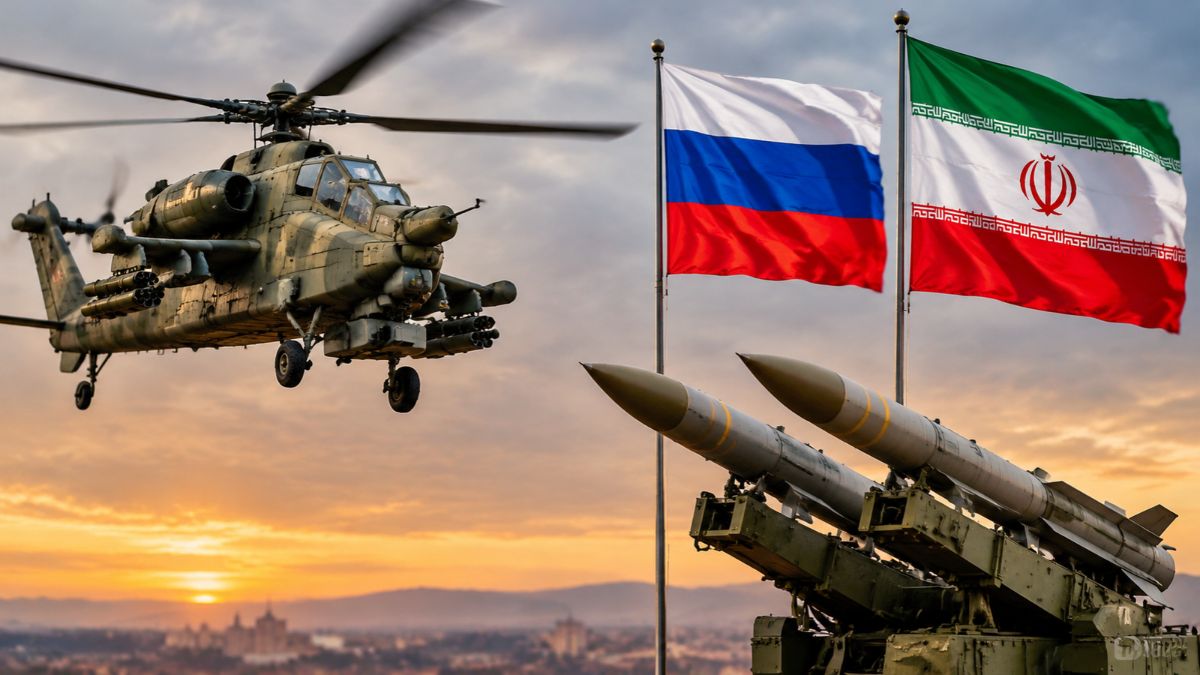
RNA Media illustration for representation.

New Delhi: Russia reportedly agreed to supply Iran with 90 helicopter-mounted launchers for precision-guided missiles used by Russian forces in Ukraine, according to previously undisclosed defence industry records. The documents identify an export order scheduled for delivery between late 2024 and December 2025 but do not establish whether the equipment reached Tehran.
A May 2024 production schedule prepared by Russian defence manufacturer Vympel listed 90 APU-L launchers under the export designation K-10, identified as Iran in Russian defence records, the Financial Times reported on Thursday.
The documents, obtained by Ukrainian private intelligence organization Dallas Analytics, provide details of Moscow’s arms-export commitments while its military continues to consume substantial equipment in Ukraine.
What makes the missile system significant?
The APU-L launcher is designed primarily for Russia’s Mi-28 attack helicopters and can carry two light multipurpose guided missiles (LMUR), also designated Izdeliye 305. The missiles have a reported operational range of approximately 14 kilometres and allow operators to adjust their trajectory during flight, enabling strikes against stationary and moving targets.
Russian forces have employed LMUR missiles in Ukraine since 2022. Unlike unguided rockets, these weapons allow helicopters to engage targets more precisely from greater distances.
The reported launcher order could complement Iran’s procurement of Russian-made Mi-28 helicopters. Iranian deputy defence minister, Mehdi Farahi, announced in November 2023 that arrangements for acquiring the aircraft had been finalized, while photographs circulated in January this year appeared to show an Mi-28 at an aviation facility in Tehran.
However, the number of operational helicopters and their integration with the missile system remain unclear.
What the leaked documents reveal
A May 2024 letter from Vympel to Russian defence manufacturer KBM requested faster delivery of components needed for launcher production, warning that delays could disrupt nine contracts. The accompanying schedule identified seven Russian customers and two foreign buyers, including Iran’s order for 90 APU-L launchers and a separate Chinese order for 192 APU-305 launchers.
The correspondence highlights pressure on Russia’s defence-industrial supply chain as manufacturers balance export commitments with military requirements arising from the Ukraine war. Another production schedule from 2023 identified six Yak-130 advanced trainer aircraft destined for Iran under the same K-10 designation.
Iran acknowledged receiving two aircraft in 2023, while the Stockholm international peace research institute recorded all six as delivered by the end of 2024. These records support the identification of Iran as the customer but do not establish completion of the missile-launcher transfer.
Russia-Iran military cooperation
The defence cooperation between Moscow and Tehran has expanded since Russia’s full-scale invasion of Ukraine in February 2022, including Russia’s use of Iranian-designed Shahed attack drones.
The two countries signed a comprehensive strategic partnership agreement in January 2025 covering military-technical cooperation, although it does not establish a mutual-defence alliance. Russia subsequently reaffirmed its commitment to bilateral cooperation during the foreign minister, Sergey Lavrov’s, October visit to Tehran, RNA Media reported.
The reported launcher agreement comes amid tensions involving Iran, Israel and the United States.
Western intelligence assessments have separately suggested that Moscow supplied Tehran with satellite imagery and other information potentially useful for identifying military targets. Russia has denied supplying weapons for Iran’s current conflict.
The Institute for the Study of War assessed that the helicopter-mounted weapons could support Iran’s counterinsurgency and border security operations. If delivered alongside compatible missiles, the launchers could strengthen Iran’s helicopter-based precision-strike capabilities.
However, neither the leaked production records nor available official statements confirm delivery of all 90 launchers, associated LMUR missiles or their operational deployment by Iranian forces.