


Exercise Rahat Mitra – 2026: India, Myanmar launch first triservice disaster relief drills in Chennai
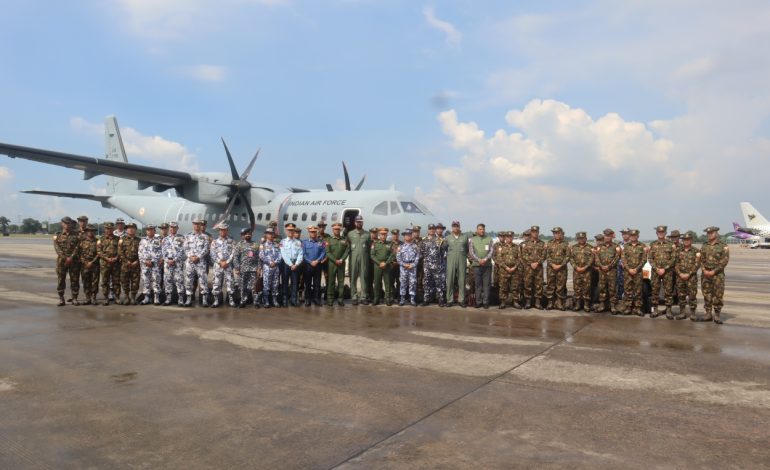
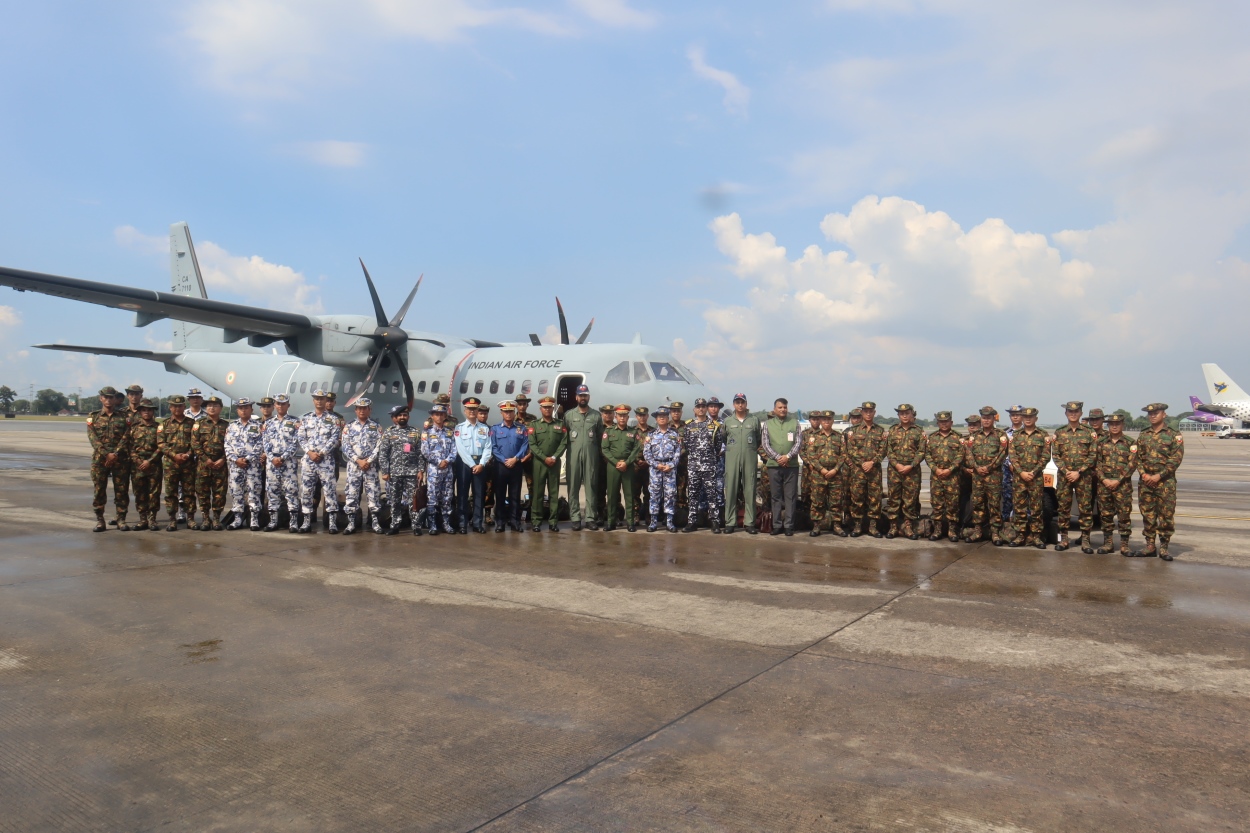
Indian and Burmese military contingents taking part in Exercise Rahat Mitra. (Photo: MoD)

New Delhi: India and Myanmar have launched their first bilateral triservice HADR (humanitarian assistance and disaster relief) exercise, named Rahat Mitra, in Chennai, bringing together military personnel from both countries to improve their ability to respond jointly to natural disasters and humanitarian emergencies. The exercise, which began on Thursday and will conclude on Friday, involves more than 300 personnel from the armies, navies and air forces of the two neighbouring countries, with the Indian Navy coordinating the multinational training activities.
The exercise is designed to improve operational coordination, strengthen interoperability and develop common procedures for responding to emergencies that require the deployment of military resources across national boundaries. It also provides an opportunity for personnel from the two countries to exchange operational experiences, assess disaster management practices and identify areas where closer cooperation could improve the speed and effectiveness of relief operations.
Conducted under the theme “Together for Humanity, Stronger through Partnership”, Rahat Mitra combines professional exchanges with practical demonstrations of disaster response capabilities. The participating forces are focusing on coordinated rescue operations, emergency engineering support and the restoration of essential services in areas affected by natural calamities.
As part of the exercise, Indian Army personnel, working alongside the Indian Navy and Indian Air Force, demonstrated the capabilities of flood relief columns and engineer task forces. These included rescue operations, the removal of accumulated floodwater through dewatering equipment and the construction of temporary bridges to restore road connectivity and facilitate access to disaster-affected communities.
Such capabilities are particularly important during major floods and cyclones, when damaged roads, submerged settlements and disrupted communication networks can delay relief operations. Military engineering units, transport aircraft, helicopters and naval platforms can play complementary roles in evacuating stranded people, transporting emergency supplies and restoring access to isolated areas.
Building on earlier humanitarian operations
The exercise comes against the backdrop of several Indian humanitarian missions in Myanmar, which has experienced devastating cyclones, floods and earthquakes in recent years. These operations have demonstrated the importance of rapid military mobilization and cross-border logistical coordination, particularly when civilian disaster management agencies face substantial operational challenges.
In May 2023, India launched Operation Karuna after Cyclone Mocha devastated parts of Myanmar, particularly its western coastal regions. Four Indian Navy ships – INS Shivalik, INS Kamorta, INS Savitri and INS Gharial – delivered relief supplies, medicines and medical equipment, including a portable medical facility, to support emergency assistance in the affected areas.
India subsequently provided humanitarian assistance to Myanmar following Typhoon Yagi in 2024 under Operation Sadbhav. In March 2025, New Delhi launched Operation Brahma to assist Myanmar after a major earthquake, extending emergency relief and recovery support to the disaster-stricken country.
These earlier missions largely involved responding to emergencies after they had occurred, whereas Rahat Mitra seeks to strengthen preparedness before a disaster strikes. Joint training can help participating forces familiarize themselves with each other’s equipment, operational procedures and command structures, potentially reducing coordination difficulties during actual relief missions.
Growing defence and strategic cooperation
The Chennai exercise also follows the Eighth India-Myanmar Army-to-Army Staff Talks, held recently in Naypyidaw, where military delegations discussed expanding cooperation in training, professional exchanges and capacity building. During the engagement, the Indian delegation handed over training simulators to the Myanmar Army and explored opportunities for closer military interaction.
Myanmar occupies an important position in India’s regional security calculations because of its geographical location between South Asia and Southeast Asia and its proximity to the northeastern states. The two countries share a land boundary of approximately 1,643 kilometres, making cooperation on border management, security and emergency response an important component of their bilateral relationship.
Beyond their land frontier, both countries have interests in maintaining stability and improving humanitarian response capabilities across the northeastern Indian Ocean and the Bay of Bengal. The region is frequently exposed to tropical cyclones, severe flooding and other natural hazards, creating a practical requirement for cooperation in maritime surveillance, emergency transportation and disaster relief logistics.
The Indian defence ministry has placed Rahat Mitra within the broader framework of India’s “Neighbourhood First” policy and its “Mahasagar” vision – Mutual and Holistic Advancement for Security and Growth Across Regions. The initiative seeks to expand regional cooperation in maritime security, economic development and humanitarian assistance, with disaster preparedness forming an important element of India’s engagement with neighbouring countries.
For New Delhi and Naypyidaw, the inaugural exercise provides a structured opportunity to move beyond individual relief missions towards more regular operational interaction between their armed forces. Its longer-term significance will depend on whether the experience gained in Chennai translates into sustained joint training, compatible response procedures and more effective coordination during future humanitarian emergencies.