



Pakistan tests extended-range Fatah-4 cruise missile with upgraded avionics, navigation
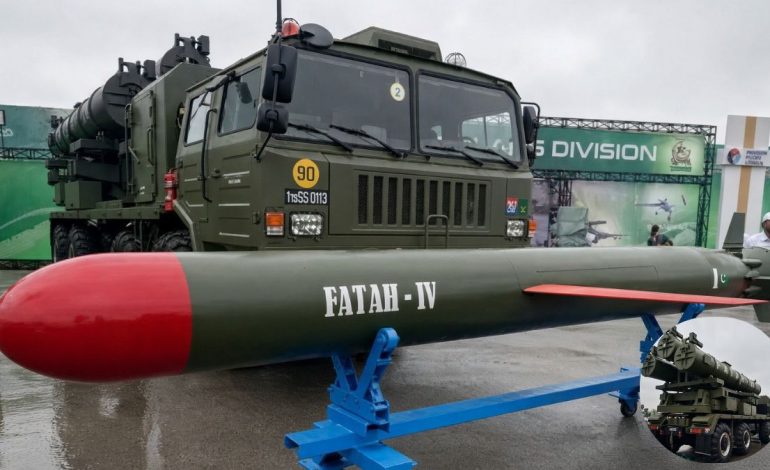
Pakistan’s Fatah-4 ground-launched cruise missile (Image courtesy: X/@awais4226)

New Delhi: Pakistan on Tuesday successfully test-fired an indigenously developed extended version of its Fatah-4 ground-launched cruise missile, with the military saying the weapon incorporates upgraded avionics and navigation systems for strikes at greater distances. The precise range of the new version was not disclosed.
The Inter-Services Public Relations (ISPR) said the weapon was “equipped with advanced avionics and state-of-the-art navigational aids” and could engage targets at extended ranges with “high precision and lethality”.
The latest test also validated additional “technical parameters” of several subsystems incorporated to improve accuracy and survivability, according to the military. Pakistan did not disclose the precise modifications made to the missile or detailed performance data from the launch.
Pakistan’s September 30, 2025, training launch of the Fatah-4 was reported at a range of 750 kilometres. The latest ISPR statement did not disclose the range of the extended version tested this week.
A 750-kilometre range would theoretically place large parts of northwestern India within reach from launch positions in eastern Pakistan, including major centres such as New Delhi, Chandigarh, Jaipur and Jodhpur, depending on the launch point and flight path. The extended version tested this week could potentially reach farther, but Pakistan has not disclosed how much farther the extended version tested this week can reach.
Pakistan also conducted a training fire of the Fatah-4 on May 14, this year, under the army rocket force command. The military said that launch was intended to enhance troops’ operational efficiency and validate technical parameters of subsystems designed to improve accuracy and survivability.
During the September 2025 launch, Pakistan said Fatah-4 employed a terrain-hugging flight profile and advanced navigation intended to improve precision and survivability. The military has presented the system as part of Pakistan’s conventional missile capability, but its claims regarding the weapon’s ability to evade missile defences have not been independently verified.
Senior Pakistani army officers and scientists and engineers from the developing agency witnessed Tuesday’s launch.
“Today’s launch was witnessed by senior officers from Pakistan Army along with scientists and engineers of the developing agency,” ISPR said.
The Pakistan president, Asif Ali Zardari, the Pakistan prime minister, Shehbaz Sharif, army chief, Field Marshal Asim Munir, and the country’s service chiefs subsequently commended those involved in the programme.
The interior minister, Mohsin Naqvi, called the test a “commendable achievement of our scientists and engineers” and a “significant development” in Pakistan’s defence sector. “I congratulate our scientists and engineers, and we are proud of them,” he said.
The latest launch continues Pakistan’s development of the Fatah-4 system, but key details about the extended version, including its precise range, deployment status, production numbers and operational induction timeline, remain undisclosed.