Operation Sindoor effect: Türkiye signals recalibration of India ties, dehypenates Pakistan
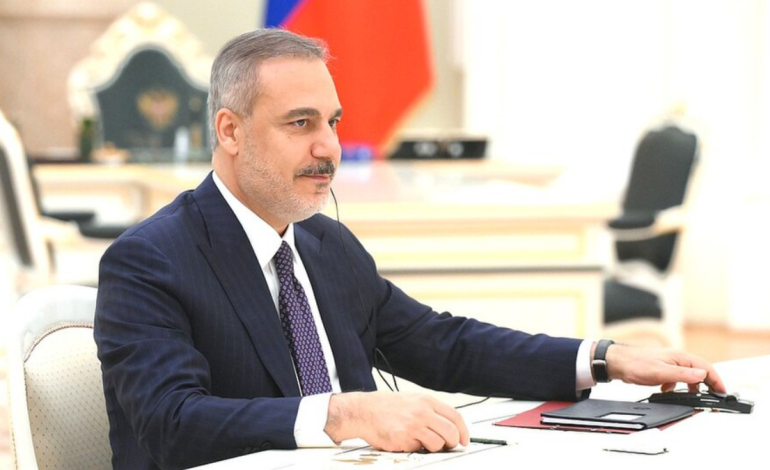
Turkish foreign minister, Hakan Fidan. (Image courtesy: Wikimedia)

New Delhi: Türkiye has reportedly signalled a recalibration of its diplomatic ties with India, detangling them from Pakistan, with which it has consciously maintained deeper ties, in a significant geopolitical shift after May 2025 Operation Sindoor, CNN-New18 reported on Thursday.
“Türkiye has signalled a strong desire to decouple its bilateral relationship with India from its historic, deeply entrenched ties with Pakistan,” the report said, quoting unnamed intelligence sources.
It said Türkiye was actively seeking to insulate its economic and diplomatic relationship with India from the South Asian conflicts and geopolitics, in a bid to establish “a pragmatic, transaction-based diplomatic foundation.”
Türkiye’s officials have maintained that they have no inherent bilateral disputes with India, marking a conscious effort to transition toward “a more normalised, state-to-state diplomacy,” while avoiding provocative territorial rhetoric, the report said.
“This diplomatic overture is widely viewed by intelligence experts as a defensive narrative driven by Türkiye’s pressing internal economic challenges,” without naming who these experts were.
The reason for the change of heart in Ankara was attributed to its eagerness to prevent New Delhi from engaging in manoeuvres that are counterproductive to Türkiye’s diplomatic interests, particularly on New Delhi’s trade leverage against Turkish firms.
Indian agencies alert
However, the Indian security agencies were alert and highly focused on Türkiye’s defence exports to Pakistan, specifically the proliferation of Ankara-origin drones and dual-use sensor technologies that were heavily deployed by Islamabad during the Operation Sindoor conflict in May 2025.
Türkiye’s bid is to keep its defence supplies to Pakistan separate from the broader economic ties with India, the report said. Ankara was testing the waters to see if it could maintain its traditional leadership role in the Organization of Islamic Cooperation (OIC) while still building “a highly lucrative, pragmatic partnership” with New Delhi, the report added.
After India’s Operation Sindoor, reports emerged that Pakistan had deployed Turkish-origin military systems in its four-day war with India. As New Delhi viewed the arms supplies to Islamabad adversely, Ankara claimed that it did not send any additional weapon systems or extraordinary assistance during the military faceoff.
The Turkish foreign minister, Hakan Fidan, requested New Delhi not to read adversely into its long-standing defence cooperation with Pakistan. He characterized Ankara’s recent military engagements, such as naval port visits and military cargo flights, as routine, well-documented bilateral protocols.
Power balance impact
India and its security agencies, though, are maintaining a strategic caution, without falling easily for Türkiye’s narrative. New Delhi continues to evaluate the impact of Turkish military supplies to Pakistan on the balance of power scale in South Asia.
“The developing situation underscores a delicate diplomatic balancing act, where Türkiye seeks to safeguard its economic interests in India without explicitly dismantling its traditional strategic partnership with Pakistan,” the report added.
A 2023 Ministry of External Affairs document on India’s bilateral ties with Türkiye noted that the economic engagement had acquired new momentum in recent years with a considerable increase in trade, exceeding the $10 billion mark in 2021-22.
During their bilateral meeting in September 2022 on the side lines of the SCO summit in Samarkand, the prime minister, Narendra Modi, and Türkiye’s president, Racep Tayyip Erdoğan, agreed to enhance bilateral trade to $20 billion.
Indian companies have invested about $126 million in Türkiye, according to the data from the Central Bank of Türkiye. Turkish investment in India is worth $210.47 million, according to India’s Department for Promotion of Industry and Internal Trade.