Now, Trump demands reparations from Iran as Hormuz deal looks distant
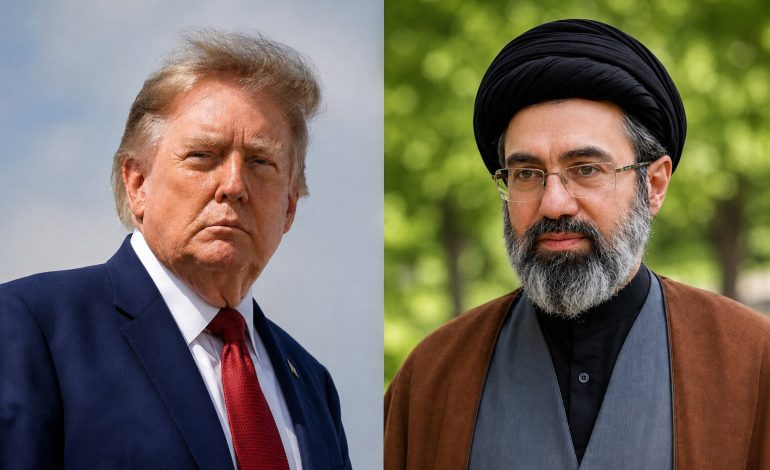
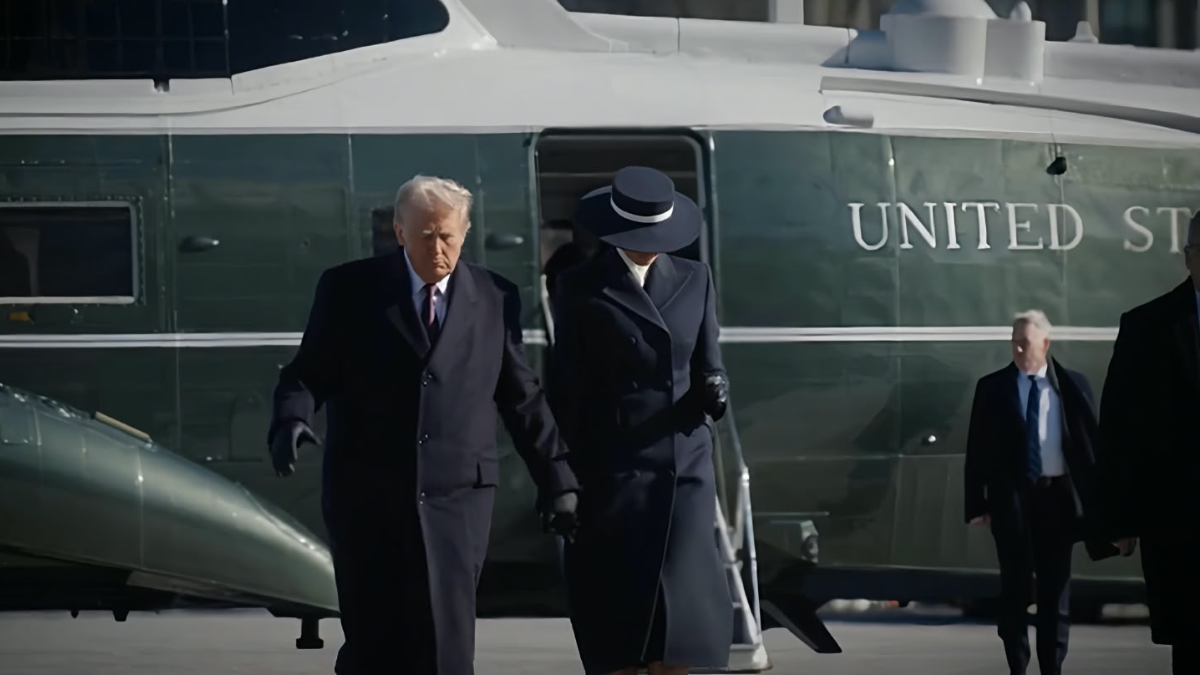
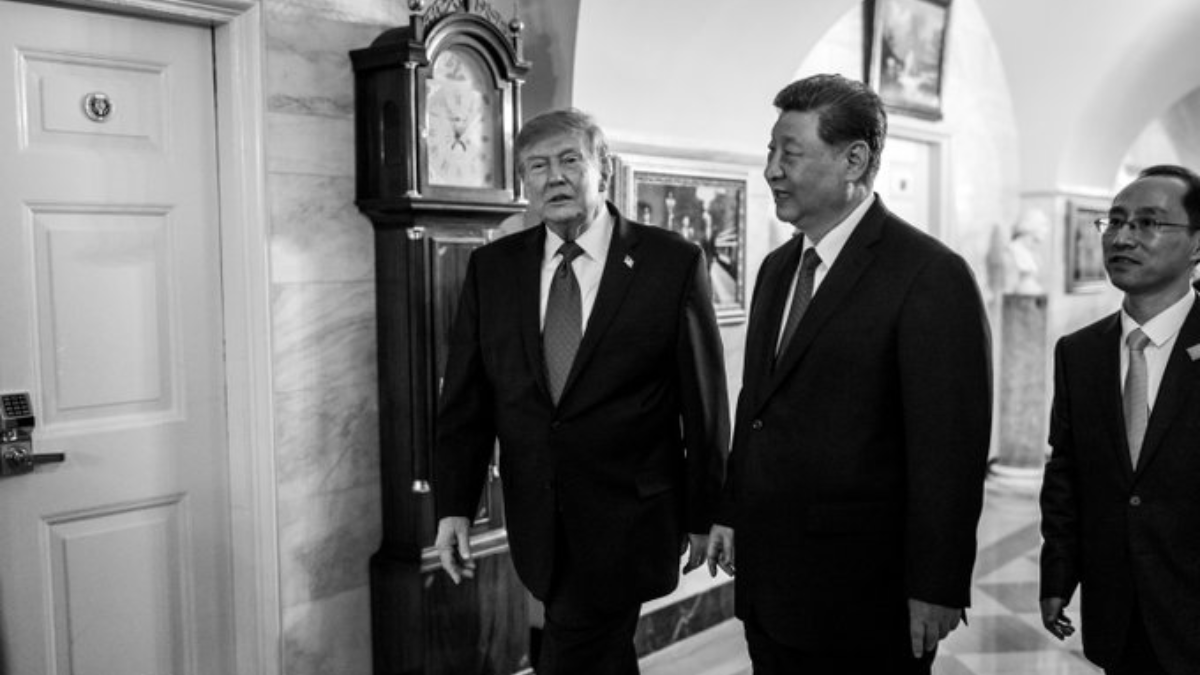
Donald Trump (L) and Mojtaba Khamenei.

New Delhi: Hopes of an early reopening of the Strait of Hormuz dimmed sharply on Monday after the US president, Donald Trump, demanded that Iran pay compensation for people killed or wounded in conflicts he blamed on Tehran. The remark, posted on his Truth Social account, came only hours after Iran repeated its own long-standing demand that Washington compensate Tehran before the strategic waterway reopens.
Trump wrote that he found it “an interesting idea” to seek compensation from Iran for people it had killed and gravely wounded through roadside bombs and other conflicts. He added that he had instructed his officials to build the demand into all future negotiations, according to the post.
Speaking separately at the White House, Trump said Washington would seek payment for what he described as five decades of damage, covering both Iranian protesters killed during unrest and American personnel. He specifically raised the case of the 17 US sailors killed in the October 2000 bombing of the USS Cole in Yemen, an attack that has historically been attributed to al-Qaeda rather than Iran.
Trump also wrote that Tehran should “be responsible for the damages and death caused to the people of Lebanon, Syria, Yemen, and Gaza”. The remark drew attention because Trump himself had urged Iranians to rise up against their government when the war began in February, even as rights groups say Tehran has since intensified its crackdown on dissent.
Tehran’s own conditions remain unchanged
Iran’s position had not shifted. The foreign minister, Abbas Araqchi, said on Sunday that Tehran would not resume talks until Washington compensated it for what it called violations of the interim peace agreement signed in June, an accord that has since collapsed in all but name.
The secretary of Iran’s supreme national security council, Mohammad Baqer Zolqadr, had earlier listed Tehran’s conditions in full – a permanent end to the war against Iran and its regional allies, a halt to threats against Tehran, the lifting of the US naval blockade in the Gulf, compensation for war damage, and the unconditional release of sanctioned or frozen Iranian assets. Iranian state media reported that the strait would stay shut until Washington “corrects its behaviour”.
Even as the rhetoric hardened, technical negotiations between Iran and Oman over new navigation routes through Hormuz continued to progress. The foreign ministry spokesman, Esmaeil Baghaei, said on Monday that talks with Muscat were moving along smoothly, with a shipping route map already agreed, though some language in a joint statement remained unsettled.
Those talks reportedly extend to arrangements for paid services such as safe navigation, environmental protection and maritime security along the route. American officials have, however, ruled out any settlement that would let Tehran levy access fees on vessels transiting the strait, a sticking point that could yet undo months of quiet diplomacy.
As reported by RNA Media on Monday, Iran underlined its resolve over the weekend by naming Mohsen Rezaee, a veteran former commander of the Islamic Revolutionary Guard Corps, as secretary of the supreme national security council. Rezaee, 71, led the guard corps through much of the Iran-Iraq war of the 1980s and has previously called Iranian control of Hormuz more valuable than dozens of nuclear weapons.
He replaces Mohammad Baqer Zolqadr, who has been moved to serve as a political adviser to Iran’s supreme leader. The reshuffle followed the killing of Zolqadr’s own predecessor, Ali Larijani, in an air strike earlier in the conflict, a reminder of how thoroughly the war has reshaped Tehran’s security establishment.
Financial markets read the exchange as a setback. Brent crude settled close to five per cent higher on Monday at $87.72 a barrel, and West Texas Intermediate rose by a similar margin to $82.13, the sharpest single-day gains for both benchmarks since late July.
The rally followed a fall of more than seven per cent the previous week, when traders had grown optimistic that the Oman track might yield a swift reopening. Adding to supply concerns, Iran-aligned Houthi rebels claimed a strike on Saudi Aramco’s Jazan refinery on Sunday, widening the conflict’s footprint beyond the strait itself.
New Delhi has good reason to track every twist in these talks closely. Roughly a fifth of global oil and liquefied natural gas normally moves through Hormuz, and the effective closure since February pushed India’s crude basket price above $113 a barrel at its peak, straining an economy that imports close to 88 per cent of its crude and around half its natural gas.
India has since diversified its supplier base to nearly 40 countries and set up round-the-clock monitoring of fuel stocks, but its strategic reserve still covers barely nine to ten days of net imports – far thinner than the cushion held by Japan or South Korea. A prolonged deadlock between Washington and Tehran, layered atop the unresolved compensation dispute, keeps that vulnerability firmly in play for Indian policymakers heading into the coming quarters.