


North Korea fires missile salvo after South’s hypersonic test; Seoul demands halt
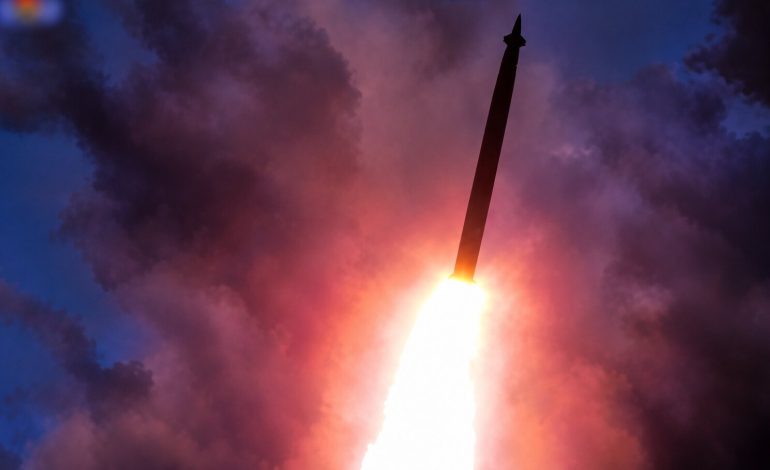
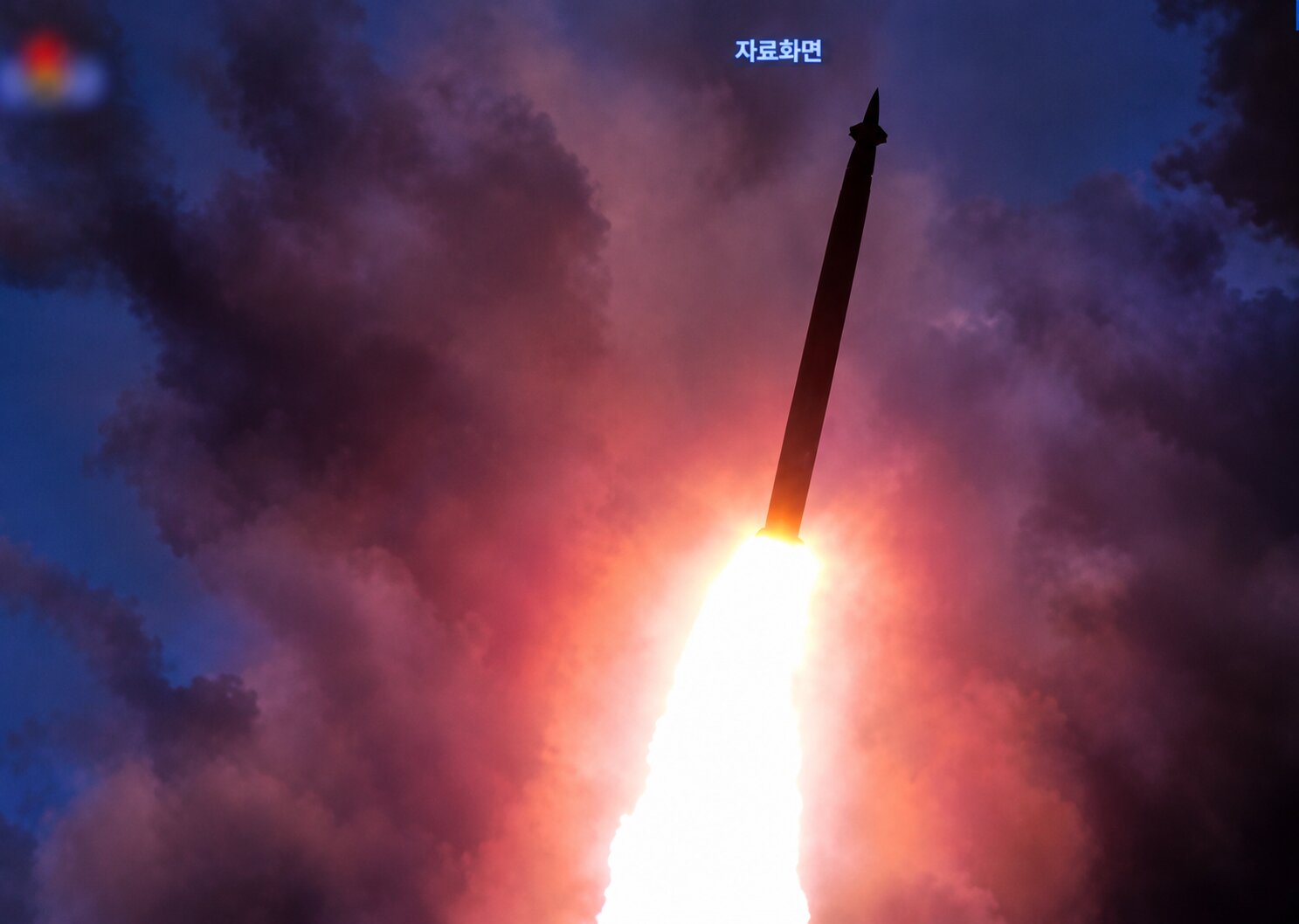
This digitally enhanced screenshot of a Channels TV footage shows one of the missiles North Korea launched on October 12, 2026.

New Delhi: North Korea launched multiple ballistic missiles into waters off its east coast on Monday, prompting South Korea to convene an emergency security meeting and demand an immediate halt to the tests. The launches followed recent weapons demonstrations by both countries, adding to tensions on the Korean Peninsula as diplomatic efforts remained stalled.
South Korea’s joint chiefs of staff said the missiles were fired from the Pyongyang area at about 9.20am local time, with at least one travelling more than 900 kilometres. South Korean and US officials were analysing the weapons’ specifications, while Seoul had not disclosed the total number detected.
Japan detected at least two missiles launched 17 minutes apart, according to its deputy defence minister, Takashi Koyari, who said both fell outside the country’s exclusive economic zone. The first travelled about 220 kilometres and the second more than 910 kilometres, with the latter following an irregular flight path; no damage to aircraft or vessels was reported.
The reported trajectories placed the missiles over the sea east of the Korean Peninsula, rather than indicating an attack directed at South Korean territory. Japan nevertheless lodged a protest with Pyongyang through their embassies in Beijing.
In Seoul, the presidential national security office brought together defence ministry and military officials to review readiness and assess the implications for national security. The presidential spokesman, Kang Yu-jung, said the repeated launches violated United Nations security council resolutions and complicated efforts to manage the situation on the peninsula.
The office called for the launches to stop immediately and instructed the relevant agencies to take necessary measures following their assessment. Its response reflected concern over successive tests, with the latest firing coming nine days after North Korea’s previous strategic missile demonstration.
South Korea’s military assessed that the salvo was intended to demonstrate North Korea’s missile capabilities and could also be a response to Seoul’s recent hypersonic test. It was Pyongyang’s fourth launch in a month, Reuters reported, although that assessment of its motives did not establish the purpose of each weapon fired.
The president of South Korea, Lee Jae-myung, recently oversaw the first test of a domestically developed hypersonic missile, describing it as progress towards greater defence self-reliance. His office said the weapon’s speed and unpredictable trajectory would strengthen the country’s ability to strike targets, and Lee urged researchers to accelerate its development and deployment.
Hypersonic weapons fly at least five times the speed of sound, but their military significance also lies in their ability to manoeuvre during flight. A US congressional research service assessment explains that the combination of speed and manoeuvrability can challenge detection and interception, making flight characteristics an important part of assessing such tests.
North Korea’s October 3 launch involved what Pyongyang described as an intermediate-range strategic missile, tested under the supervision of its leader, Kim Jong-un. His sister and senior ruling-party official, Kim Yo-jong, claimed the weapon could change course at low altitude and frustrate tracking, but provided no evidence for those assertions.
Seoul’s objection rests on longstanding restrictions on North Korea’s weapons programmes, rather than on where the latest missiles landed. security council Resolution 1718, adopted in 2006 after the North’s first nuclear test, demanded that Pyongyang conduct no further ballistic missile launches and suspend activities related to its ballistic missile programme.
The launches also came amid a dispute over a September 21 mine explosion near the inter-Korean border that injured South Korean soldiers. Seoul said a joint investigation with the US-led United Nations Command established that North Korean troops had planted the mines south of the Military Demarcation Line, while Pyongyang denied responsibility and rejected demands for an apology.
The military tensions have further complicated Lee’s efforts to reopen dialogue, with North Korea also rejecting a proposed South Korean medical aid package last week. Kim Yo-jong described the initiative as politically motivated, while Seoul maintained that it would continue trying to reduce distrust and expand humanitarian cooperation.
Nuclear negotiations with Washington have remained stalled since talks broke down in 2019, and Kim has so far rebuffed renewed overtures from the US president, Donald Trump. Pyongyang wants Washington to abandon what it calls a hostile policy and drop denuclearization demands as a precondition for negotiations, leaving a substantial gap between the sides even as weapons development continues.



