
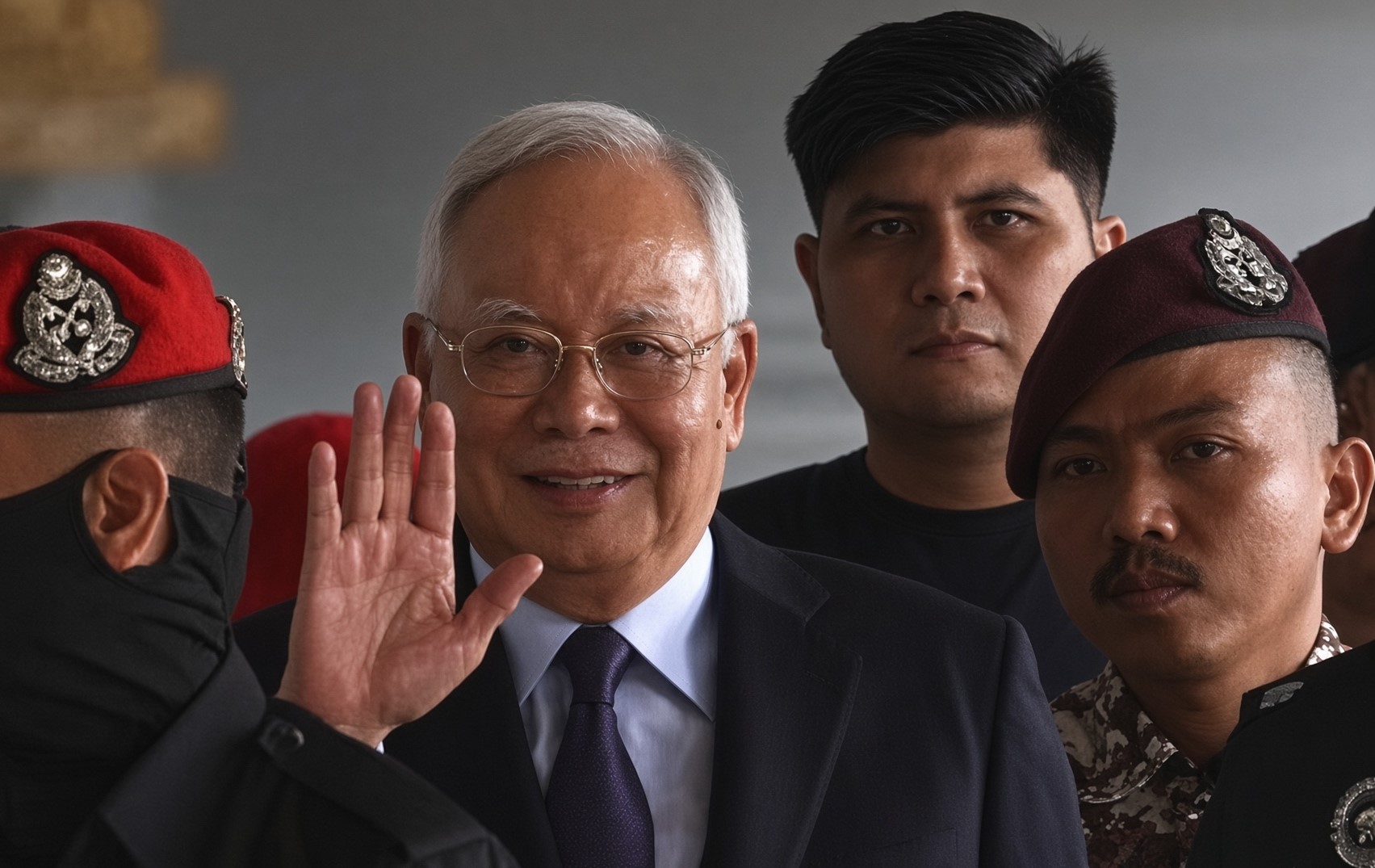

Malaysia’s former PM Najib Razak granted house arrest in fresh royal clemency over 1MDB-linked graft conviction
Najib Razak

New Delhi: Malaysia’s king, Sultan Ibrahim Iskandar, has granted former prime minister Najib Razak a conditional pardon, allowing him to serve the remainder of his prison sentence under house arrest, in a significant development in the long-running legal fallout from the 1Malaysia Development Berhad (1MDB) scandal. The decision means Najib, who has been imprisoned since August 2022, can serve the balance of his six-year sentence at home until August 23, 2028, subject to a RM50 million fine and other conditions.
The decision was taken at a specially convened meeting of the pardons board for the federal territories of Kuala Lumpur, Labuan and Putrajaya on Friday, according to Malaysia’s legal affairs division. The authorities said the house-arrest arrangement forms part of a conditional pardon and that failure to comply with its terms could result in the clemency being revoked and Najib being returned to prison.
The move marks a major change from Najib’s previous attempt to secure home detention. In December 2025, the Kuala Lumpur High Court rejected his earlier bid, ruling that an additional royal order reportedly permitting house arrest had not followed the constitutional procedure because it had not been considered by the Pardons Board.
The latest decision therefore provides a formal route for house arrest through the pardons board, rather than relying on the disputed royal addendum that had been at the centre of Najib’s earlier legal challenge. Malaysia’s federal court had previously allowed him to pursue judicial review of the issue, while the high court later ruled that the earlier order could not be enforced because the required procedure had not been followed.
Najib’s original six-year sentence arose from his conviction over the diversion of RM42 million from SRC International, a former subsidiary of 1MDB. He was initially sentenced to 12 years in prison and fined RM210 million, but the pardons board in 2024 reduced the prison term to six years and cut the fine to RM50 million.
The house-arrest decision does not, however, resolve Najib’s wider legal exposure. In December 2025, the high court convicted him on 25 charges involving the abuse of his position and money laundering linked to about RM2.3 billion in 1MDB funds, imposing a further 15-year prison sentence and a fine of about RM11.4 billion – a ruling he is appealing.
The distinction is important because the latest clemency applies to the SRC International sentence rather than automatically cancelling the separate 1MDB conviction. Najib therefore remains involved in several criminal and civil proceedings despite being allowed to serve the balance of the SRC sentence outside prison.
The 1MDB scandal has remained one of the most consequential financial and political controversies in Malaysia, involving billions of dollars allegedly diverted from a state investment fund established during Najib’s premiership. International investigations have traced money connected to the scandal through multiple jurisdictions, while Malaysia has pursued the recovery of assets and funds linked to the case.
Najib was prime minister from 2009 until his coalition suffered a historic defeat in the 2018 general election, when public anger over the 1MDB affair became a major political issue. His imprisonment in 2022 marked an extraordinary reversal for a former national leader who had remained an influential figure within the United Malays National Organisation (UMNO).
The Malaysian prime minister, Anwar Ibrahim, has defended the clemency process by pointing to the constitutional role of the monarchy and the pardons board, while maintaining that his administration remains committed to combating corruption. The decision is nevertheless likely to attract renewed political and public scrutiny because Najib continues to have supporters within UMNO, a component of Anwar’s governing coalition.
For Malaysia, the episode also carries significance beyond Najib’s individual case because the country is considering broader reforms to its criminal justice system, including the possible use of home detention in certain circumstances. The Najib decision is therefore likely to be closely watched as authorities balance royal clemency, judicial procedure, punishment and the wider principle of accountability for corruption involving public funds.