




Australia rules against India’s exclusive Basmati claim. Why India-Pakistan disunity risks the name’s exploitation
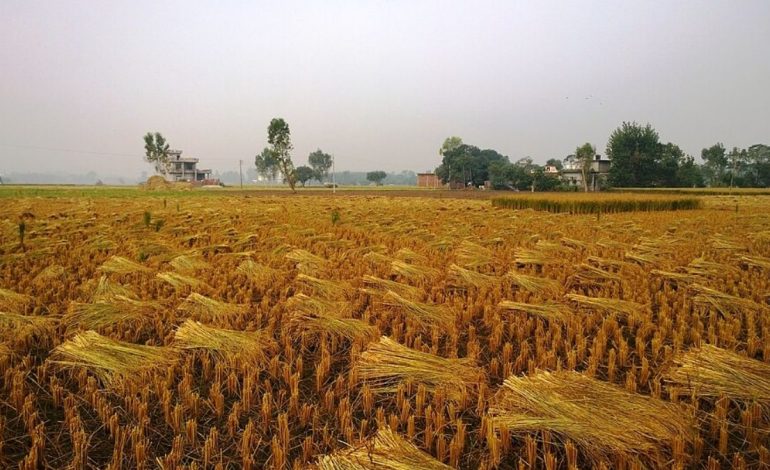
Basmati rice fields in India. Image courtesy: Wikimedia Commons

New Delhi: The Federal Court of Australia has dismissed an appeal by India’s Agricultural and Processed Food Products Export Development Authority (APEDA) to register the word ‘Basmati’ as an exclusive certification trademark, ruling that Pakistani producers have an equally legitimate claim to use the name. The judgment, delivered by Justice Dowling on August 12, upholds a 2022 decision by the Australian Registrar of Trade Marks, which had found that ‘Basmati’ alone could not distinguish rice certified by APEDA from Basmati legitimately produced and marketed by other traders, including in Pakistan. The court also ordered APEDA to pay the respondent’s costs.
The ruling has been welcomed by Islamabad as vindication of its long-standing position that Basmati is a geographical indication tied to a historic growing belt spanning both Pakistan and India, rather than a name that either country can claim exclusively. Pakistan’s commerce minister, Jam Kamal Khan, described the outcome as a significant win for the country’s “agricultural heritage, commercial
For India, the setback in Australia adds a new front to a wider, unresolved contest over who controls the Basmati name in international markets – one that has grown more consequential as India’s own Basmati trade hits record volumes and looks to expand into new markets such as Japan.
Basmati’s older, unresolved fight: the European Union
The immediate battleground remains the European Union, where India and Pakistan have filed separate applications seeking Protected Geographical Indication (PGI) status for Basmati. DW, in a documentary published on August 28, described the contest as one of the most complex disputes in the global food trade, with both countries claiming the premium aromatic rice as part of their agricultural and cultural heritage.
The stakes are substantial. According to APEDA, India exported 6.52 million tonnes of Basmati worth ₹50,138.28 crore in 2025-26, a record volume.
Pakistan is a much smaller exporter, but Basmati remains important to its rice economy. Pakistan Bureau of Statistics data, reported by the state-run Associated Press of Pakistan, put its 2025-26 Basmati exports at about 794,638 tonnes worth roughly $843 million.
What exactly are India and Pakistan fighting over?
The dispute is often reduced to whether Basmati is Indian or Pakistani. Legally, it is more complicated. India does not dispute that Basmati is cultivated in present-day Pakistan. The fight is over how the name should be protected in Europe and what geographical area should fall under that protection.
A geographical indication links a product’s reputation or characteristics to a defined place. Protection can prevent producers outside the recognised region from using the name and can help preserve the premium attached to authenticity and origin.
European Union records show that India filed its Basmati application on July 18, 2018. It was published in the EU’s Official Journal in September 2020, opening the way for objections. India’s dossier describes Basmati as a special long-grain aromatic rice produced in specified parts of northern India in the Indo-Gangetic plains below the Himalayan foothills.
Pakistan opposed India’s application, arguing that Basmati is also historically produced on its side of Punjab. Islamabad later filed its own application on August 24, 2023.
That has left Brussels with an unusual problem: two neighbouring countries are asking it to protect the same internationally recognised food name through separate national applications.
Basmati’s geography predates Partition
The traditional Basmati-growing belt spans the Indo-Gangetic plains and Punjab, an agricultural landscape that existed long before Partition in 1947.
In India, APEDA says the registered Basmati GI area covers Punjab, Haryana, Himachal Pradesh, Uttarakhand, Delhi, 30 districts of western Uttar Pradesh and three districts of Jammu & Kashmir.
Pakistan’s EU application similarly identifies production areas in the Indo-Gangetic plains. It also includes areas in POK among the claimed Basmati-growing territory, adding political sensitivity to an already difficult trade and intellectual-property dispute.
European GI rules can accommodate cross-border products. In principle, Basmati could fit such a model. The obstacle is less geographical than political, because India-Pakistan relations make a joint approach extremely difficult.
A joint EU application would require both governments to agree on a shared product specification, a common growing-area map and joint quality standards – a level of formal coordination that has proved elusive given the broader state of India-Pakistan ties. Trade and diplomatic channels between the two countries have been strained for years, leaving little institutional space for the kind of technical cooperation a joint GI filing would demand. As a result, both sides have continued to pursue separate national applications, even though this leaves the EU to adjudicate between two competing claims rather than a single, uncontested one.
Why misuse of the Basmati name matters
DW’s August 28 documentary highlighted a wider risk. Experts cited by DW warned that widespread misuse of the Basmati name in international markets could weaken efforts to protect it.
If Basmati is used loosely for aromatic long-grain rice produced outside the recognised geographical area, the name can gradually lose the association with origin that gives GI protection commercial value.
That is why the dispute is not simply about which country exports more. Both India and Pakistan also have an interest in preventing the Basmati name from becoming generic.
Why Europe matters
Europe is important because GI recognition affects branding, traceability and pricing in a high-value consumer market.
For Pakistan, the Basmati label helps its rice command a premium over ordinary long-grain varieties. India is the much larger global exporter and, according to the European Commission, supplies most of the Basmati imported into the EU.
Neither side therefore sees the case as a symbolic argument over culinary history. Any decision that appears to narrow one country’s ability to market rice as Basmati could affect exporters, millers and farmers.
India’s bigger challenge: reducing dependence on West Asia
While the legal disputes continue, India faces another commercial challenge. Its Basmati exports remain heavily concentrated in West Asia.
APEDA data for 2025-26 show that Saudi Arabia accounted for 16.6 per cent of India’s Basmati exports, Iran 13.9 per cent, Iraq 11.2 per cent, the United Arab Emirates 8.2 per cent and Yemen 5.7 per cent.
That concentration creates vulnerability to conflict, shipping disruption, sanctions and payment problems in the Gulf. Reuters reported in May that India’s Basmati exports in the first four months of 2026 fell 7 per cent to about 2.3 million tonnes as the Iran conflict affected shipments to Gulf markets.
The pressure has since increased. Reuters reported this month that tighter US sanctions and disruption to trade and payment channels through Dubai were expected to further hit Indian exports to Iran. That makes diversification increasingly important.
India explores Japan as a potential market
Commerce and Industry Minister Piyush Goyal’s visit to Japan from August 24 to 27 gave that push fresh momentum.
Speaking at an investors and business roadshow in Osaka, Goyal said India would seek greater market access for Basmati rice during the review of the India-Japan Comprehensive Economic Partnership Agreement.
Rice remains a sensitive sector in Japan, but the market is attractive because it is wealthy, quality-conscious and capable of supporting premium food products.