
India puts upgraded BrahMos under a veil of secrecy. Why New Delhi wants to keep adversaries guessing
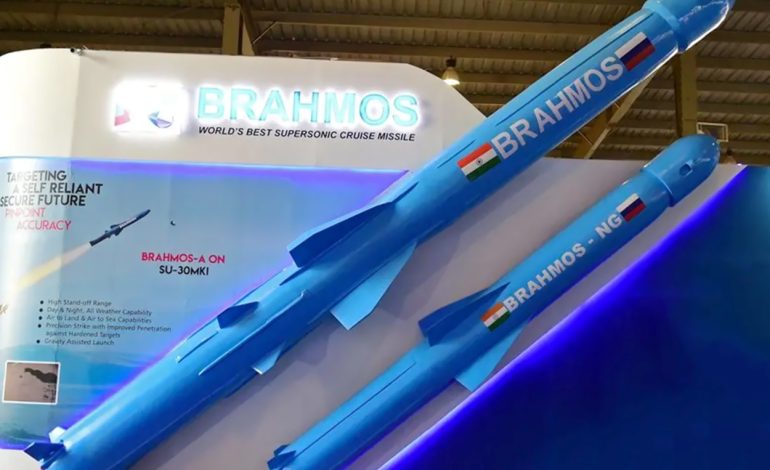
Models of the new-generation BrahMos (BrahMos-NG) at display at the BrahMos Aerospace pavilion at a defence exhibition. (Photo: X/@TheMilObserverr)

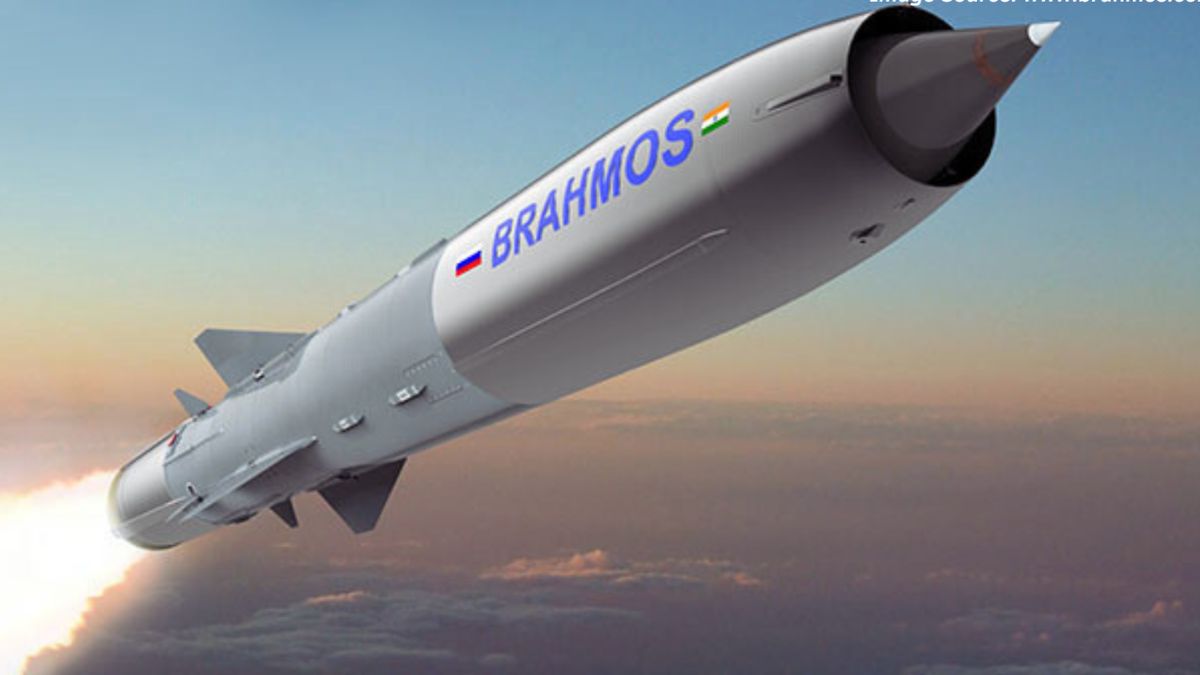
New Delhi: India has decided to withhold sensitive details of the upgraded BrahMos supersonic cruise missile, signalling a change in how the country intends to publicize its most important weapons programmes. The government believes that revealing advanced military capabilities before they are operationally required could give potential adversaries valuable information to develop countermeasures and reduce the element of surprise in a future conflict.
The defence secretary, Rajesh Kumar Singh, made the government’s position clear at the ANI National Security Summit 3.0 in New Delhi on Monday when he declined to disclose information about the improved missile. His remarks suggested that India would increasingly favour discreet development and induction of certain strategic weapons over the publicity traditionally associated with successful missile trials.
Singh was particularly critical of the practice of announcing technological advances at an early stage, including the extensive publicity surrounding tests conducted by the Defence Research and Development Organisation (DRDO). He argued that premature disclosures could be counterproductive when the same capabilities might eventually be needed against an adversary during military hostilities.
“I think we should keep some surprises up our sleeve for adversaries, develop things quietly, and induct them,” Singh said, explaining why the government intended to limit disclosures about certain strategic programmes. His position represents a deliberate preference for operational secrecy rather than public demonstrations of every technological achievement.
The statement comes as India pursues several improvements to the BrahMos family, including longer-range weapons and a smaller, lighter next-generation missile suitable for a wider selection of aircraft. However, Singh did not identify the particular upgraded configuration he was discussing, making it important to distinguish officially acknowledged development programmes from the classified capabilities that the government now intends to protect.
Developed by BrahMos Aerospace, a joint venture involving India’s DRDO and Russia’s NPO Mashinostroyeniya, BrahMos has become one of the country’s most important conventional precision-strike weapons. The missile combines supersonic speed, precision guidance and the ability to engage land or maritime targets, giving the Indian armed forces a strike capability across several operational environments.
The original BrahMos had a publicly declared range of approximately 290 kilometres and a speed approaching Mach 2.8, or nearly three times the speed of sound. Subsequent improvements extended its reach, with longer-range versions tested from naval platforms and Sukhoi Su-30MKI fighters, progressively expanding the missile’s utility beyond its initial design parameters.
India’s ambitions extend further, with BrahMos Aerospace examining future designs capable of substantially greater reach and developing the more compact BrahMos-NG variant. As RNA Media had reported earlier, the company is targeting a next-generation prototype around 2027–2028 and exploring the feasibility of a missile with a range of up to 1,500 kilometres, although these developments should not be interpreted as evidence that such capabilities have already entered service.
BrahMos has also acquired greater prominence following its reported use during Operation Sindoor against Pakistani military targets in May 2025. The experience underscored the importance of precision-guided standoff weapons in modern warfare, particularly when military objectives must be attacked without exposing launching aircraft or other platforms to unnecessary risks.
Singh’s announcement coincides with another significant change in India’s missile policy, with the defence ministry seeking to expand private-sector participation beyond the established public-sector manufacturing structure. He said the government wanted additional companies to become missile-system integrators and development partners, reducing industrial dependence on a limited number of suppliers and broadening the country’s defence production capacity.
The latest industrial expansion is already visible in BrahMos-related naval procurement, including an October 6, 2026, agreement worth ₹661.50 crore for fire-control systems and launchers. According to the defence ministry, the project involves a minimum indigenous content of 68 per cent and is intended to strengthen the Navy’s maritime strike capabilities.
Why new BrahMos secrecy could give India military advantage
The principal argument for withholding details of an upgraded BrahMos is that modern missile warfare involves much more than the speed, range or destructive power of a weapon. Its effectiveness also depends on how much the enemy knows about its flight behaviour, guidance systems, electronic characteristics and ability to penetrate increasingly sophisticated air defences.
A missile whose capabilities are thoroughly understood presents a more predictable threat than one whose performance parameters remain uncertain. Potential adversaries can use publicly available technical information, intelligence assessments and observed test results to improve their defensive preparations, reducing the advantages gained through years of technological development.
Consider the missile’s range, which determines not only the distance from which a target can be attacked but also the operational choices available to the launching platform. If an adversary knows the missile’s maximum reach with reasonable confidence, it can position valuable military assets beyond the expected engagement envelope and concentrate defensive resources around installations considered vulnerable.
An unexpected increase in that range could invalidate some of those assumptions, forcing the enemy to defend a much larger geographical area. This becomes especially important when the potential targets include airbases, command centres, naval facilities, logistics hubs and other strategically significant infrastructure situated well behind the frontline.
The same principle applies to the missile’s flight profile and terminal manoeuvrability, which determine how difficult it is for enemy sensors to detect, track and engage an incoming weapon. Information about operating altitudes, manoeuvring characteristics and the terminal phase of flight can help defenders refine radar coverage, interception procedures and the deployment of surface-to-air missile systems.
Research by the Washington-based Center for Strategic and International Studies (CSIS) has highlighted the particular challenges posed by cruise missiles flying beneath the detection horizons of ground-based radars. Its assessment of elevated sensors and missile defence explains how aircraft and other elevated surveillance platforms can improve detection of low-flying threats that might otherwise be concealed by terrain or the curvature of Earth.
Another consideration is electronic warfare, which has become central to the contest between precision-strike weapons and increasingly capable defensive systems. Modern cruise missiles rely on combinations of navigation equipment, onboard guidance and terminal seekers, and knowledge of their characteristics can assist an adversary in developing jamming, deception or other electronic countermeasures.
A US National Air and Space Intelligence Center assessment describes how land-attack cruise missiles can employ inertial navigation, satellite updates, terrain matching and terminal guidance to reach their targets. Although this does not establish which technologies are incorporated into the classified BrahMos upgrade, it illustrates why the technical details of a precision-guided missile have considerable military intelligence value.
There is also the question of reaction time, particularly against supersonic weapons travelling at several times the speed of sound. Even small differences in a missile’s approach speed, flight path or terminal manoeuvres can influence the time available for detection, threat classification, engagement and possible interception.
For India, these uncertainties are relevant to two distinct military environments: the land frontier with China and Pakistan, and maritime operations across the Indian Ocean region. In both settings, a longer-reaching or more difficult-to-intercept BrahMos could complicate an adversary’s deployment calculations, although the actual advantage would depend on intelligence, targeting support and the survivability of India’s launching platforms.
The maritime implications are particularly significant because naval forces depend heavily on the ability to detect threats before entering an opponent’s engagement range. An improved BrahMos could strengthen India’s sea-denial capabilities by increasing the risks faced by hostile surface combatants approaching strategically important areas, especially when integrated with reliable reconnaissance and targeting networks.
However, greater missile range does not automatically translate into an equivalent increase in effective striking distance against moving ships. Locating, identifying and continuously tracking a target beyond the radar horizon remains a separate challenge, requiring coordination between satellites, aircraft, maritime patrol assets and other intelligence sources.
Operation Sindoor lessons and limits of secrecy
The importance of these considerations has become more apparent following Operation Sindoor, when India demonstrated its ability to conduct precision strikes against targets inside Pakistan. The government subsequently emphasized the performance of its military systems, including BrahMos, with the defence minister, Rajnath Singh, describing the missile’s operational role as evidence of its practical military value rather than merely successful testing.
Yet combat use creates a problem for military planners because it allows adversaries to gather information that peacetime demonstrations might not reveal. Radar recordings, recovered missile fragments, observed trajectories and other intelligence obtained during hostilities can provide clues about a weapon’s capabilities, enabling the development of more effective defensive measures.
Consequently, an upgraded missile incorporating undisclosed improvements could be more difficult for an adversary to assess using information collected from previous engagements. This does not mean that a new BrahMos would necessarily defeat existing air defences, but uncertainty about its capabilities could complicate their preparation and increase the resources needed to counter the threat.
The approach also has implications for deterrence, which depends partly on persuading an adversary that military aggression could impose unacceptable costs. A credible but incompletely understood strike capability may generate uncertainty in an opponent’s calculations, especially when the adversary cannot confidently determine which assets are vulnerable or how effectively they can be defended.
Nevertheless, secrecy is not an unqualified advantage because deterrence also requires a degree of credibility and visible military capability. A weapon whose existence and effectiveness remain entirely unverified may have less deterrent value than one whose broad capabilities are demonstrated, even if its most sensitive specifications are withheld.
India therefore faces a balance between public reassurance, strategic signalling and operational security, rather than a simple choice between complete disclosure and absolute secrecy. Broad information about successful tests, deployment milestones and indigenous technological achievements can support public accountability without necessarily revealing the technical details an adversary would find most useful.
There are practical limits to concealment as well, particularly for a missile developed through an Indo-Russian joint venture and supported by an expanding industrial supply chain. Testing activities, procurement records, production requirements and foreign partnerships create opportunities for information to emerge, making selective classification and disciplined information management more realistic than attempting to conceal an entire programme.
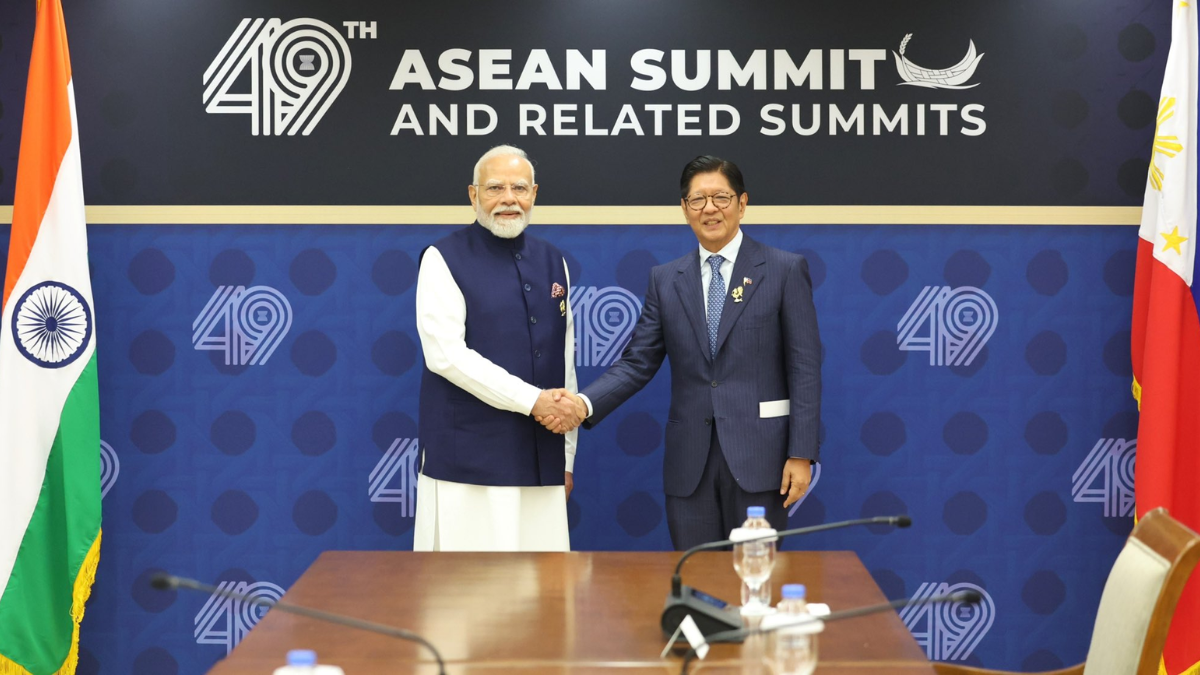
Exports introduce another consideration, since BrahMos has become an important component of India’s defence diplomacy following the 2022 contract with the Philippines. Prospective customers need sufficient information to evaluate a missile’s performance, operational suitability and maintenance requirements, but export configurations and disclosure arrangements need not be identical to those governing systems intended for India’s own armed forces.
Ultimately, Singh’s remarks suggest that India wants to preserve the military advantages of technological improvement until those capabilities are needed in an operational setting. The real test of that policy will be whether the country can combine credible public demonstrations of defence preparedness with effective protection of the performance characteristics, vulnerabilities and operational methods that adversaries would most want to understand.
For BrahMos, the strategic calculation is relatively straightforward: a faster, longer-reaching or more capable missile can strengthen deterrence, but its value may be greater when a potential enemy cannot determine precisely what it can do. The challenge for India is to preserve that uncertainty without allowing secrecy to become a substitute for rigorous testing, industrial accountability and demonstrable military readiness.