
DRDO to build new missile testing range at Junput in Bengal to ease pressure on Odisha’s Chandipur facility
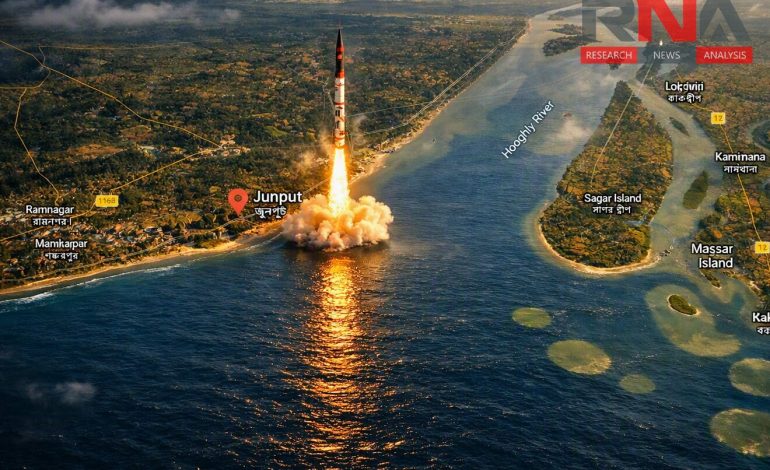

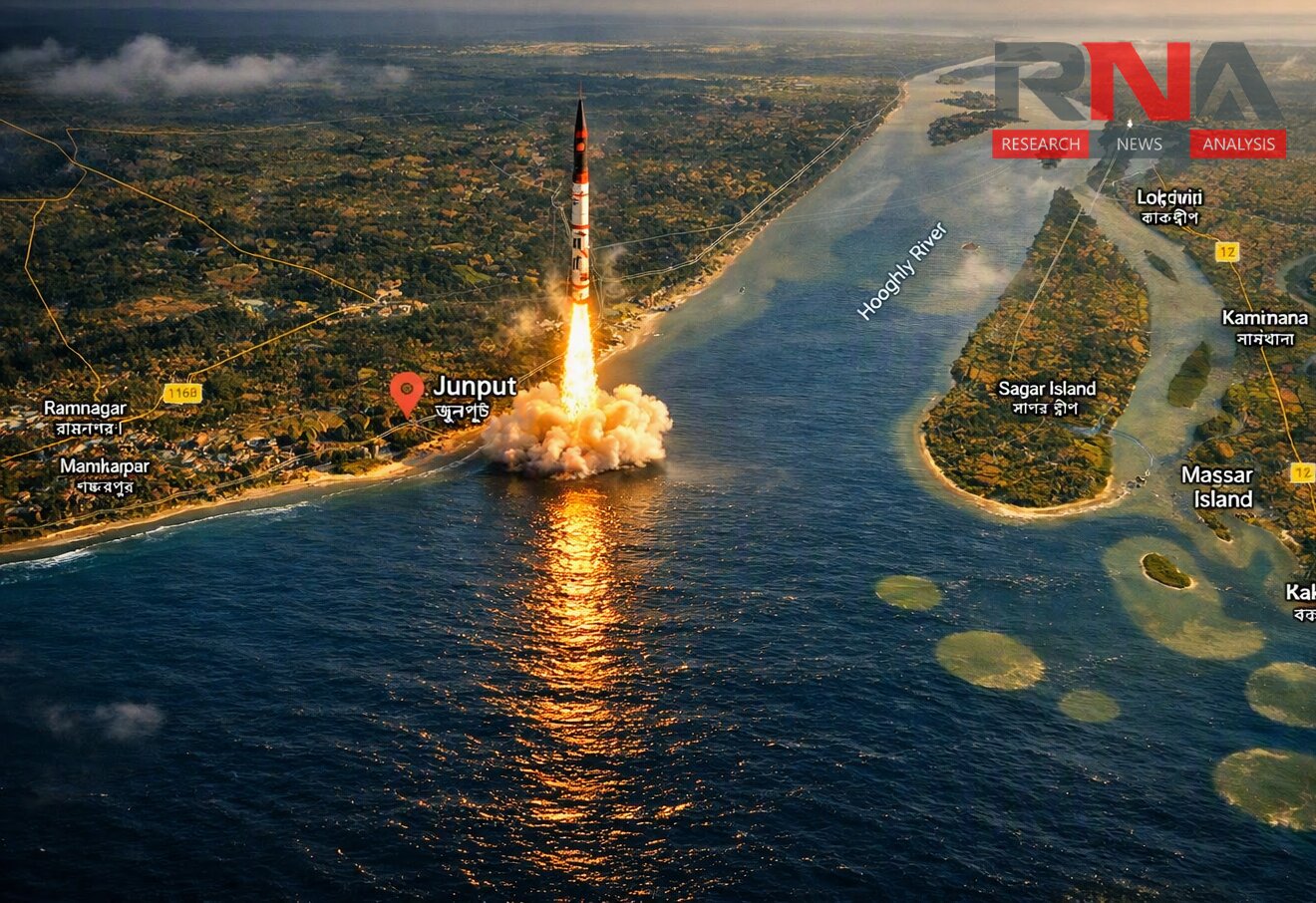
New Delhi: The Defence Research and Development Organisation is moving ahead with a new missile and weapons testing range at Junput, a coastal village in West Bengal’s Purba Medinipur district. The facility, once operational, will become the organization’s third major testing hub on India’s eastern seaboard, alongside its long-established range at Chandipur in Odisha and a proposed centre in Andhra Pradesh.
The Junput range had been on the drawing board since April 2024, when DRDO first wrote to the West Bengal government seeking land along the Purba Medinipur coast. That request went unanswered under the previous Trinamool Congress administration, and the project remained stalled for well over a year.
The chief minister, Suvendu Adhikari, disclosed the development at a public event on Friday, saying his government had cleared the proposal after DRDO’s earlier approach had been ignored. He described it as a significant infrastructure gain for the state, framing the range as a contributor to West Bengal’s broader development rather than purely a defence undertaking. A DRDO source separately confirmed to the Times of India that the project was indeed proceeding in Bengal.
The proposed site spans roughly 8.73 acres near Digha beach, about 70 kilometres from Chandipur. Land acquisition and preliminary road infrastructure have reportedly been completed, clearing one of the main hurdles that had held up the project.
Officials have not publicly specified which missile systems will be tested at Junput. Multiple reports, however, indicate the facility is intended chiefly for short-range missiles, radar systems and coastal defence technologies, positioning it as a direct extension of the Chandipur range rather than a standalone strategic site.
Chandipur’s Integrated Test Range currently operates through two launch complexes. Launch Complex-III, known as Chandipur-on-Sea, handles trials of short-range tactical weapons, surface-to-air missiles and multi-barrel rocket systems such as Akash and Pinaka. Launch Complex-IV, situated on Dr APJ Abdul Kalam Island off the Odisha coast, is reserved for longer-range strategic platforms, including the Agni and K-series missile families.
The rationale behind the expansion is straightforward. India’s interceptor and cruise missile programmes have grown substantially in scale and frequency of testing, and the existing Odisha infrastructure – tracking radars, telemetry stations and launch pads included – is increasingly stretched to accommodate them.
A second facility is separately being planned in Andhra Pradesh, near Machilipatnam, to further spread this testing load. Between the two additions, DRDO appears to be pursuing a deliberate policy of geographical diversification rather than continuing to concentrate all eastern-coast trials at Chandipur.
This is not the first time DRDO has relocated or expanded testing infrastructure to resolve capacity or safety constraints. The organization shifted its air-to-ground weapons range from Kolar to Chellakere near Chitradurga some years ago, after the original site’s flight path began conflicting with civilian air traffic near Bengaluru. The Junput project follows a similar logic of easing bottlenecks, though here the driver is testing volume rather than airspace conflict.
For West Bengal, the range promises modest but tangible economic activity in an otherwise low-profile coastal belt, along with a stake in India’s expanding defence-testing ecosystem. For DRDO, it represents another step towards decentralising a testing infrastructure that has, for decades, relied almost entirely on Odisha’s coastline.