


Lockheed Martin lifts the veil on secretive AIM-260 missile as Pentagon fast-tracks production to counter China
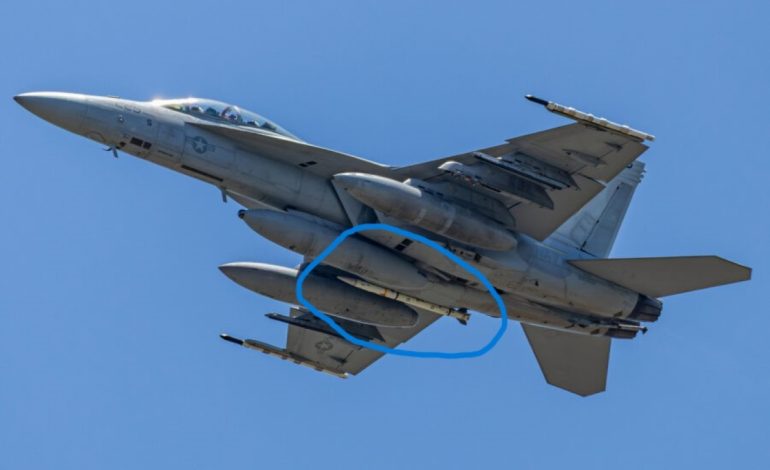
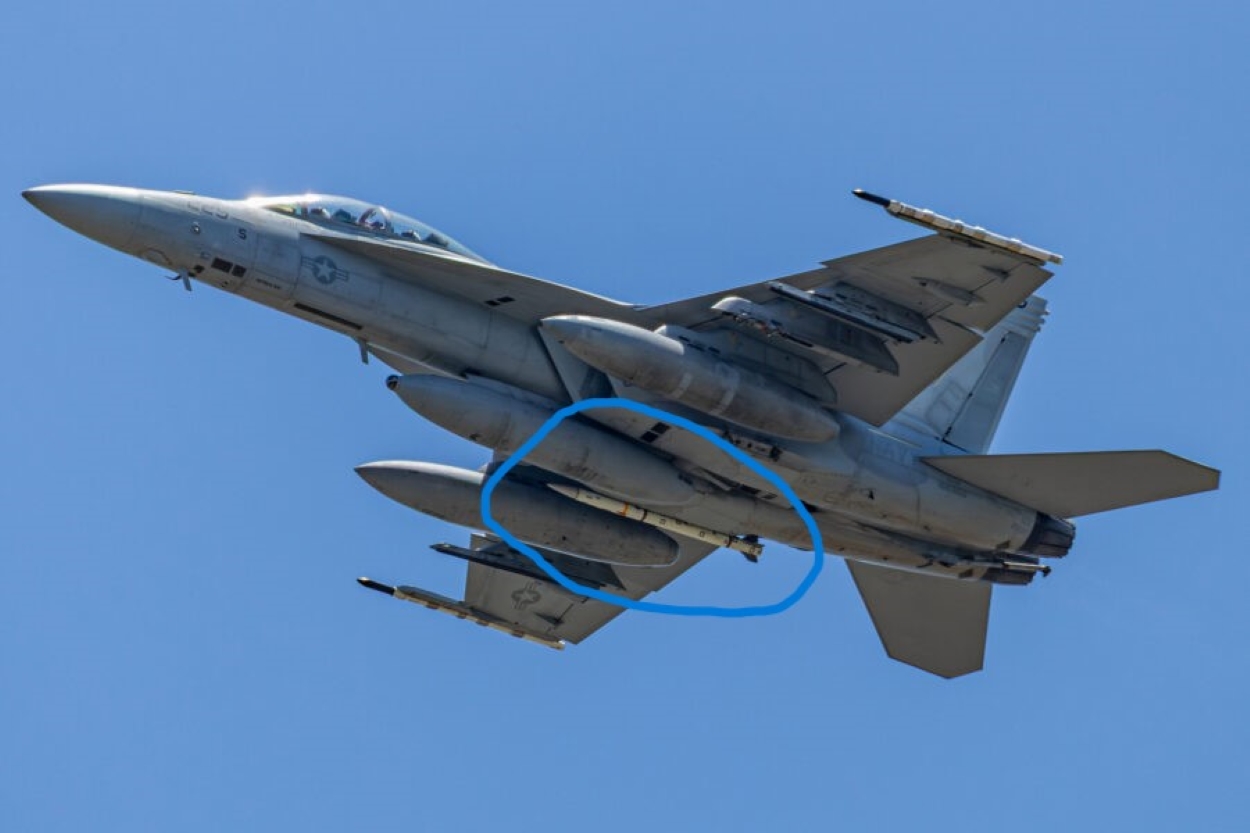
The AIM-260 JATM was first spotted on a Navy F/A-18F Super Hornet, in May 2026. (Photo via Air and Space Forces/Jonathan Tweedy)

New Delhi: Lockheed Martin has, for the first time, disclosed detailed information about a next-generation air-to-air missile that it has developed largely in secrecy for years, built specifically to counter China’s growing arsenal of long-range aerial threats. The disclosure, made on Thursday was accompanied by a new agreement with the US defence department to rapidly scale up production as the Pentagon works to rebuild depleted munitions stockpiles.
The missile, designated the AIM-260 Joint Advanced Tactical Missile, or JATM, is intended to succeed the AIM-120 Amraam, the beyond-visual-range weapon that has anchored American air combat doctrine for decades. It has been developed in secrecy for years as the US military’s answer to increasingly capable long-range air threats from China.
According to the company, the weapon offers greater range and effectiveness than existing air-to-air missiles, providing an advantage against Chinese fighter jets such as the J-20. The AIM-260 has been engineered to be carried internally by stealth platforms, and it will be used on the F-22 Raptor and the F-35, in addition to the F/A-18E/F Super Hornet and the F-15EX Eagle II.
The programme dates back further than most had realized. It was launched in 2017, directly in response to long-range Chinese missiles such as the PL-15, and the first aerial target tests were conducted as early as April 2020.
For most of that period, the missile’s very existence was rarely discussed in public. That changed only in May 2026, when it was photographed for the first time on a US Navy test aircraft, ending years of near-total secrecy around its external design.
The president of Lockheed Martin Missiles and Fire Control, Tim Cahill, said the programme had remained one of the company’s best-kept secrets despite its significance, one that had, until now, been “a story we haven’t been able to tell.” Cahill added that Lockheed was proud to finally discuss the extraordinary engineering behind the missile and its work with the government to accelerate manufacturing.
The timing of the announcement is not incidental. The war with Iran depleted US and allied missile stocks, spurring a push to rapidly acquire less expensive long-range precision-strike weapons. That depletion has sharpened Washington’s urgency to replenish inventories that had already been strained by years of supplying partners across multiple theatres.
International demand has followed quickly on the heels of the disclosure. Australia has moved to purchase about $521 million worth of AIM-260 missiles, though the number of units and the per-missile cost were not specified. It is the clearest sign yet that allied air forces see the weapon as a genuine leap over the Amraam variants they currently operate.
The new framework agreement between Lockheed and the Pentagon is expected to lay the groundwork for a multiyear procurement contract, part of a wider effort to strengthen America’s defence industrial base. Lockheed Martin is separately investing $8–9 billion to scale munitions production, including new buildings, site expansions and thousands of jobs across more than twenty locations in the United States, with dedicated production and warehousing space expected to grow by close to half.
Precise performance figures for the AIM-260 remain classified, as they were for the Amraam variant it is measured against. Independent trackers and defence analysts, however, estimate its range at roughly 200 kilometres with a top speed near Mach 5, nearly double the reach of the standard AIM-120D that American and allied fighters have relied upon until now.