


India opens more global markets for defence firms with new export rules
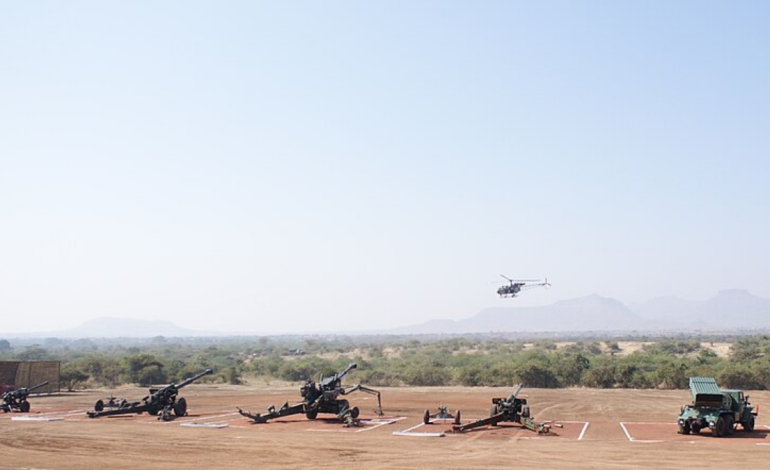
Representational image. (Image courtesy: Wikimedia)

New Delhi: Indian defence companies will now find it easier to sell their products in overseas markets as the government has simplified several rules for defence exports. The changes are aimed at cutting paperwork, speeding up approvals and helping Indian manufacturers compete for more international orders.
The new rules cover both the defence export standard operating procedure (SOP) and the open general export licence (OGEL). The government has kept checks in place for sensitive defence items and countries where exports could raise security concerns.
The new “defence export SOP” will not require companies to consult stakeholders before exporting non-lethal defence products to most countries. But the easing will not apply to sensitive countries where extra checks will continue. Companies will also not need stakeholder consultations when exporting defence products for international tenders and exhibitions. This means Indian firms can take their products to overseas exhibitions or bid for foreign defence contracts without going through the earlier consultation process.
The government has also made major changes to the OGEL. The licence allows eligible defence exporters to send certain approved products in multiple shipments without applying for a fresh export licence every time. Earlier, there were three separate OGEL procedures for major defence platforms and equipment, parts and components, and transfer of technology within a company. These have now been brought together under one set of rules, making the process easier for companies to follow.
The validity of an OGEL has also been increased from two years to three years. Companies will therefore have to renew the licence less frequently, reducing paperwork and other compliance work.
The government has expanded OGEL coverage from 41 countries to almost all countries. However, the licence will not cover sensitive or restricted countries, or countries facing UN security council sanctions or arms embargoes.
The new rules also make it easier for Indian companies working with foreign original equipment manufacturers, or FOEMs. Companies with long-term contracts with such foreign manufacturers can get an OGEL for eligible products, with the licence period linked to the contract, subject to government conditions.
The list of products that can be exported through OGEL has also been expanded. The revised rules will allow civilian-use exports of certain parts and components of small-calibre arms and protective equipment.
The government hopes the changes will help Indian defence companies, especially smaller firms and MSMEs, respond faster to overseas business opportunities. They will be able to take part in international tenders and exhibitions more easily and avoid applying repeatedly for the same type of export permission.
The changes come at a time when India’s defence industry is recording strong growth. Defence production reached a record ₹1.78 lakh crore in 2025-26, while defence exports touched a record ₹38,424 crore during the same period.