


GE delivers 3 more F404 engines to HAL, Tejas-Mk1A programme now has total 10
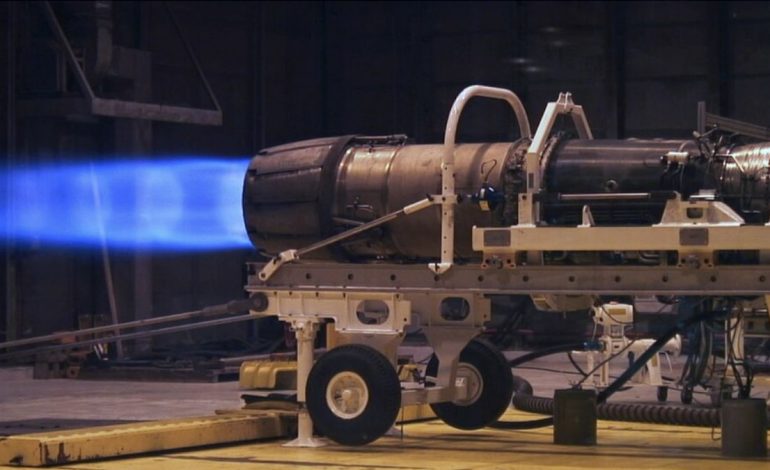
GE Aerospace’s F404 engine. Image courtesy: Wikimedia commons

New Delhi: GE Aerospace delivered three F404-IN20 engines to Hindustan Aeronautics Limited (HAL) in August 2026 for the light combat aircraft (LCA) Tejas-Mk1A programme, taking deliveries under the current engine order to 10. The engines power the single engine fighter and their delayed supply has been one of the main factors holding back deliveries to the Indian Air Force.
GE Aerospace said on Thursday that it shipped three F404-IN20 engines to HAL during August. The latest batch follows the seventh engine supplied in July and is the largest monthly shipment reported so far under HAL’s order for 99 engines.
As of now, however, no Tejas-Mk1A had been formally handed over to the IAF. HAL has continued manufacturing aircraft while engine supplies have lagged, leaving several Mk1A airframes at different stages of testing and preparation for delivery.
Why the latest engines matter for Tejas–Mk1A
Engine availability directly affects how quickly HAL can move aircraft through flight testing and towards formal handover. Each production aircraft requires an F404-IN20 before it can complete the necessary ground and flight-test sequence.
HAL said during an investor call on May 15 that it had received six GE engines at that stage and that all six aircraft fitted with them were flying, although some tests were still under way. The company said it hoped to begin Mk1A deliveries around August or September.
HAL also said that 21 to 22 Mk1A structures were fully built by the end of March and had completed engine ground runs. More recent reporting by the New Indian Express said HAL had built about 30 Mk1A airframes, with around 20 having completed manufacturing and initial flight testing.
The distinction is important because an aircraft that has been built or flight tested is not necessarily one that has been formally accepted by the IAF. HAL is targeting about 15 to 20 Mk1A deliveries during financial year 2026-27, subject to engines and completion of pending tests.
From delayed deliveries to higher production tempo
HAL ordered 99 F404-GE-IN20 engines and support services from GE Aerospace in 2021 in a deal valued by the US company at $716 million. GE said at the time that the engines were to be supplied by 2029.The first engine under the order was delivered on March 25, 2025, later than required for HAL’s original Mk1A production schedule.
GE has said the delay was linked to restarting an F404-IN20 production line that had been shut after earlier Tejas requirements were completed. The company had supplied 65 F404-IN20 engines to HAL by 2016, but with no further orders then in sight, the dedicated line was closed.
The 2021 Mk1A order required GE to reactivate production and rebuild parts of its supply chain. HAL has separately said supply chain difficulties, including problems involving castings at lower tier suppliers, contributed to the delay.
The then HAL chairman and managing director, DK Sunil, said in April that GE had indicated it could supply around 20 engines between June and December 2026. A month later, HAL management gave a more cautious assessment, saying GE was indicating another 15 to 20 engines, although the exact number was not fixed.
The three engines supplied in August therefore point to an improvement in delivery tempo. Whether the bottleneck has been resolved will depend on GE sustaining higher monthly deliveries over the remaining months of the year.
HAL’s own production capacity has also increased. The defence ministry said in October 2025 that the third Mk1A production line at Nashik had raised HAL’s combined capacity across its facilities to 24 aircraft a year.
What is the F404-IN20 engine?
The F404-IN20 is an afterburning turbofan developed by GE Aerospace for the Tejas. It provides the thrust required for normal flight and additional power through its afterburner for high speed and combat manoeuvres.
The department of defence production lists its afterburning thrust at about 85 kilonewtons. GE describes the IN20 as the highest thrust version of the F404 family.
What next for Tejas–Mk1A?
The IAF’s Tejas requirement has expanded significantly. In 2021, the ministry of defence contracted HAL for 83 aircraft, comprising 73 Mk1A fighters and 10 Mk1 trainers, under a programme valued at close to ₹48,000 crore including development and infrastructure provisions.
A second contract signed in September 2025 covers another 97 Mk1A aircraft, comprising 68 fighters and 29 twin-seaters, at a cost of more than ₹62,370 crore excluding taxes. Deliveries under that contract are scheduled to begin in financial year 2027–28 and continue over six years.
HAL subsequently signed another agreement with GE in November 2025 for 113 F404-GE-IN20 engines and support for the 97-aircraft programme, with deliveries scheduled from 2027 to 2032. The Mk1A incorporates improvements over the earlier Tejas variant, including an active electronically scanned array radar, an electronic-warfare suite and upgraded avionics.
For now, the programme’s immediate test remains the engine pipeline. Ten production engines have reached HAL under the 99 engine order and the company has a growing number of Mk1A aircraft at different stages of manufacture and testing. The August shipment shows that F404 supplies have begun to improve, but a sustained increase in engine deliveries will be necessary before HAL can establish the steady aircraft-delivery rhythm planned for the IAF.