



CJI Surya Kant set for 10 bilateral meetings as India hosts BRICS judicial forum
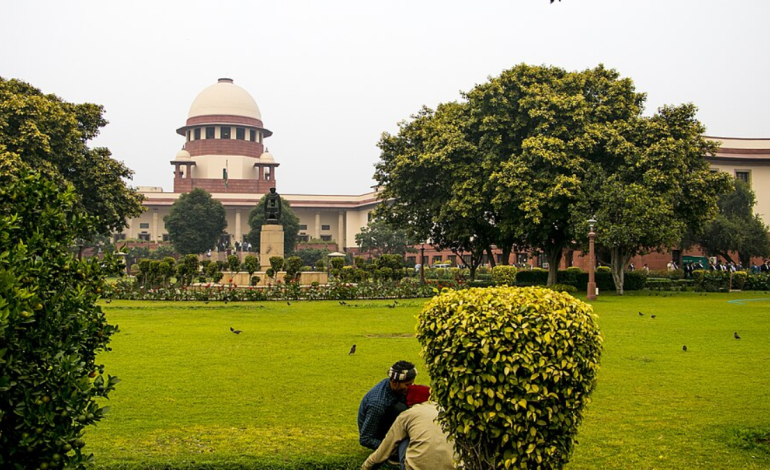
Supreme Court of India. (Image courtesy: Wikimedia)

New Delhi: Senior judicial leaders from BRICS member states and partner countries will gather in New Delhi from September 4 to 6 for the BRICS chief justices’ forum, hosted by the Supreme Court of India. The chief justice of India, Surya Kant will hold separate bilateral meetings with judicial representatives from 10 countries during the three-day forum.
The participating judiciaries will discuss a range of issues linked to the functioning of courts and international legal cooperation. According to the Supreme Court of India, the agenda will include justice delivery, international dispute resolution, technology and sustainable development.
On the opening day, Surya Kant will meet judicial leaders from Russia, China, Egypt, Indonesia, the UAE, Belarus, Kazakhstan, South Africa, Iran and Uzbekistan. The discussions will provide an opportunity for the participating sides to exchange views on areas of mutual interest and judicial cooperation.
The visiting officials include the Russian supreme court chief justice, Igor Krasnov; Chinese supreme court president, Zhang Jun; Indonesian supreme court chief justice, Sunarto and UAE federal supreme court president, Mohammed Hamad Al Badi Al Dhaheri.
The Belarus supreme court chairman, Andrei Shved; Kazakhstan supreme court chairman, Aslambek Mergaliyev; South Africa’s supreme court president, Mahube Betty Molemela; Iranian chief justice, Ayatollah Gholam Hossein Mohseni-Eje’I and Uzbekistan’s supreme court deputy chairperson, Malikakhon Kalandarova, are also scheduled to meet the CJI.
The forum will have participation from judicial delegations representing Brazil, China, Egypt, Ethiopia, Indonesia, Iran, Russia, South Africa and the UAE. Partner countries including Belarus, Bolivia, Kazakhstan, Malaysia, Thailand, Uganda and Uzbekistan will also be represented.
The second day will feature addresses by heads of delegations, followed by deliberations on four broad themes. These include mediation and international commercial disputes, cross-border enforcement of arbitral awards, artificial intelligence and the judiciary, and judicial leadership and sustainable development.
The discussions will cover the use of mediation in international commercial matters and difficulties related to enforcing arbitral awards across jurisdictions. Participants will also examine the growing use of AI in judicial administration and the role of courts in ecological governance and sustainable energy systems.
The supreme court said the forum is intended to strengthen dialogue between participating judiciaries and encourage the sharing of experiences on emerging legal and institutional challenges.