

Cochin Shipyard lays keel for first of six next-generation missile vessels for Indian Navy
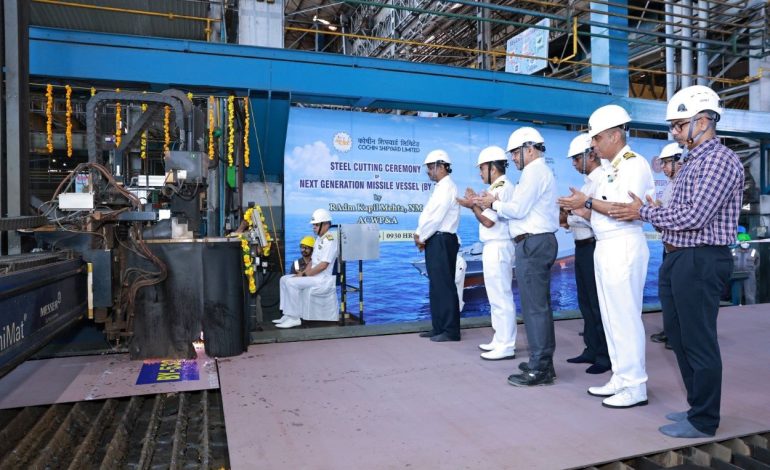
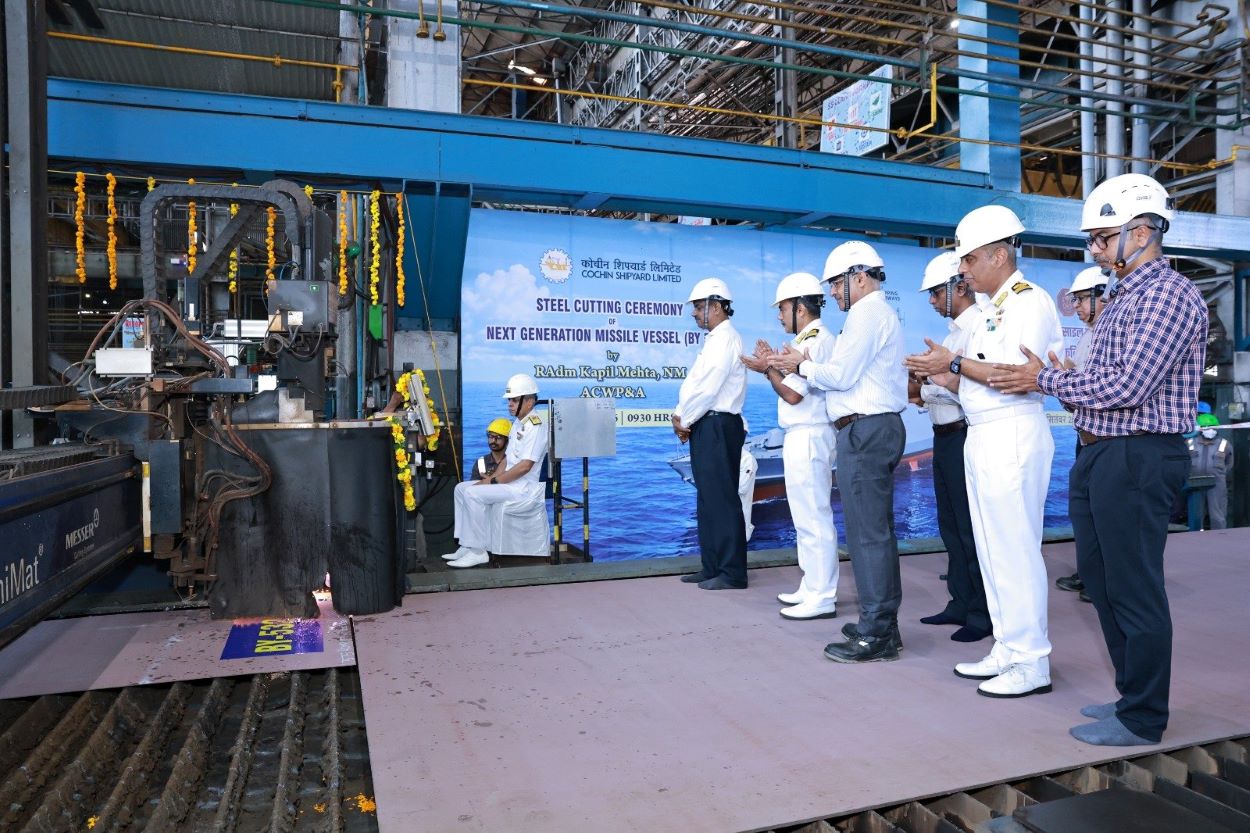
CSL engineers and officials along with Indian Navy senior officers during the keel-laying ceremony for the six next-generation missile-vessels at Cochin. (Photo: Cochin Shipyard Limited)

New Delhi: Cochin Shipyard Limited (CSL) has laid the keel of the first of six next-generation missile vessels (NGMVs) being built for the Indian Navy, marking a further step in a programme intended to add a new class of fast, heavily equipped surface combatants to the fleet. The milestone also represents an important stage in CSL’s expansion into the construction of more technologically demanding naval platforms.
The keel-laying ceremony for the first vessel, identified as BY-531, was held at CSL in Kochi on Friday, with Vice Admiral Sanjay Sadhu, controller of warship production and acquisition at Integrated Headquarters, Indian Navy, performing the ceremony. Senior naval and shipyard officials, representatives of the warship overseeing team and Indian Register of Shipping, as well as personnel involved in the construction programme, attended the event.
The milestone follows the cutting of the first steel plate for BY-531 in December 2024, which formally started fabrication of the vessel. CSL signed the contract with the Indian Navy on March 30, 2023, for six NGMVs at a reported value of about ₹9,804 crore, with the first vessel originally scheduled for delivery in March 2027.
The NGMV programme is significant for CSL because it takes the shipyard further into the construction of advanced, weapon-intensive naval platforms rather than conventional commercial and support vessels. The design incorporates sophisticated sensors, integrated ship-management systems and high-performance propulsion, reflecting the Navy’s requirement for relatively small but fast and capable surface vessels.
CSL has stated that each NGMV is designed to reach a maximum speed of 33 knots and accommodate about 80 personnel. The ships are intended to perform a range of maritime security and combat-support functions, with their speed and manoeuvrability forming an important part of their operational concept.
Propulsion is itself a notable element of the programme. Norwegian company Kongsberg Maritime announced in April that it had secured a contract to supply 18 Kamewa waterjets – three for each of the six vessels – making the order its largest single waterjet contract and highlighting the performance demands of the class.
The propulsion arrangement is being integrated into a programme that has otherwise placed considerable emphasis on domestic industrial participation. The Ministry of Defence has said that major role-defining equipment for the NGMVs has been developed and manufactured in India, while the wider programme is being pursued under the government’s indigenization drive.
The programme also illustrates the increasingly complex nature of India’s naval industrial base, where domestic shipyards are integrating Indian-developed systems with selected foreign technologies. The result is a more sophisticated supply chain involving shipbuilders, propulsion specialists, electronics companies and other defence manufacturers rather than a shipyard functioning in isolation.
CSL’s progress on the NGMVs comes as the Indian Navy continues to expand its domestic warship-building pipeline. The shipyard is simultaneously involved in other naval programmes, including anti-submarine warfare shallow-water craft, underscoring the growing role of Indian yards in producing different categories of vessels for the Navy.
The next major test for the NGMV programme will be maintaining construction momentum across all six hulls while integrating their propulsion, sensors and other systems. With the first vessel having now reached the keel-laying stage after steel cutting in 2024, the programme has moved from initial fabrication into a more substantial phase of ship construction.