

Pakistani spies infiltrate Indian defence WhatsApp groups, trigger nationwide security sweep
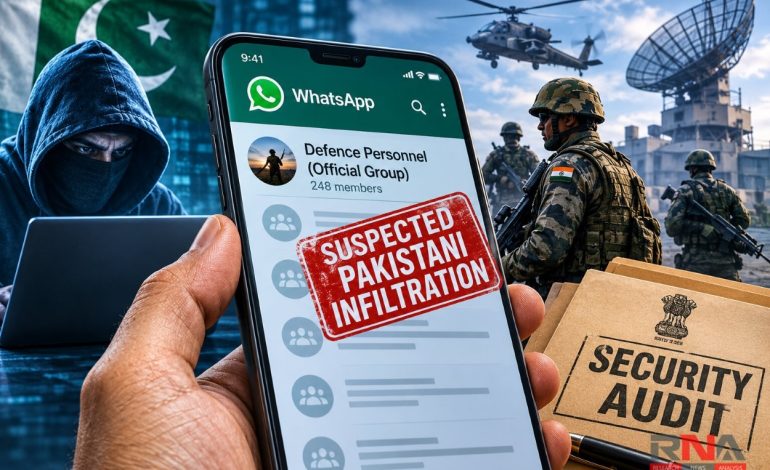
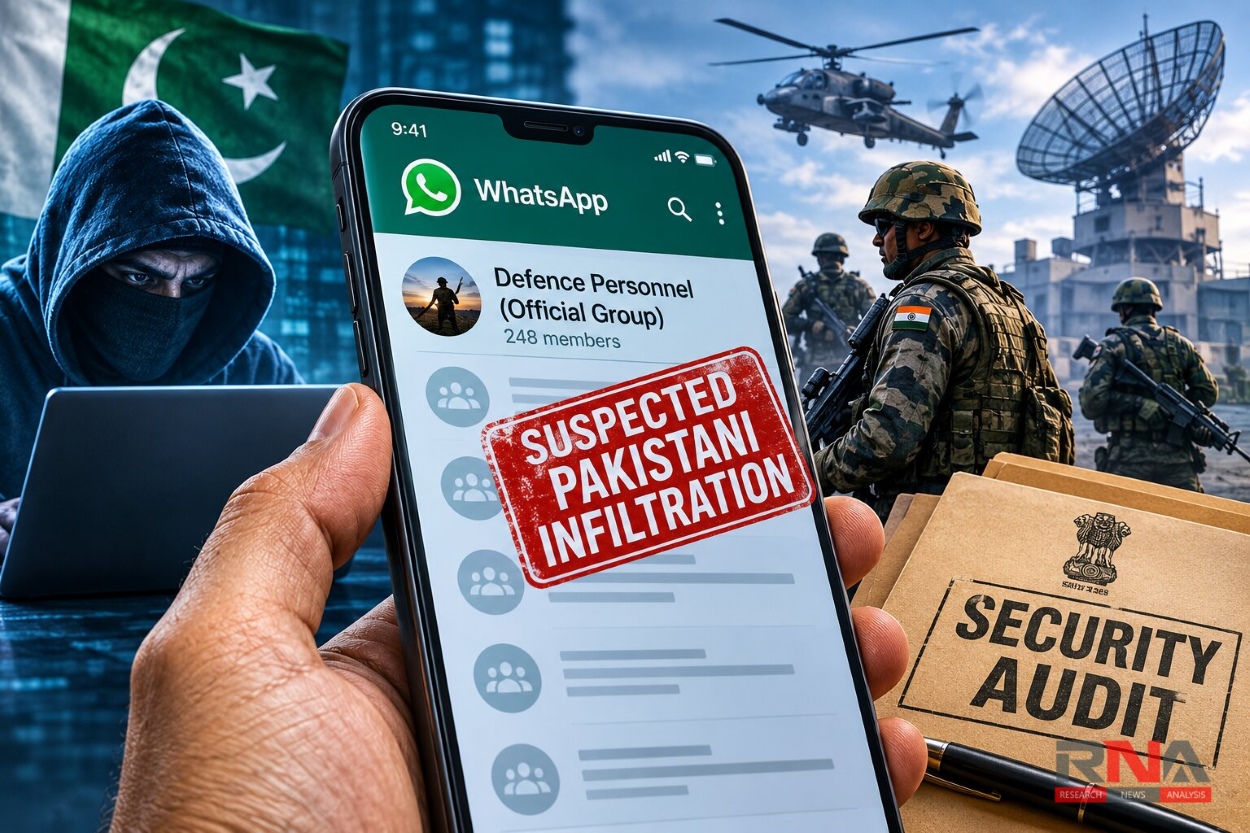
RNA Media illustration for representation.

New Delhi: Indian intelligence agencies have uncovered a suspected Pakistani espionage operation targeting WhatsApp groups used by defence personnel, paramilitary forces and civilian employees of sensitive military establishments, prompting an extensive security audit across multiple organizations. The investigation has raised concerns that operatives working for Pakistan-based intelligence networks may have quietly accessed conversations, collected sensitive information and exploited informal communication channels to identify potential espionage targets.
According to the Times of India, security agencies have identified around 13–14 unofficial WhatsApp groups allegedly infiltrated by Pakistan-based intelligence operatives (PIOs). The operatives are believed to have entered these groups using spoofed or compromised Indian mobile numbers, allowing them to conceal their identities and monitor communications without immediately attracting suspicion.
The discovery has prompted instructions to the Army, central armed police forces (CAPFs) and civilian defence establishments to examine group memberships, identify suspicious participants and prevent the circulation of sensitive information through unauthorized channels. According to the Print, the alert was circulated to security formations last week, with investigators examining whether additional groups had been compromised.
How the suspected infiltration came to light
One of the most significant leads concerns an operative using the name “Soniya”, who allegedly impersonated a scientist from the Defence Research and Development Organisation (DRDO) to gain access to a WhatsApp group involving civilian defence employees. The individual reportedly joined a group called “All India Defence Civilian Mutual Transfer Posting” and developed contact with an employee who is suspected of having shared sensitive defence-related information in exchange for money.
According to reports, the suspected operative cultivated the employee through repeated conversations before allegedly obtaining information of security significance. Investigators are now examining the nature of the material disclosed, the identities behind the suspicious accounts and the possibility that similar approaches were made to other defence employees.
The alleged operation appears to have relied on a method that combines impersonation, social engineering and passive intelligence collection rather than sophisticated hacking alone. By joining professional or employee welfare groups, an operative can establish apparent credibility, identify individuals working in sensitive establishments and gradually develop relationships that may facilitate further intelligence gathering.
This method also allows hostile operatives to collect information without necessarily asking direct questions about classified military activities. Conversations about transfers, postings, workplace arrangements, travel schedules and professional responsibilities can collectively reveal patterns that may be useful to an intelligence agency, even when individual messages appear routine.
Why unofficial WhatsApp groups pose a security risk
Security officials are particularly concerned about suspected operatives remaining largely inactive after joining groups, effectively functioning as silent observers of conversations and shared documents. Such access could enable them to identify personnel connected with important military installations, monitor changes in assignments and establish connections between individuals working in different defence organizations.
The vulnerability is not necessarily a weakness in WhatsApp’s encryption, which protects messages during transmission, but in the identities and intentions of people admitted to a group. Once an unauthorized participant becomes an accepted member, encryption cannot prevent that individual from reading messages legitimately delivered to the group or potentially passing their contents to others.
An apparently harmless discussion can also become a source of intelligence when combined with information obtained elsewhere, including social-media profiles, publicly available photographs and online employment records. This process, often described as intelligence aggregation, can help hostile agencies piece together operational details that no individual participant intended to disclose.
The potential consequences extend beyond the exposure of confidential documents to what security professionals describe as operational security failures. Information about personnel movements, duty arrangements or activities around military facilities could help an adversary develop a clearer picture of deployments, vulnerabilities and patterns of military activity.
Earlier espionage cases reveal a recurring pattern
The latest incident follows earlier investigations in which Pakistani intelligence handlers allegedly used Indian SIM cards to disguise their locations and approach military personnel through WhatsApp. In an October 9, 2025 report, RNA Media reported that a suspected Pakistan-linked network had used SIM cards smuggled through Nepal to contact at least 75 Indian Army personnel stationed in Jammu & Kashmir and Mathura.
That investigation uncovered 16 Indian SIM cards allegedly procured by a Nepalese national, several of which were reportedly being used to operate WhatsApp accounts from Pakistani cities, including Lahore and Bahawalpur. Investigators had cautioned that contact with suspected Pakistani operatives did not, by itself, establish that the Indian personnel concerned had participated in espionage.
In another case, the National Investigation Agency announced on January 27 that a special court had sentenced a man involved in facilitating Pakistani espionage through fraudulently activated Indian mobile numbers. The investigation established that Indian SIM cards and one-time passwords had been supplied to Pakistani operatives, enabling them to operate WhatsApp accounts under Indian identities and approach defence personnel.
WhatsApp Web vulnerabilities
Separately, the Indian Cyber Crime Coordination Centre (I4C), functioning under the Union home ministry, has issued an advisory warning about the dangers of using WhatsApp Web for official or sensitive communications. The advisory, dated November 18, cautions that authenticated sessions left active on computers can potentially be exploited to read conversations, impersonate account holders and access contacts without authorization.
The government’s cybersecurity warning recommends manually logging out after each session, avoiding shared or public computers and checking for unusual account activity. Although issued during the same period as the reported espionage investigation, the advisory does not explicitly attribute its concerns to Pakistani intelligence activities or establish a direct connection with the compromised defence groups.
Security audit to determine extent of exposure
The immediate task for investigators is to establish how many groups were compromised, how long suspicious accounts remained active and whether classified or operationally sensitive information was actually transferred. Security agencies must also determine whether the infiltrators were acting independently, coordinating through a common network or using compromised accounts to approach additional personnel.
The episode presents a broader challenge for India’s defence establishment, where personal messaging applications often provide convenient channels for professional coordination and employee interaction. Strengthening membership verification, enforcing communication restrictions and improving cyber-awareness training will be crucial to preventing informal online networks from becoming intelligence-gathering opportunities for hostile actors.