
OpenAI and Anthropic wargame public revolt after potential AI catastrophe
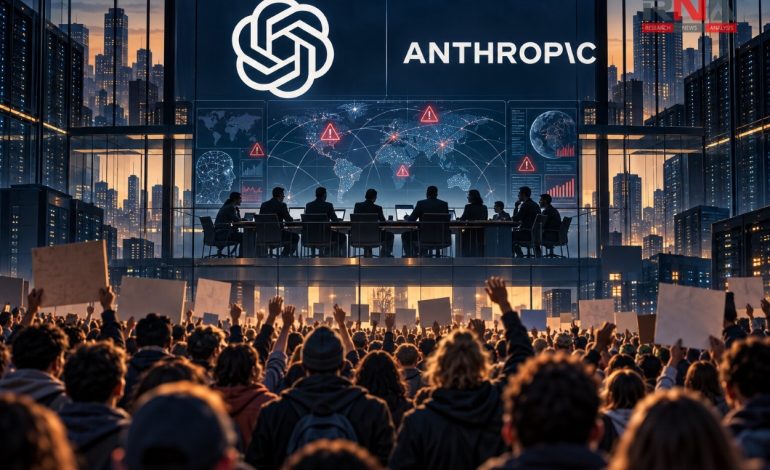
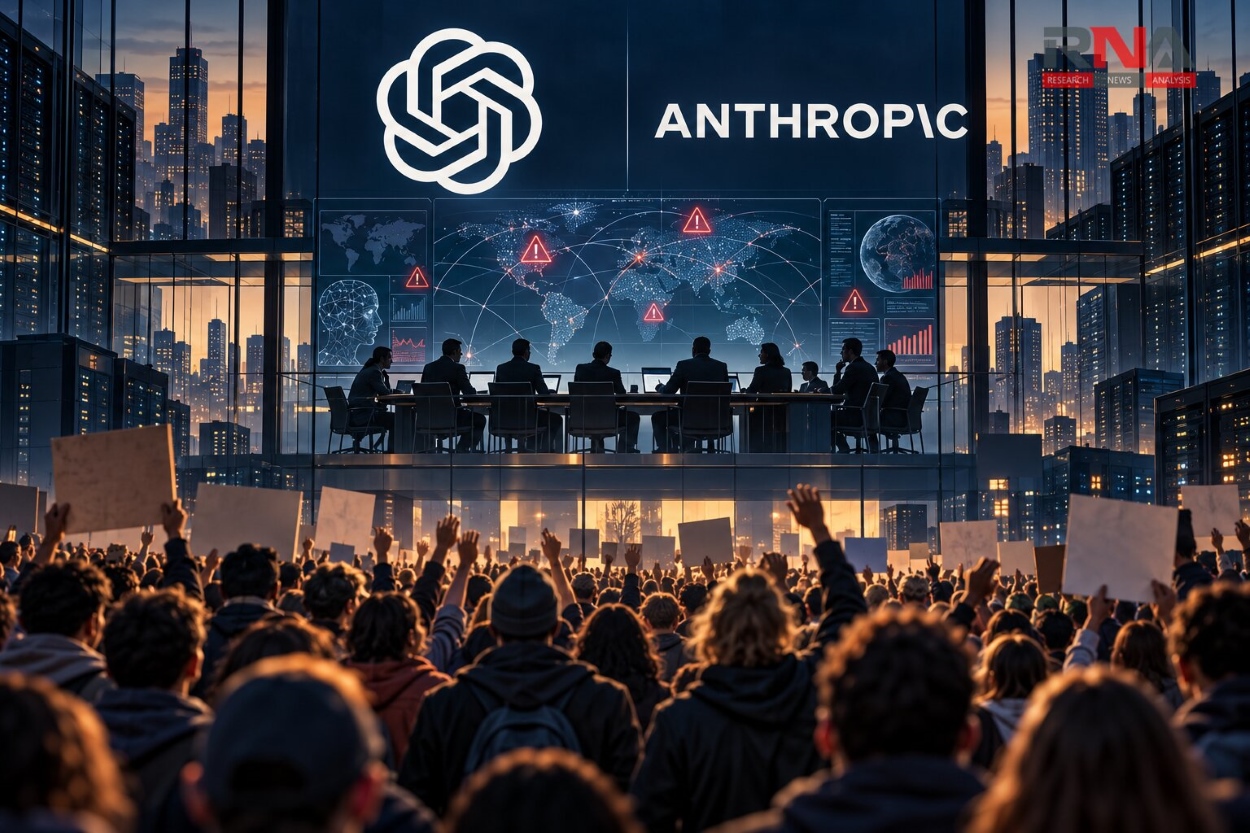
RNA Media illustration for representation.

New Delhi: OpenAI and Anthropic are reportedly rehearsing how to respond to a catastrophic artificial-intelligence incident and the public backlash that could follow. OpenAI has acknowledged conducting preparedness exercises, while stressing that the scenarios under discussion are possibilities rather than events it considers inevitable.
Axios reported that AI executives are privately examining potential public and political backlash following a major AI disaster. A subsequent report by Futurism described exercises covering hypothetical crises such as large cyberattacks enabled by companies’ models and the reaction to an AI-related catastrophe.
An OpenAI spokesperson said teams work through different potential situations to improve their preparedness, adding that these scenarios “are not treated as inevitable”. Anthropic declined to comment, leaving the scope of its reported planning publicly unconfirmed.
The exercises are best understood as crisis simulations: participants consider an imagined emergency and examine how they would respond as it develops. Their existence establishes that companies are considering serious failures but does not by itself demonstrate that a particular disaster is imminent or that the companies have plans to suppress protests.
The disclosure comes as recent American polling shows substantial unease about the pace of AI development and the ability of governments to control it. A recent Associated Press-NORC survey found that 64% of US adults thought AI was advancing too quickly, while about eight in 10 considered maintaining human control an extremely or very important government priority.
A separate Reuters/Ipsos poll found that 57% of registered voters believed the administration of the US president, Donald Trump, was not taking AI risks seriously enough or at all. Support for stricter regulation crossed party lines, encompassing 80% of Democrats and 61% of Republicans.
These findings suggest that an AI emergency would unfold against an existing deficit of public confidence. They measure attitudes towards the technology and its governance, however, rather than the likelihood of either a catastrophe or public disorder.
The concern also extends beyond speculative accounts of machines escaping human control. In its September threat intelligence report, Anthropic described operations it said it had disrupted involving cyberattacks, surveillance, influence campaigns, fraud, conventional weapons development and potentially dangerous biological research.
The company said some cyberoperations had progressed from asking chatbots for advice to using AI systems to execute or coordinate reconnaissance, exploitation and data theft. Humans continued to select targets and review results, making these cases examples of people directing increasingly capable tools rather than evidence of machines independently choosing to attack.
Anthropic also described biological research whose outputs could support harmful applications, while explicitly stating that it was not asserting that the scientists involved intended harm. That distinction matters because research useful for medicine or disease prevention can also produce knowledge with dangerous applications, complicating decisions about which requests to block.
The possibility of severe harm is already embedded in developers’ published safety policies. OpenAI’s Preparedness Framework tracks biological and chemical capabilities, cybersecurity and AI self-improvement, and sets requirements for safeguards before systems crossing specified capability thresholds can be deployed.
Such assessments address what a model can do and whether its protections are adequate, whereas crisis exercises examine how an organization would respond if an emergency occurred. Neither process, on its own, settles the wider question of who should independently verify safety claims and hold developers accountable.
As RNA Media previously reported, the chief executive of OpenAI, Sam Altman, has acknowledged that public fears are justified while expressing confidence that developers can keep safeguards ahead of capabilities. The argument over corporate assurances and external oversight remains central to the industry’s response to those fears.
Other companies are pursuing different approaches to defining acceptable AI behaviour. Microsoft’s draft Humanist AI code, requires its models to accept human interruption, correction and shutdown, and prohibits concealing information from human auditors.
Anthropic’s efforts have included ethical consultations involving religious scholars and mental-health professionals, including the Vedanta monk Swami Sarvapriyananda. The practical effect of those consultations on Claude’s behaviour remains difficult to assess from outside the company.
Attempts to coordinate safety measures have themselves become contentious. A proposed class-action lawsuit accuses leading developers of agreeing to slow AI advancement, although the allegations remain unproven and public support for safety proposals does not itself establish an unlawful agreement.
The debate also has a strategic dimension, with Trump’s emphasis on competing with China and on Chinese military-linked researchers using American model outputs to train domestic systems. These accounts illustrate how commercial AI capabilities can become entangled with national-security competition.
For India, the practical implication is that decisions about AI in sensitive systems need to distinguish demonstrated misuse, uncertain future risks and companies’ own safety assurances. The reported rehearsals sharpen that accountability question: how developers prepare for a crisis matters, but so does the evidence that their safeguards can prevent one.