




Google’s classroom catch: Schools can switch off Gemini, but Search comes with AI
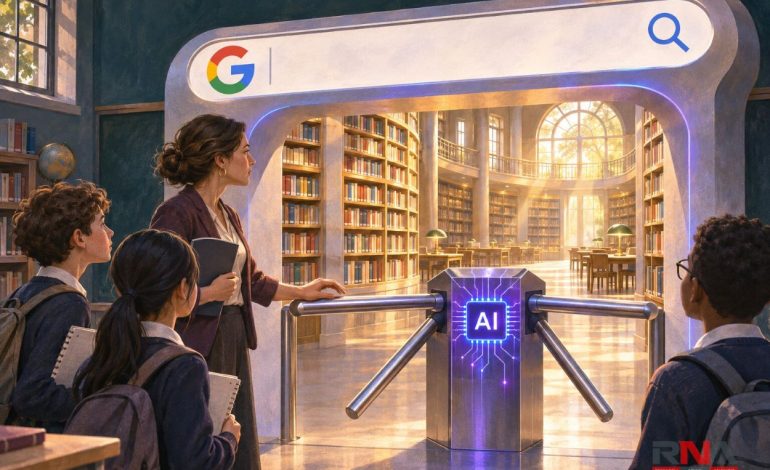
RNA Media illustration for representation.

New Delhi: Google will require schools to accept the artificial intelligence features built into its search engine if they want students to retain access through their school accounts under changes expected in early 2027. Announced on Tuesday, the policy gives administrators greater control over individual services but leaves schools seeking an entirely AI-free search experience with a difficult choice.
Under Google’s new approach to school controls, Search, Gemini, Gemini Notebook and Gemini in Classroom will be switched off by default for K-12 student accounts, covering primary and secondary education. Administrators will have to enable the services they want students to use, with Google promising further implementation details before the changes take effect.
Following criticism, Google clarified that schools could activate the services individually, meaning they would not have to enable the standalone Gemini chatbot to retain Search. However, that clarification does not provide an option to use Search without its integrated AI features – the central issue for schools that prohibit generative AI altogether.
The distinction narrows the meaning of reports that schools rejecting Gemini would automatically lose Google Search. The proposed controls concern access through school-managed student accounts: schools can reject particular AI applications but retaining Search means accepting the AI capabilities within that service.
Google’s vice-president and general manager of education, Chris Phillips, has defended that arrangement on the grounds that “Search and AI are deeply integrated”. According to Education Week’s reporting, schools unwilling to accept that integration would have to leave Search disabled for the affected students.
Administrators will be able to apply different settings to different age groups, potentially withholding access from younger children while allowing older students to use more extensive features. The options described by Google include an educational experience centred on Guided Learning and a fuller Search experience, but neither amounts to a conventional search service stripped of AI.
The announcement comes alongside an effort to change how Google’s tools respond to schoolwork, addressing concerns that students can obtain completed answers without understanding the subject. Its Guided Learning feature is designed to lead pupils through questions and intermediate steps, rather than immediately supply a solution.
Google plans to begin testing Guided Learning within Search at selected American schools later in November, using teachers’ feedback before expanding the programme. It also announced the global availability of Guided Learning in Google Classroom on November 3, allowing teachers to assign activities grounded in their own lesson materials and monitor where students need support.
The changes follow controversy over Google’s decision in August to make Gemini accessible within Classroom for students at schools that had already permitted its AI tools. That expansion drew objections from educators and parents concerned about how quickly conversational AI was becoming part of everyday schoolwork.
New York City subsequently barred student use of generative AI through eighth grade for the current school year, while Los Angeles Unified restricted students’ access on district-issued devices. Those decisions illustrate the practical challenge posed by Google’s new arrangement: a school’s prohibition on AI could also remove a familiar route to finding source material online.
The former chair of the US Federal Trade Commission, Lina Khan, accused Google of using its dominance in search to pressure schools into adopting AI. The executive director of the children’s advocacy group Fairplay, Josh Golin, urged schools to consider alternative search services and broader research methods instead of accepting the arrangement.
The dispute has considerable reach because Google says Classroom is used by about 150 million students and teachers worldwide. Its extensive presence in education makes changes to account settings consequential for both classroom teaching and school technology policies.
Google, meanwhile, has presented new research on Guided Learning to support its argument that carefully designed AI can improve learning. In a randomized trial involving more than 300 University of Tokyo students, the company reported that participants given access to Guided Learning improved their statistics test scores by 8.1 percentage points, compared with 5.3 points among those using standard online resources alone.
That experiment covered half a day of independent study by university students, so its findings do not establish the long-term effects of AI use among younger children. Google also described a four-week pilot at three British secondary schools, where feedback prompted improvements to teachers’ oversight and their ability to keep AI conversations focused on assigned material.
For Indian schools using Google’s education services, the announcement raises questions about which student accounts and age groups will receive access as the controls are introduced. Google’s published statement does not specify a separate Indian implementation date, and the initial Search learning pilot is confined to selected US schools, making the forthcoming rollout guidance important for local planning.