
As Jensen Huang returns to rapturous welcome in Nvidia, tech stocks soar; US blacklists Megaspeed
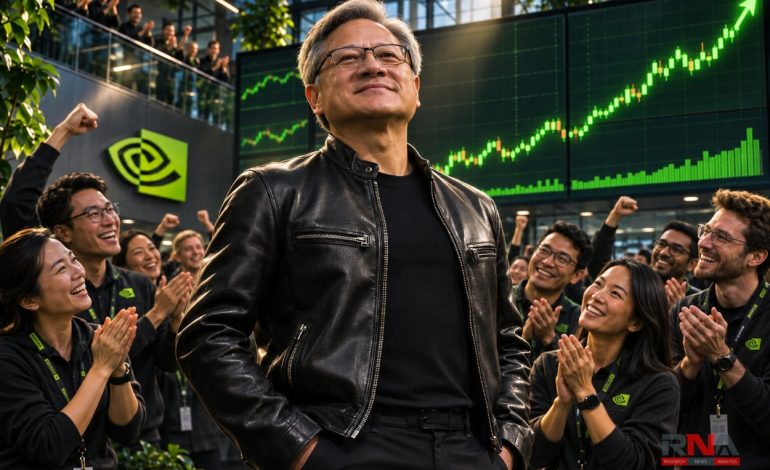
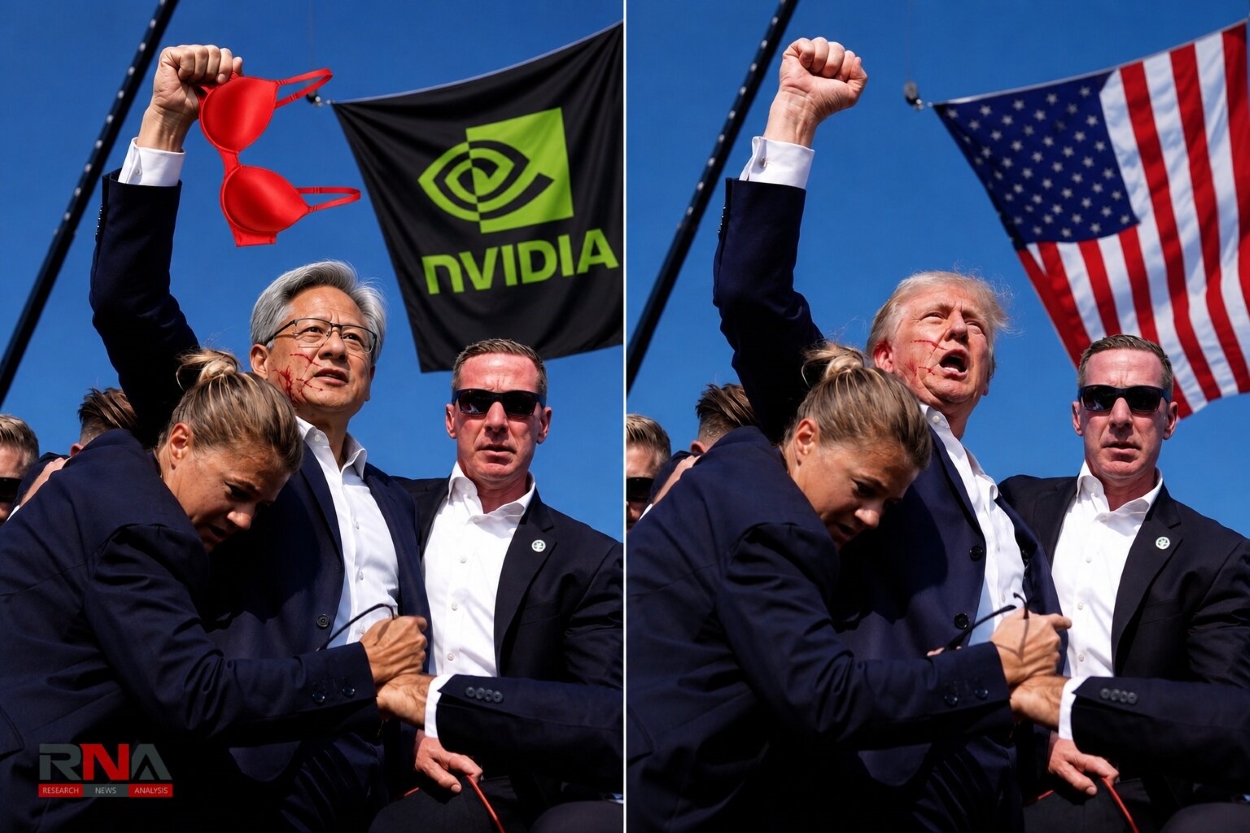
RNA Media illustration for representation.

New Delhi: Nvidia’s extraordinary corporate crisis took a dramatic turn on Monday as its co-founder, Jensen Huang, returned as chief executive officer to an enthusiastic reception from employees, less than two weeks after resigning over a scandal involving a suspected Chinese intelligence operative. His reinstatement, following direct intervention by the United States president, Donald Trump, triggered a spectacular rally in global technology stocks.
However, within hours of Huang’s return, Washington moved to blacklist Megaspeed International, the Singapore-based technology company at the centre of the controversy over the suspected diversion of advanced American artificial intelligence chips to China. The developments brought into sharp focus the competing commercial, political and national security considerations surrounding America’s most valuable semiconductor company and its technological rivalry with Beijing.
Huang received a rapturous welcome when he walked into Nvidia’s Silicon Valley headquarters on Monday with employees applauding and chanting his name as he made his way through the building. Addressing the gathering, the 63-year-old technology executive promised to perform better during his second stint at the helm of the company he had co-founded in 1993.
The scenes marked a remarkable reversal of fortune for Huang, who had resigned on November 12 following revelations about two extramarital relationships, including one with Alice Huang, a Chinese businesswoman suspected by American officials of having links with China’s intelligence establishment. His departure had plunged Nvidia into an unprecedented leadership crisis and unsettled the global AI industry.
As RNA Media reported earlier, Nvidia’s board had categorically ruled out Huang’s reinstatement on November 17, making its subsequent unanimous decision to bring him back all the more striking. Huang has also regained his positions as company president and board director, while the interim chief executive, Colette Kress, has returned to her responsibilities as chief financial officer.
The White House openly celebrated the decision, with Trump claiming credit for persuading Nvidia’s directors to reverse their earlier position. The US vice-president, JD Vance, was also reportedly involved in the discussions over the weekend, helping address reservations among board members about restoring Huang to the leadership.
Nvidia said its directors had received assurances from senior US government officials before concluding that Huang’s reinstatement did not present a national security risk. The company’s chairman, Harvey C Jones, maintained that bringing back the co-founder was in the interests of shareholders, employees, business partners and customers.
Leading figures in the technology industry, including the OpenAI chief executive, Sam Altman, and the billionaire entrepreneur Elon Musk, welcomed Huang’s return. An online petition demanding his reinstatement had attracted more than 180,000 signatures, reflecting the considerable support he continued to enjoy across the technology industry despite the allegations.
However, the celebrations were accompanied by a backlash on Capitol Hill, where lawmakers from both the Republican and Democratic parties questioned the implications of the decision for corporate accountability and American national security. Several lawmakers argued that Huang’s commercial importance should not exempt Nvidia from scrutiny over its dealings with companies suspected of circumventing US semiconductor export restrictions.
Nvidia’s independent investigation into whether Huang was targeted by a foreign intelligence operation will continue despite his reinstatement. The company has also established a committee comprising independent directors to oversee national security risks and export-control compliance, while Huang has agreed to appear at a public Senate hearing on December 3.
Nvidia’s $1 trillion rebound sparks global tech rally
Wall Street responded to Huang’s reinstatement with one of its most dramatic rallies in recent months, reversing a substantial portion of the losses suffered during the leadership crisis. Nvidia shares closed at $165.05 on Monday, registering a gain of approximately 31.5 per cent and restoring nearly $1 trillion to the semiconductor giant’s market capitalization in a single trading session.
The recovery accelerated the gains witnessed during early trading, when RNA Media reported a massive surge in Nvidia shares following Huang’s reappointment. Nevertheless, the company’s stock remained considerably below its record high of $239.24 reached in October, indicating that investors had yet to recover fully from the recent market turmoil.
The impact extended well beyond Nvidia, with the technology-heavy Nasdaq Composite index surging 6.5 per cent and the benchmark S&P 500 gaining 4.7 per cent. The Dow Jones Industrial Average advanced 3 per cent, as American equities recorded their strongest single-day performance in more than 18 months.
The rally spread to Asian markets on Tuesday with Taiwan’s benchmark stock index surging more than 9 per cent during morning trading. South Korea’s Kospi climbed around 7 per cent, while Japan’s Nikkei 225 gained more than 4 per cent, led by semiconductor manufacturers and technology companies.
The scale of the recovery reflects Nvidia’s extraordinary influence over the global AI economy, which extends beyond its dominance of the advanced semiconductor market. The company is also a major investor in AI enterprises and has extensive commercial relationships with cloud-computing providers, data-centre operators and developers of large language models.
Huang’s departure had intensified existing concerns over whether the enormous investments being made in AI infrastructure would generate adequate financial returns. His reinstatement has reassured investors about the continuity of Nvidia’s business strategy, although it has done little to address the underlying questions about the long-term profitability of the AI boom.
Meanwhile, Trump’s personal financial exposure to Nvidia has attracted renewed scrutiny following the spectacular recovery in its share price. A Reuters analysis of presidential financial disclosures estimated that Trump held between $11 million and $55 million in Nvidia shares, with Monday’s rally potentially increasing the value of his investments by as much as $17 million.
The White House maintained that independent financial institutions managed Trump’s investment portfolio and that neither the president nor his family could influence individual investment decisions. The financial disclosures do not establish that Trump personally directed any of the transactions involving Nvidia shares.
US blacklists Megaspeed, 6 other companies
Even as Nvidia employees and investors celebrated Huang’s return, the US commerce department moved against the Singapore-based company whose business dealings with the American chipmaker are central to the unfolding controversy. Its Bureau of Industry and Security (BIS) announced the addition of Megaspeed International and six other Southeast Asian entities to its export-control blacklist.
The other blacklisted companies include MSFusion, PT Megaspeed International, Speedmatrix, Apex Enterprise Solutions, SwiftData and Megaspeed (Thailand). The restrictions will severely limit their access to American technology covered by US export regulations, including advanced graphics processing units (GPUs) used in AI applications.
Megaspeed has been under investigation by the US Department of Justice over allegations that advanced Nvidia processors supplied to its overseas operations may have subsequently been diverted to China in violation of American export restrictions. The company had previously maintained that its commercial activities were lawful and rejected allegations concerning its operations as unsubstantiated.
The controversy acquired a national security dimension following reports that Alice Huang, a former senior executive at Megaspeed, had been in contact with an officer of China’s Ministry of State Security. American intelligence officials reportedly suspected that her relationship with Jensen Huang formed part of an intelligence-gathering operation, although Beijing has categorically denied the espionage allegations.
The decision to blacklist Megaspeed also follows reports of serious differences within the Trump administration over Washington’s semiconductor export policy. The US treasury secretary, Scott Bessent, had indicated that several government departments favoured restricting Megaspeed’s access to American technology months before the commerce department, headed by Howard Lutnick, eventually acted.
At the heart of these disagreements is the question of how far Washington should restrict China’s access to American semiconductor technology without undermining the commercial competitiveness of its own chipmakers. In December 2025, the Trump administration announced that it would permit certain exports of Nvidia’s H200 processors to China under an arrangement involving a 25 per cent payment to the US government.
Advanced AI processors have applications extending well beyond commercial computing, including military intelligence analysis, autonomous systems, surveillance, cyberoperations and weapons development. Consequently, preventing the unauthorized transfer of such technology through third countries has become an increasingly important element of Washington’s strategy to preserve its technological advantage over Beijing.
For countries like India, which are seeking to expand their indigenous AI infrastructure and semiconductor capabilities, the controversy also illustrates the strategic vulnerabilities arising from excessive dependence on a handful of foreign technology suppliers. It underlines the importance of diversifying technology supply chains while developing domestic capabilities in advanced computing.
Huang’s reinstatement may have ended Nvidia’s immediate leadership crisis, but Washington’s action against Megaspeed demonstrates that the wider controversy is far from over. The investigations into suspected intelligence activities and possible export-control violations will determine whether the scandal remains a corporate governance issue or develops into a more consequential national security crisis.