
Supreme Court says accidental gunshot from soldier’s own weapon can qualify for ‘war injury’ pension
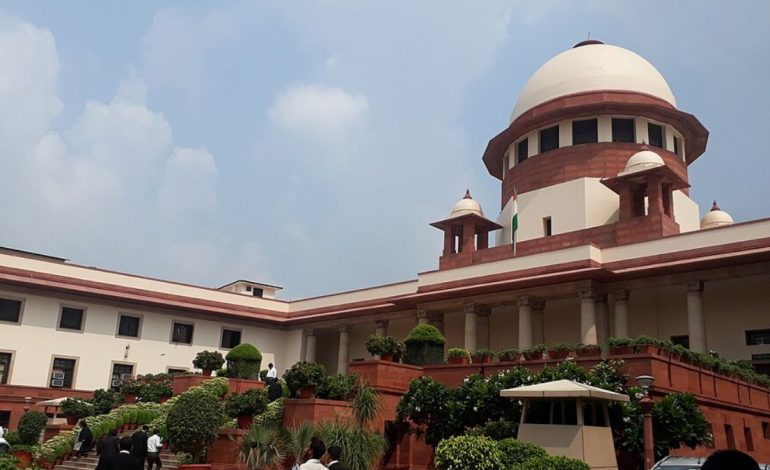
Supreme Court of India. Image courtesy: Wikimedia Commons.

New Delhi: The Supreme Court has ruled that an accidental gunshot injury sustained by an Army soldier from his own service weapon can qualify for the “war injury” element of pension, provided the prescribed operational and medical conditions are met. The bench of justice Satish Chandra Sharma and Justice Nongmeikapam Kotiswar Singh observed that the source of the bullet alone cannot determine whether an injury was self-inflicted.
The judgment, delivered on Friday, came in an appeal filed by retired Subedar Major and Honorary Lieutenant Devi Singh. The court set aside an earlier decision of the Armed Forces Tribunal (AFT), which had rejected his claim for the enhanced pension benefit, and directed the authorities to grant the war injury element from his date of retirement.
Soldier injured during Operation Rakshak
Singh was injured on August 7, 2002, while serving with 31 subarea signal company in Jammu & Kashmir during Operation Rakshak and Operation Parakram. His loaded weapon accidentally discharged while he was on duty, with the bullet passing through his left thigh and damaging his femoral vein.
The release medical board assessed his disability at 40 per cent for life and attributed it to military service. Although the Army granted him the “ordinary disability” element of pension, his claim for the enhanced war-injury element was rejected because the competent authority had not issued final battle casualty approval and his name was missing from the relevant digital database.
Court says own weapon does not mean self-inflicted injury
The Supreme Court examined surviving Army records, including a Part II Order dated December 16, 2002, which recorded the incident as a battle casualty during Operation Rakshak and Operation Parakram and described the discharge as accidental. It also considered an Attributability Certificate issued by signals records and medical documents classifying the injury as grievous.
The court noted that the original unit records had been destroyed in the 2014 floods while in official custody. It said the soldier could not be penalized for the loss of records beyond his control or merely because his name was absent from a later digital database. The bench also found no evidence that the injury was deliberate or had been officially classified as self-inflicted.
The court explained that Army rules recognize accidentally sustained gunshot injuries as eligible for battle casualty classification when two conditions are met. The injury must occur while carrying out operations against enemy forces or militants and must be at least grievous in nature. In Singh’s case, the court found that both requirements were satisfied.
The authorities have been directed to issue a revised pension payment order and release the net arrears within three months. The disability element already paid for the same disability and period will be adjusted to avoid duplication.