
From Dibang flood search to Ladakh glacier evacuation, Armed Forces respond across extreme terrain
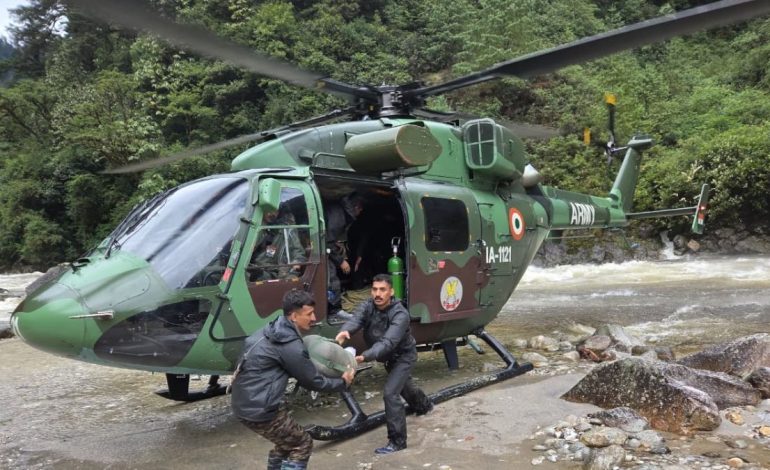
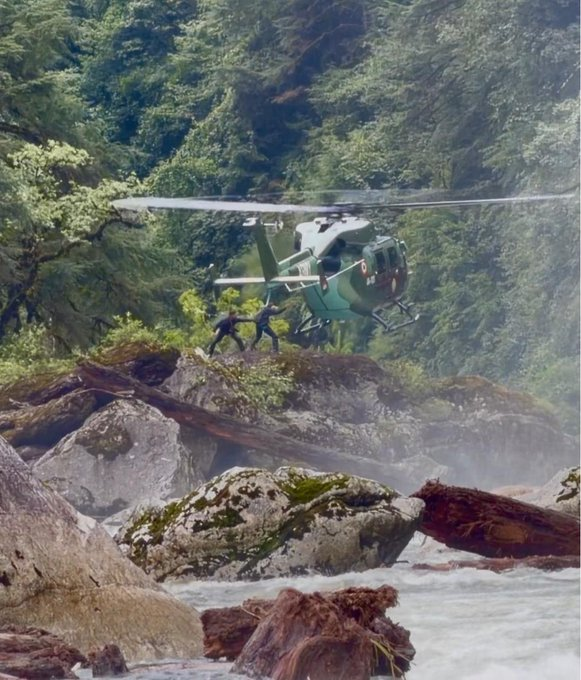
Army Aviation conducts search, rescue and casualty evacuation operations in Dibang Valley. Image courtesy: X.com/@easterncomd

New Delhi: Army Aviation helicopters continued searching the rugged Dibang Valley in Arunachal Pradesh for five soldiers swept away by flash floods, even as two critically injured personnel were evacuated from a riverbed. The Army’s Eastern Command said aerial and ground teams were coordinating the search after improving weather allowed helicopters to cover the affected area on Wednesday.
The flash flood struck the Pasu Pani area on August 14, washing away two shelters at an Army camp and sweeping away seven personnel. Two were rescued, while five remained missing. The search has involved Army teams, the Indo-Tibetan Border Police, General Reserve Engineer Force, Arunachal Pradesh Police, State Disaster Response Force and local volunteers, with weather, fast-flowing rivers and difficult terrain slowing operations.
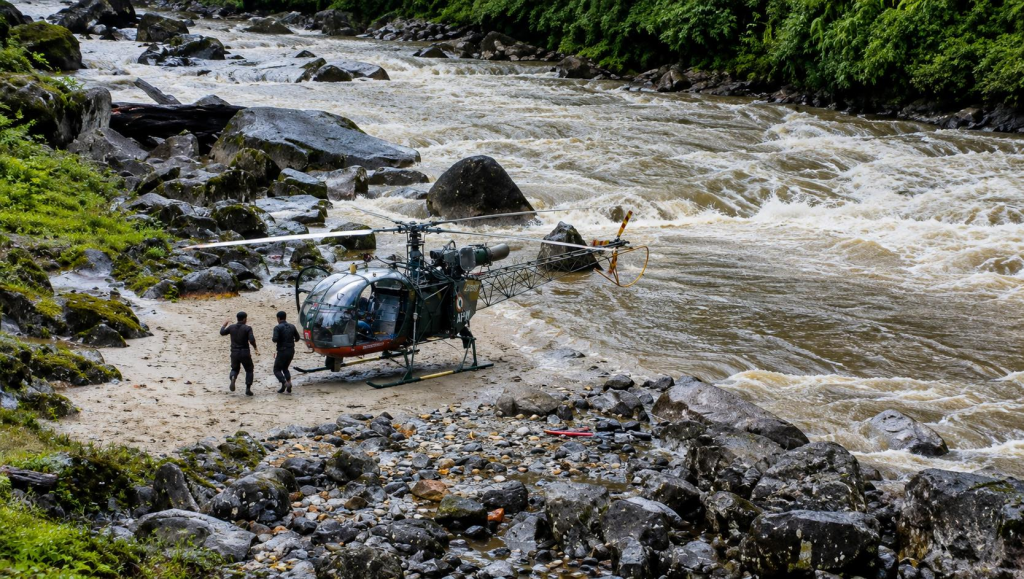
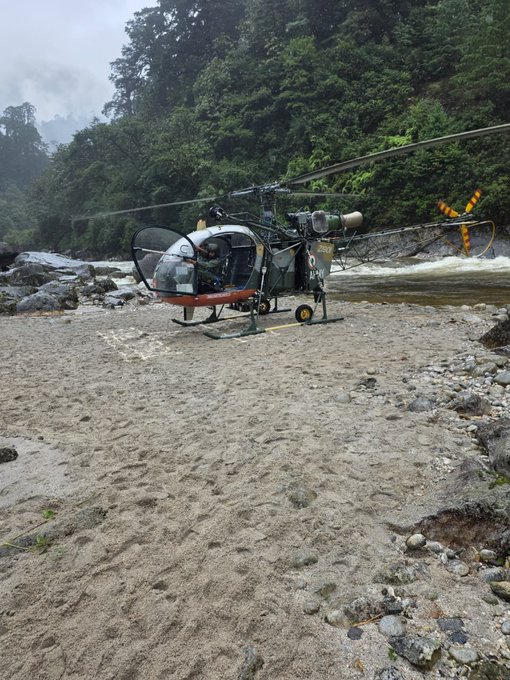
Hundreds of kilometres to the west, another military helicopter mission showed the other side of the same capability. An Indian Air Force (IAF) Cheetah carried out a casualty evacuation (CASEVAC) from Sumzon Glacier in Ladakh’s Pheyang valley, lifting a 56-year-old Overseas Citizen of India (OCI), settled in the US, from an altitude of 15,000 feet and flying him to Leh for medical care.
A lifeline at 15,000 feet
The Ladakh evacuation involved a landing in difficult terrain with restricted space at the site. The IAF said the crew landed safely, took the survivor on board and evacuated him to Leh. The nature of his medical condition was not disclosed.
Such missions are an important part of aviation support in Ladakh, where altitude, distance and limited road access can turn a medical emergency into an evacuation problem. The Tribune reported that IAF helicopters are frequently called upon when civilians are stranded by landslides and avalanches or need urgent assistance because of medical emergencies linked to the region’s high-altitude environment. Army Aviation units also undertake CASEVAC missions.
The 114 Helicopter Unit, the Siachen Pioneers, based at Leh, has long been associated with high-altitude flying and casualty evacuation in the region. Cheetah helicopters remain part of that support network, operating over terrain where access by road or foot can be slow or impossible when time is critical.
The Sumzon mission is also not an isolated example of military medical support in Ladakh. A defence ministry review said the IAF airlifted a civilian patient from Leh to Chandigarh on April22, 2025, while serious cases from the region can be moved onwards by fixed-wing aircraft for advanced treatment.
The Army has also expanded medical outreach in the Union Territory. During Operation Netra 1.0 at 153 General Hospital in Leh in April 2026, Army doctors screened 950 patients from remote areas across Ladakh and carried out 214 specialized procedures, including complex cataract and retinal surgeries. The IAF helped airlift advanced medical equipment for the four-day programme.
Together, these operations show how military medical and aviation infrastructure positioned for a strategically important high-altitude region can also support civilians who might otherwise face long delays in reaching specialized care.
When Civillian access fails
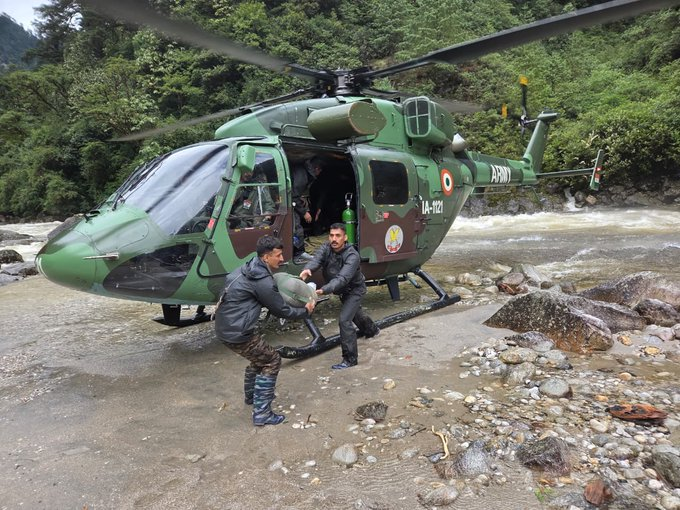
The Armed Forces’ emergency role is not confined to Ladakh. In June this year, four people stranded overnight on islands in the swollen Sisiri River in Arunachal Pradesh’s Lower Dibang Valley were eventually airlifted to safety after a multi-agency operation involving the district administration, National Disaster Response Force, local rafting teams and the IAF.
The requirement is often the same: terrain or weather cuts ordinary access, and military assets provide reach that local agencies may not have immediately available.
That support becomes particularly visible during large disasters. After part of a glacier struck a Border Roads Organisation labour camp at Mana in Uttarakhand in February 2025, the IAF deployed Do-228 aircraft and Mi-17 and Cheetah helicopters. The operation helped move 90 personnel from rescue agencies, five casualties, two mortal remains and 2.15 tonnes of equipment and supplies between February 28 and March 3.
Help beyond nationality
The same principle can extend beyond India’s mountains and borders.
In March 2025, the Indian Coast Guard alerted the Navy after four crew members aboard the Panama-flagged MV Heilan Star, about 230 nautical miles west of Goa, suffered severe burns. The Navy diverted INS Vikrant and INS Deepak, and a Sea King helicopter evacuated three injured sailors from the ship.
The men rescued were two Chinese nationals and one Indonesian national. They were flown to INS Hansa in Goa and then transferred to a civilian hospital. A fourth sailor had died before the evacuation could be carried out.
That episode is useful in understanding the wider image such missions create. Emergency assistance was extended to foreign seafarers because they were in distress, just as military aircraft and helicopters are deployed for civilians trapped by weather or needing urgent medical evacuation in remote parts of India.
The government has increasingly described India as a dependable first responder in the Indian Ocean Region and beyond, citing humanitarian assistance, evacuation and disaster-relief missions by the Army, Navy and Air Force.