
IAF chief backs theaterization but rejects a borrowed model. Why the Air Force is still seen as the reluctant service
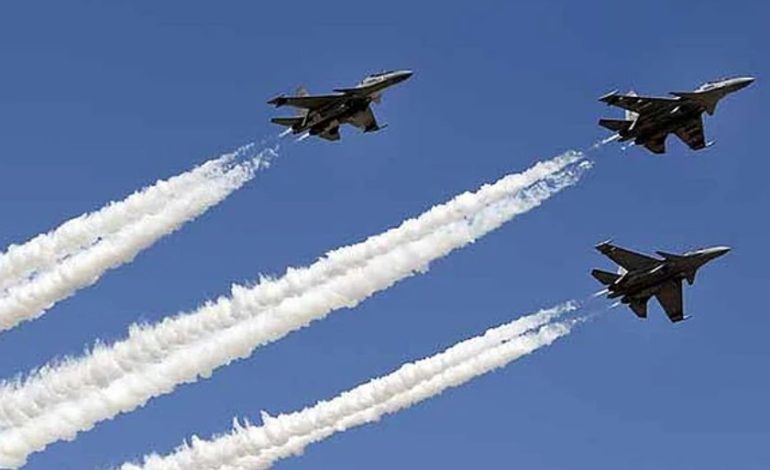
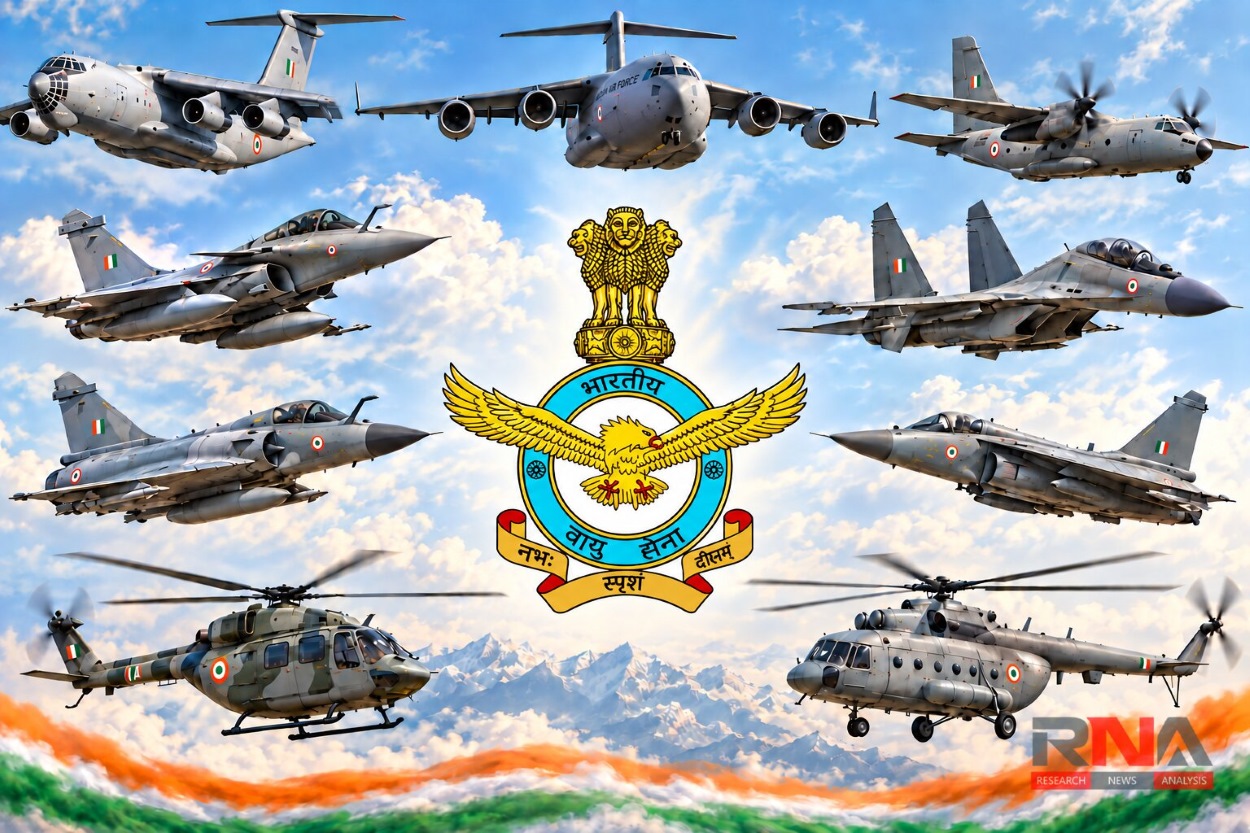
Three IAF Su-30MKIs flying in a formation. (File photo for representation.)

New Delhi: The Indian Air Force chief, Air Chief Marshal Amar Preet Singh, has rejected the perception that his service opposes theaterization, saying it supports greater integration but wants the proposed command structure to be based on India’s operational requirements. He argued that the transition should be carefully sequenced to avoid destabilizing a military system operating under sustained pressure.
Speaking at the Air Vice Marshal Harjinder Singh Memorial Lecture in Kanpur on August 22, 2026, Singh said the Air Force had consistently sought an objective examination of the shortcomings in India’s existing command structure. Those deficiencies should be corrected through a model designed for the country rather than by importing a ready-made arrangement from another military, he said.
The air chief called for a graded transition that would cause minimum disruption to operational preparedness, particularly when India remains alert to renewed hostilities with Pakistan. Referring to the continuing military posture after Operation Sindoor, he said this was not the time to abruptly “shake up” systems critical to national security.
Singh said Air Headquarters was examining the matter through a composite team and would give the government its professional assessment. The final decision, he added, would be taken by the political leadership after considering inputs from all stakeholders.
The statement was significant because it sought to separate disagreement over the design and timing of theaterization from opposition to its underlying objective. Singh’s central argument was that jointness must solve demonstrable operational problems and not become an exercise in reorganizing headquarters merely to reproduce structures used by the United States, China or another country.
Under theaterization, designated Army, Navy and Air Force formations would be placed under a single commander responsible for operations within a defined geographical theatre. The proposed system is intended to replace the present arrangement in which the Army and Air Force have seven commands each and the Navy has three, with their operational chains running largely through their respective service headquarters.
Recent proposals have envisaged three integrated formations – a northern theatre focused primarily on China, a western theatre responsible for the Pakistan front and a maritime theatre covering the Indian Ocean. A theatre commander would control the forces assigned for operations, while the service chiefs would concentrate principally on raising, training and sustaining their respective forces.
The latest remarks were also Singh’s first detailed public intervention on the subject since the former chief of defence staff, General Anil Chauhan, submitted a collective proposal on behalf of the three services before demitting office in May. The framework remains under government consideration, with important questions concerning command relationships, the allocation of air assets and the sequencing of the transition yet to be settled.
The air chief also supported the government’s effort to reduce dependence on imported military equipment, although he acknowledged that Indian manufacturers might not always be able to meet every requirement within the necessary timeframe. Domestic companies could partner with foreign manufacturers to increase production capacity and accelerate the delivery of urgently needed systems, he said.
Why is IAF perceived as being against theaterization?
The perception has developed because successive Air Force leaders have publicly expressed reservations more frequently and more emphatically than their counterparts in the Army and Navy. Their objections have generally concerned the proposed distribution and command of air assets, but the distinction between resisting a particular model and resisting theaterization itself has often been lost in the wider debate.
At the heart of the disagreement is the Air Force doctrine that air power is inherently flexible and should be centrally controlled, even when its execution is decentralized. Fighters, transport aircraft, airborne early-warning platforms, refuelling aircraft and electronic-warfare systems can move between distant fronts within hours, allowing commanders to concentrate combat power at the point of greatest danger.
Territory divides land operations naturally, but the same boundaries do not apply as neatly to aerospace operations. The Air Force fears that permanently assigning aircraft to geographical commands could divide a limited national capability into smaller packages and make rapid concentration against an emerging threat more difficult.
That concern is sharpened by the IAF’s depleted combat strength, which is currently around 29 fighter squadrons against a sanctioned strength of 42. Its force multipliers – including airborne early-warning aircraft, flight-refuelling tankers and specialized intelligence or electronic-warfare platforms – are even fewer and may be required successively or simultaneously on the China and Pakistan fronts.
From the Air Force’s perspective, a squadron cannot simply be divided administratively among theatres without affecting the concentration, maintenance and tasking of air power. Aircraft nominally assigned to one theatre may be required for air defence elsewhere, long-range offensive operations, maritime strikes or the protection of strategic assets far beyond that commander’s geographical area.
There is also a doctrinal concern that a theatre commander drawn from the Army could see aircraft principally as instruments for supporting land operations. The IAF regards offensive counter-air missions, strategic strikes, air interdiction, air defence and the destruction of an adversary’s command infrastructure as national-level tasks that may produce a decisive effect independently of a ground campaign.
The question, therefore, is not merely who owns a particular squadron but who decides the priority of its missions during a fast-moving conflict. Unless the command structure clearly protects professional aerospace planning, the Air Force fears that scarce aircraft could be tied to immediate tactical demands at the expense of operations capable of shaping the wider war.
Singh reinforced this position at the Ran Samwad tri-service seminar in August 2025, when he cautioned against rushing into theatre commands and suggested establishing a joint planning and coordination centre in New Delhi under the Chiefs of Staff Committee. Although presented as an incremental route towards deeper integration, the proposal was widely interpreted as an alternative to transferring operational authority to geographical theatre commanders.
Repeated Air Force calls for deliberation have also contrasted with the more publicly enthusiastic positions taken by sections of the Army and Navy. As theaterization has already undergone years of discussion, every appeal for additional study or gradual implementation can appear to supporters of the reform as an attempt to delay it.
Institutional interests inevitably contribute to the debate as well, although they are not unique to the IAF. Theaterization would transfer operational authority from individual service headquarters to theatre commanders, significantly altering the responsibilities of the service chiefs and redistributing command appointments across the armed forces.
For Air Headquarters, however, the change is especially sensitive because centralized tasking is fundamental to the way the IAF currently generates and applies combat power. Theaterization could require it to surrender direct operational control over substantial parts of its fleet while remaining responsible for training, maintenance, force generation and long-term capability development.
Yet it would be misleading to portray the IAF as opposed to joint warfare. The service has participated in joint doctrines, integrated exercises and networked command-and-control arrangements, including the linkage of the Army’s Akashteer air-defence system with the IAF’s Integrated Air Command and Control System.
The Western Air Command’s All Domain Joint Operations exercise in February 2026 and subsequent integration drills demonstrated that the services can combine surveillance, targeting and weapon systems without first completing a wholesale reorganization. The defence ministry has similarly described the proposed Joint Operations Control Centre and integrated capability-planning mechanisms as central elements of India’s evolving joint warfare architecture.
Operation Sindoor has strengthened both sides of the argument. Supporters of theaterization see its tri-service planning and coordinated execution as evidence that India should institutionalize unity of command, while the IAF can reasonably argue that the operation demonstrated the effectiveness of integrated action without permanently fragmenting control of air power.
A workable compromise appears to be emerging in which theatre commanders receive forces needed for their assigned campaigns, while a pool of strategic and scarce assets remains under centralized control. Recent reporting suggests that Air Headquarters could retain authority over force multipliers and other strategic platforms, making them available to individual theatres according to operational priorities.
The dispute is consequently less binary than the public debate suggests. The IAF accepts the need for joint planning and integrated operations, but wants guarantees that theaterization will preserve the speed, flexibility and concentration that give air power its strategic value.
The government’s challenge is to establish an unambiguous chain of command while allowing aircraft to move rapidly across theatre boundaries and ensuring that commanders receive specialist advice on aerospace operations. If those questions are resolved through war-gaming, clear operating procedures and a carefully phased transition, the disagreement over theaterization may prove to be one of design rather than intent.